




«The first image I carry within me is that of a city that rallied around the victims and their families, a city deeply affected, worried, but also moved by the speed of the rescue efforts and the courage of those who intervened immediately, chasing the young man who committed the crime. Strong solidarity was immediately created around the police forces, the healthcare workers and all the people present on site.”
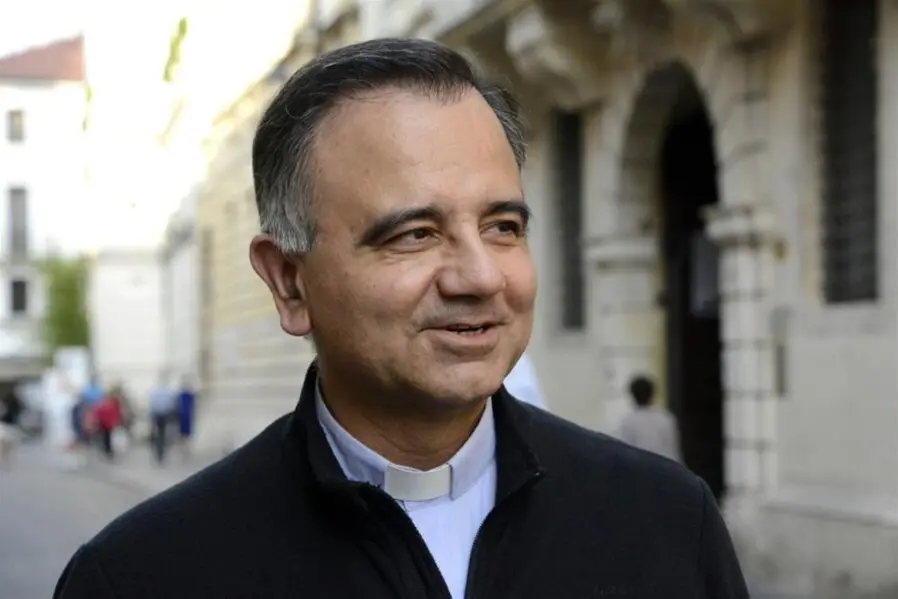
This is the monsignor’s comment Erio Castellucciarchbishop of Modena-Nonantola as well as vice-president of the CEI for northern Italy, on Saturday’s tragedy, which shocked Modena and brought the issue of youth violence, marginality and mental distress back to the centre.
Your Excellency, what must be done to prevent fear from degenerating into anger and closure?
«After this episode, fear and a sense of instability grew which remains something unusual for Modena. In recent times, however, there had already been some worrying signs: I am thinking of the episodes linked to baby gangs or the stabbing, at the end of December, of the Colombian priest Don Rodrigo Grajales Gaviria, who was chaplain of the Latin American communities and who almost lost his life. Even in that case there was a situation of strong psychological distress: it was a 29-year-old Italian man, followed by social services, but evidently it is not always possible to do everything that is necessary. Luckily the city reacted immediately. Thousands of people gathered in Piazza Grande on Sunday to send messages of peace, reconciliation and restart. Even as a Church we moved immediately and prepared a prayer intention of the faithful to be read at all the masses of the diocese, in over 200 parishes. A way to feel united, to share pain and hope.”
What to do now?
«We need to think deeply about the origin of this absurd gesture. From what we can understand, what emerges above all is a great isolation, a closure with respect to any form of community life: the religious community to which he belongs, which in the case of Salim El Koudri was the Islamic one, but also friends, relationships, work, which was completely missing. In Ravarino, where he lived, they described him as a strange person, very closed in on himself. These are all signs that reveal a profound social malaise and that we must learn to read more carefully. The risk, otherwise, is to continually find ourselves faced with tragedies of this type without being able to prevent them. If we also think about the stabbing of Don Rodrigo or certain episodes linked to baby gangs, we see that often, by digging a little deeper, a very strong social suffering emerges, a loneliness that was not intercepted in time.”
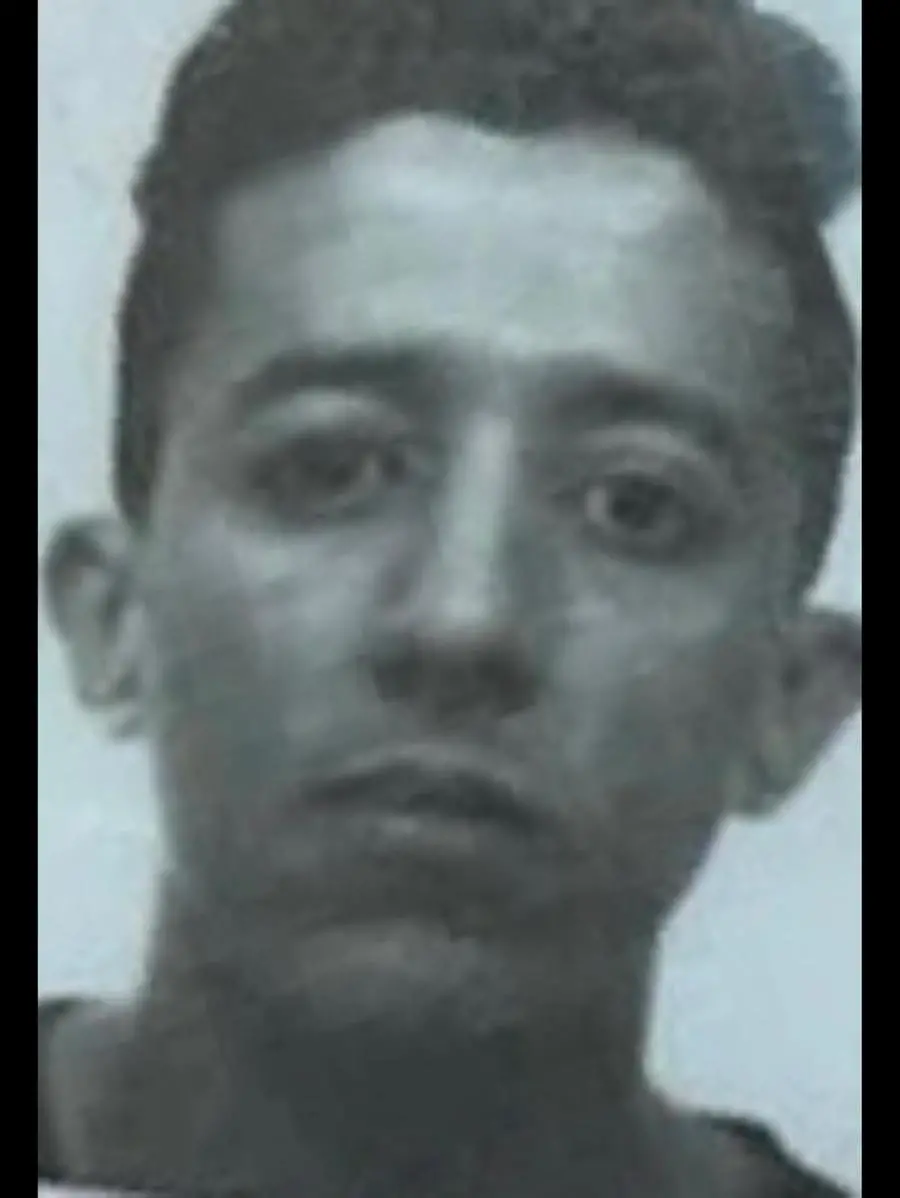
Salim El Koudri, the 31 year old who ran over 7 people in Modena and stabbed one on May 16th
(HANDLE)
Some politicians have raised the issue of the often difficult integration of second generation immigrants.
«It certainly needs to be taken into consideration but not in the form of a residence permit which for me has nothing to do with it. Rather in the form of the question on how to accompany and include those born here, who are Italian citizens in all respects, but belong to communities that sometimes do not fully find their cultural humus and which may need more attentive accompaniment, additional opportunities. It seems that this boy was complaining about not finding work, about not feeling welcomed. These are aspects that should however be verified with caution but which refer to a real issue. In any case, the point is not to blame immigrants or make proclamations that reduce the possibilities of integration. On the contrary, we need to ask ourselves how to make this process more fluid and deeper. But above all, for me, the central theme remains another: that of intercepting isolation, of sharpening the “antennas” capable of capturing loneliness. This is what challenges Christian communities and all civil realities, from school to sport, from university to the social fabric as a whole. Because isolation is often the most evident symptom, but also the root of other fragilities, up to serious psychological distress.”
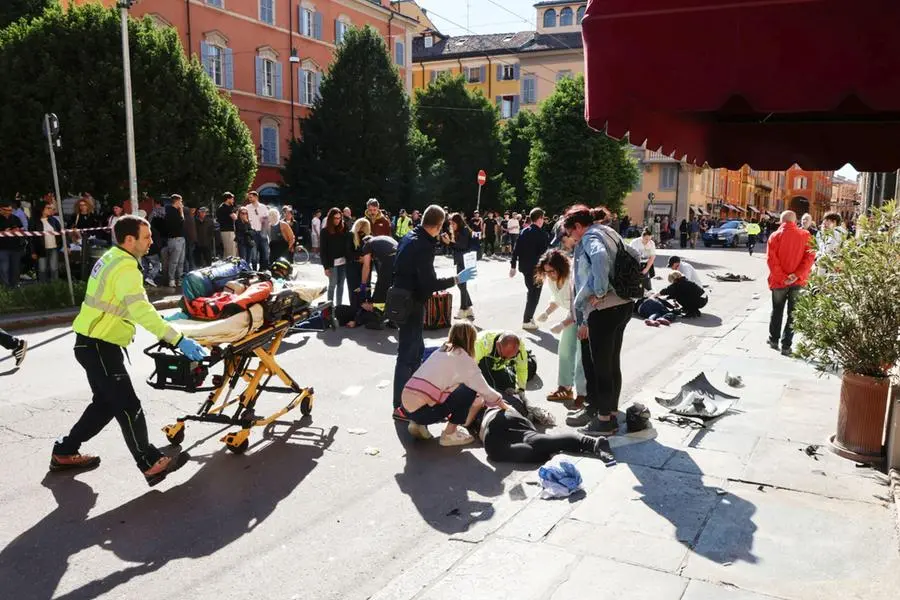
Rescue services after the car driven by Salim El Koudri at high speed mowed down a dozen people on foot in the center of Modena
(HANDLE)
Salim El Koudri is now detained in solitary confinement and has asked his lawyer Fausto Gianellli for a Bible and to speak to a priest. Would you be willing to meet him? And what would you tell him?
«First of all I would listen to him, to try to understand what moved him. I have heard statements from his lawyer that he is realizing the enormity of what he has done, but he talks about it almost as if it were something separate from itself. He says “what a job, what a bad thing”, but perhaps he hasn’t yet fully connected what happened to himself. I would therefore try to listen to him a lot, and then see if there are possibilities of a path, naturally not on my part directly, but through experts who can begin to reconstruct this personality. If you then also want to undertake a journey of faith, there is the figure of the chaplain in prisons, but in situations of this type it seems to me that it is above all an expression of confusion, of a need to cling to something. However, it is premature to think about this: first of all we must try to reconstruct the human.”
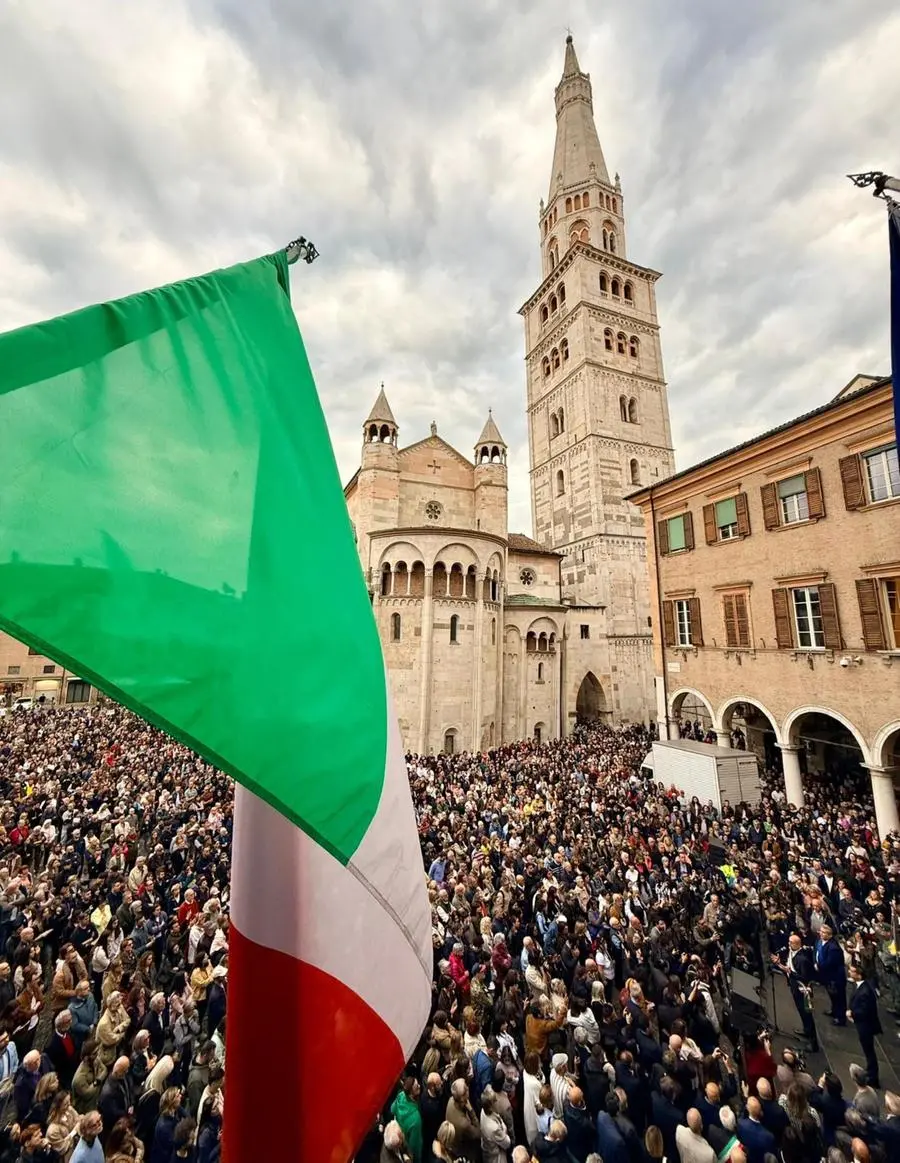
The demonstration in Piazza Grande in Modena on May 17th
(HANDLE)
What did it mean that three citizens intervened to stop him?
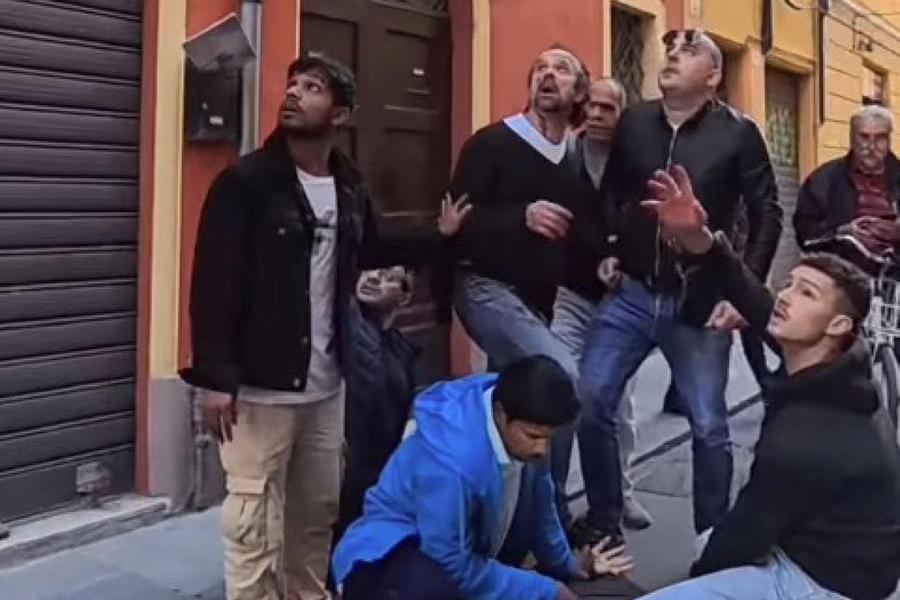
«It was the very important sign that, in an instant, one can also choose to put one’s own safety at risk to help others, to prevent the perpetrator of a crime from escaping. And it was symbolically very important that the first to chase him was a man from Modena and that two Egyptian citizens arrived immediately afterwards: it was the three of them who immediately blocked him. This data seems significant to me also compared to certain xenophobic readings circulating on social media. We should deal with the reality of those who actually intervened. These people could also have thought: “I had nothing to do with it, I don’t want to risk it, I’ll let it go because they’ll take it.” Instead there was promptness, generosity and a sense of responsibility. And this is a very beautiful testimony for the whole city.”
Are you thinking about initiatives to prepare for the next few days?
«Together with some diocesan offices we want to organize a moment of reflection which should be held at the beginning of June. The idea is to start from what has happened and address above all the theme of loneliness, young people and second generations. We do not want to ignore all the ideas that this story brings with it, but to try to understand whether concrete practices can also arise, whether the antennas of our Christian communities and also of other civil realities can be made more sensitive, more “attentive”, so to speak. The hope is that it can be a meeting that is not only ecclesial but also interreligious and open to the civil community.”