

Yuka warns of the presence of a controversial ingredient in 65% of mint syrups. It exposes you to several health risks, particularly among children.
A chilled mint syrup with water is the ultimate summer drink. The children love it. Adults too. But pay attention to its composition. In a press release published on June 16, the famous Yuka application warns of the presence of a controversial ingredient in 65% of mint syrups sold in France. Among these, “several very popular references, sold by major national brands or distributors”.
For Yuka, the presence of this ingredient “raises questions (…) due to several potential health risks, particularly in children, even though it has no nutritional use or preservation function. It only serves to modify the appearance of the product.” But this function remains essential for manufacturers since it gives the product its attractive green color. The greenness of a mint syrup is therefore not always a criterion for the quality of the product. On the contrary. “In industrial syrups, manufacturers do not use mint leaves infused in the product” reminds Yuka. They actually use mint flavorings, made industrially from the aromatic compounds of the plant. These flavors give the taste of mint, but do not contain the green pigments present in the leaves. Mint syrup is naturally transparent or slightly yellowish.
The ingredient to avoid in mint syrups, according to Yuka, is therefore a coloring. More specifically, the “brilliant blue FCF” displayed on the product label under the name “E133”. This additive is authorized by European regulations but it remains very controversial because it is suspected of promoting hyperactivity and attention deficit disorders in children (ADHD). Some typical symptoms are quickly identified by doctors.
Studies have also demonstrated an ability to damage DNA and impair cell function or survival. “Finally, some forms of this additive may contain aluminum” Yuka warns. Aluminum is a metal associated with several health risks. Research has shown that it may have adverse effects on the nervous system, reproduction and development. It could also increase the risk of multiple sclerosis, asthma, epilepsy or even Alzheimer’s.
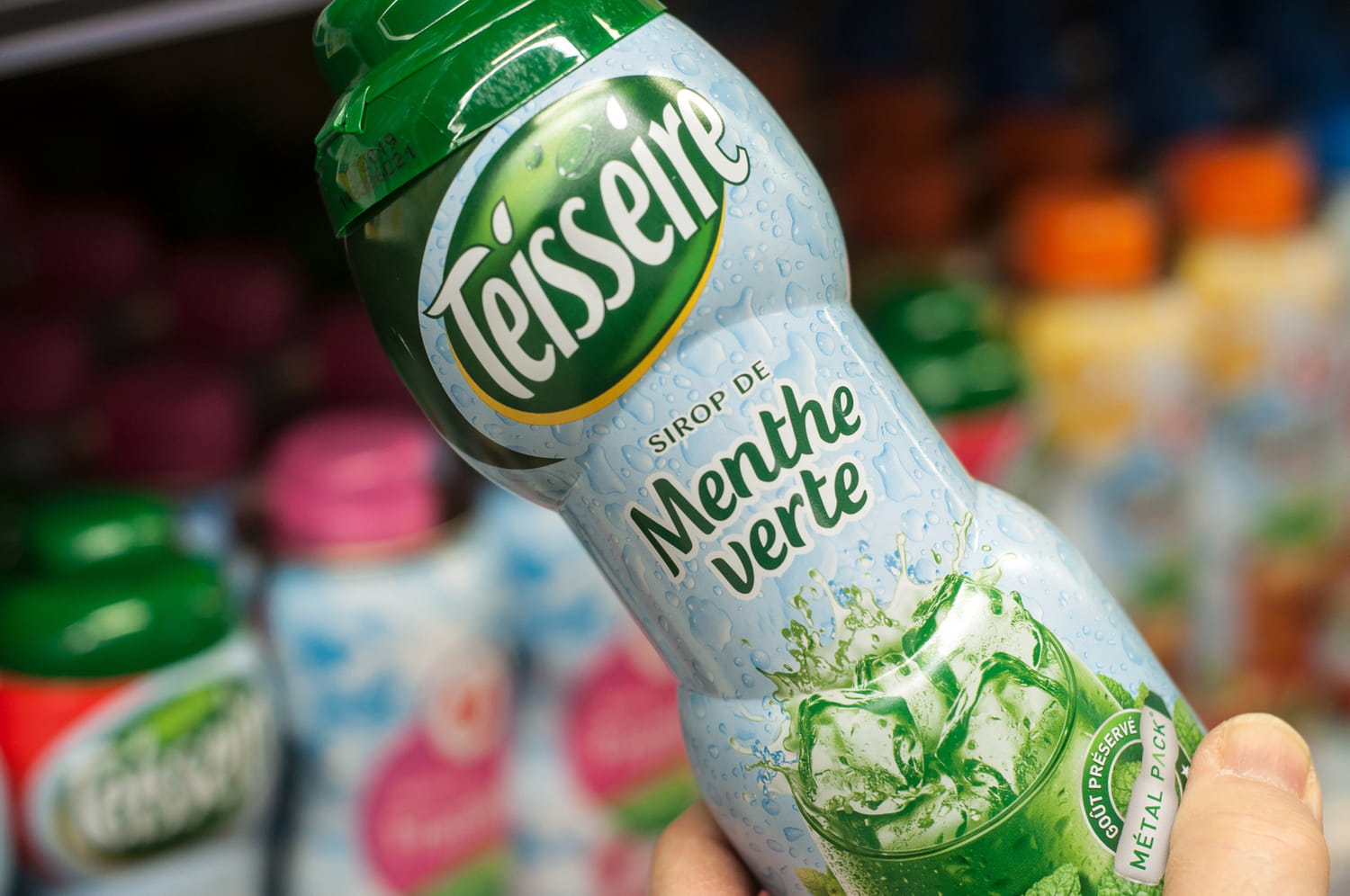
In which products? Yuka’s investigation revealed the presence of E133 in twelve mint syrups: Teisseire spearmint syrup, E.Leclerc mint syrup, Coopérative U pure sugar mint syrup, Auchan mint syrup, La Maison Guiot spearmint syrup, Carrefour mint syrup, Paquito mint syrup from Intermarché, Plein Sud spearmint syrup from Lidl, pure mint syrup sugar sports syrup, spearmint syrup from Moulin de Valdonne, spearmint syrup from Eyquebelle and that from Monin. To avoid it, you should choose mint syrups that indicate “No colorings” on their packaging or organic syrups. They are generally more expensive.