




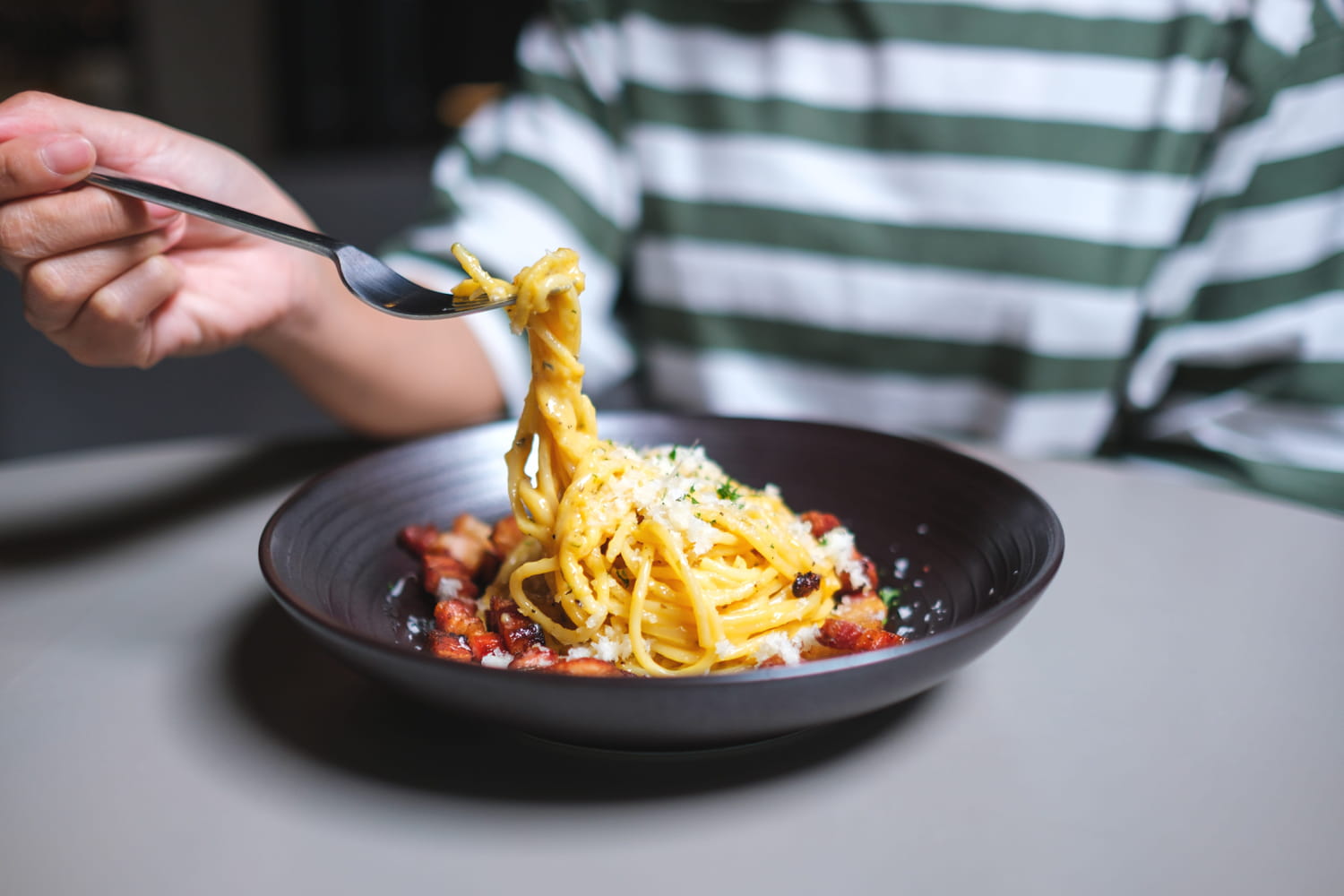
We knew that eating late at night wasn’t ideal. But a study has just put precise figures on what our liver endures when we dine after this time.
A study published in the journal npj Science of Food, based on data from 14,012 American adults, has just highlighted an association between meal times and the biological aging of several organs, including the liver.
Everything is explained by our internal clock. The liver is programmed to process fats and sugars during the day, not at night. Requested too late, he works out of sync with his natural rhythm. The researchers believe that this circadian misalignment could contribute to the biological aging observed in their analyses. The most surprising thing the study reveals: even eating healthily is not enough to compensate for a bad day. People who eat a quality diet but postpone their first meal of the day see their liver and body age more quickly than those who eat less well but at regular times. “Suboptimal eating timing could reduce the positive effect of a healthy diet”specify the researchers.
According to their observation, participants who had their last meal between 3 p.m. and 5 p.m. presented the most favorable markers of aging for the heart and the whole body. For the liver, the most favorable results were observed when the last meal was taken between 5 p.m. and 7 p.m. Conversely, late dinners age the liver and the body in general more quickly. In the study, people who ate dinner after 9 p.m. consistently had more advanced biological markers of aging. So, the later you dine, the more these markers deteriorate. But be careful: eating too early is not ideal either. The study shows that finishing your meal before 3 p.m. is associated with accelerated aging of the heart and liver. “The timing of food intake can be a powerful modulator of biological aging”summarize the authors.
The study also points to another striking figure: people who dine late and also eat longer (> 8 hours) have a higher risk of aging. When the daily eating window exceeds 16 hours – that is to say when we eat from very early in the morning until very late in the evening – the risk of accelerated aging of the entire body is more than doubled. The effects were even more pronounced among those over 40 and men. Researchers thus observe that the longest eating windows are associated with the least favorable biological aging profiles.
What to do concretely? No need to revolutionize everything. Bringing your dinner forward an hour, if possible before 8 p.m., and avoiding snacking after the evening meal are already two simple actions to let your liver work in better conditions. Also remember to add aromatic herbs that are good for the liver when preparing dinner. And perhaps, in the long term, these good habits will help the body age a little more slowly.