




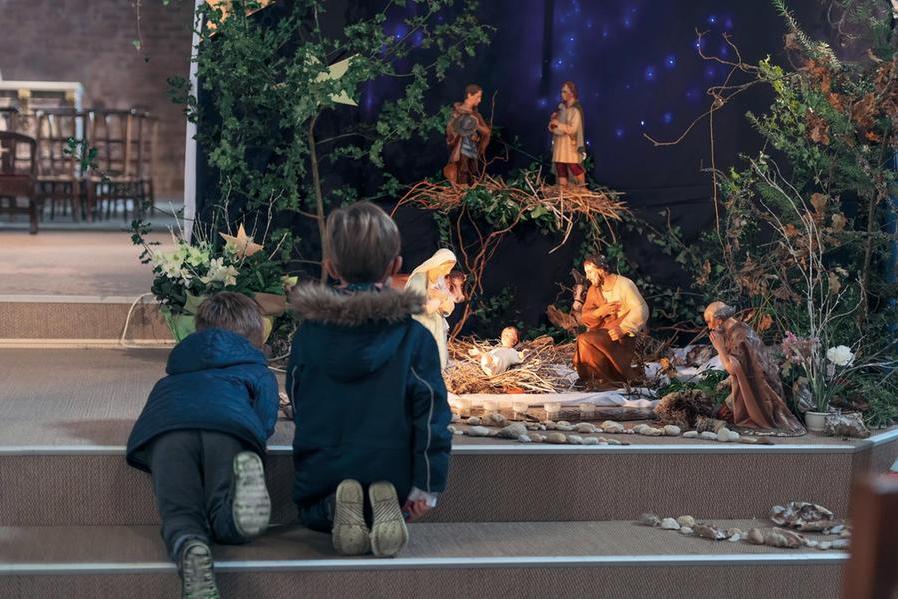
And this year too, with panettone and transport prices tripled, the first ski weeks and the squandering of gifts, the controversy over the nativity scene returns. Those who flaunt it as a weapon of battle to deprecate a world that is increasingly forgetful of its roots (it’s true, but barricades are useless); those who, even if they don’t believe it, never miss an opportunity to mock and provoke, with falsely progressive or even obscene ideas. Saint Joseph dressed as a woman, baby Jesus in handcuffs or with a keffiyeh, or with his face erased, or patchwork, to represent all the peoples of the earth. The nativity scene as a political manifesto or of gender and woke ideologies. Now, you can not have a nativity scene. The moss sits there until Candlemas and dries up, gets dusty, dirty. It is not obligatory, just as celebrating Christmas is not obligatory, especially when it is only an occasion for consumption and saccharine do-goodism on the surface and during the day. For those who believe, Christmas is a memory of the Incarnation, that is, of God made man, present then and today in history. As Eliot wrote in beautiful lines: “A moment not out of time, in what we call history… A moment in time but time was created through that moment: for without meaning there is no time and that moment of time gave the meaning.” Since then we have to deal with Jesus in order to follow him, deny him, or pretend that he isn’t, and this is the most superficial and unreasonable position. The nativity scene, for those who believe, is therefore a sign, in churches and homes, of an expectation, of a welcoming preparation for the presence of Christ, who comes, but every day, it is enough to recognize him. And then it is a symbol of joy, serenity and peace, the message of the angels in glory. It is a space conducive to prayer, reflection, which unites, which smacks of family, of beautiful and distant traditions, when we were children and every figurine spoke, every light was a cause for amazement. It is no coincidence that children continue to love the nativity scene and marvel at the many nativity scene exhibitions in our cities. We need to bring them to us and tell them the most beautiful story, from Mary’s yes to the Magi. Everyone is in the nativity scene, the knife grinder intent on his work and the women at the market, the distracted people playing cards in the tavern, the sleepyhead and the soldier, the rich man and the shepherd and all the animals, in harmony. Even a dinosaur leaning there, next to the sheep and the donkey, in the mystery of creation, when the wolf and the lamb grazed together is good. It is a shame to despise the nativity scene or reduce it to festive decor. You can not do it if it is not a sign of Christ. You can make a tree, forgetting that even the pine decorated with lights is an ancient Christian tradition, from the cold of the Nordic countries, when the missionary Saint Boniface proposed it as an image of the Trinity, of the saving cross, of the light that illuminates the darkness of winter and evil. It is therefore not a secular alternative to the nativity scene and in fact they stand next to each other, in friendship, in the center of St. Peter’s Square, the center of Christianity.
Credere, the magazine for living the “adventure of faith”
BELIEVE is the magazine that offers you stories, characters and columns every week to inspire faith in everyday life. Already chosen as the “Official Magazine of the Jubilee of Mercy”, it is a newspaper rich in content for the spirit, with many testimonies of famous people and ordinary people and the gestures and words of Pope Francis, closer than ever.
Discover the magazine and subscribe »