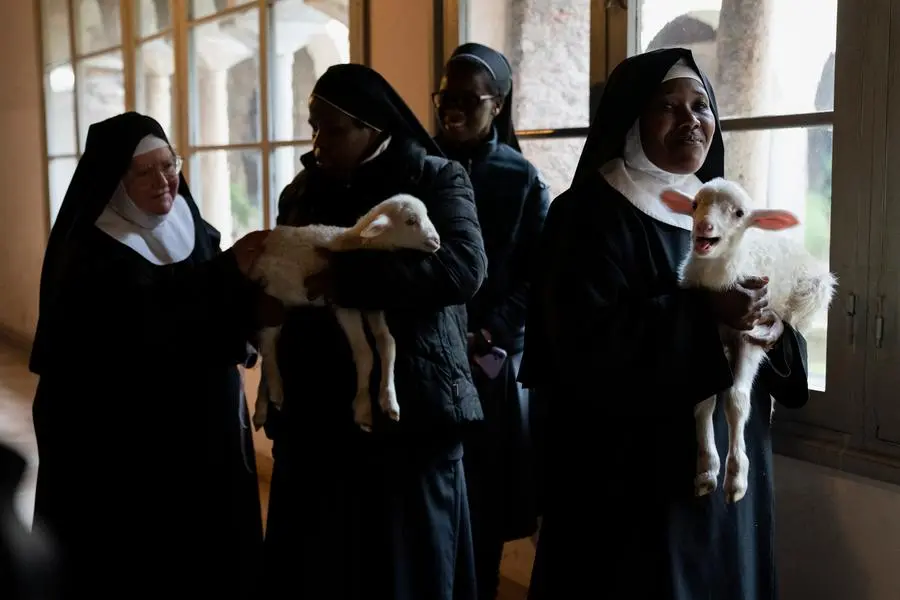

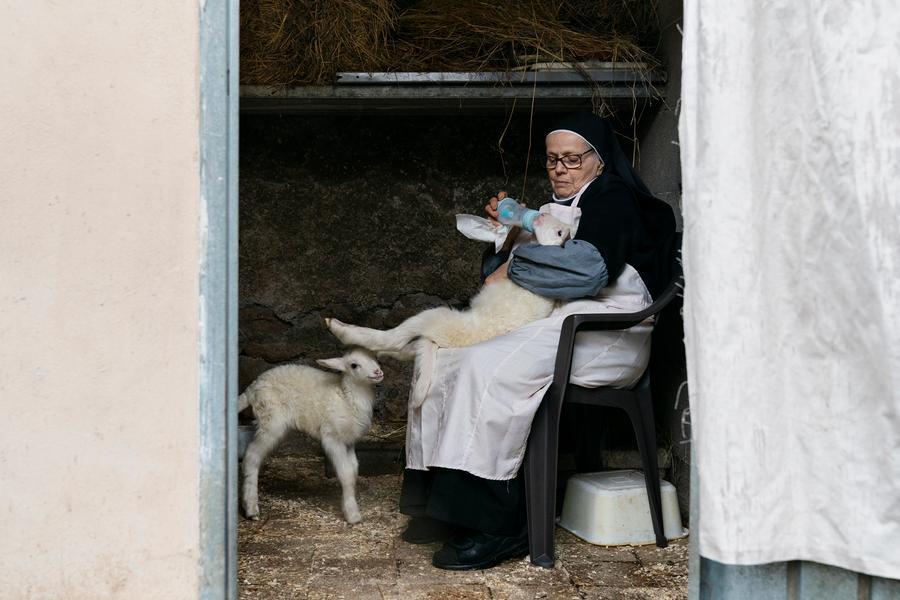




An elderly nun sitting on a stool grabs a little lamb, puts it on her lap, supporting it with her arms and feeds it with a bottle: a simple, sweet, maternal image, a gesture repeated several times a day, in the five months that the two little lambs from a farm outside Rome remain entrusted to the care of the nuns of Santa Cecilia, after having been blessed. AND those same little lambs become an integral part of the industrious and peaceful life in the monastery where a group of Benedictine nuns, some of whom are of African origin, carry out the daily tasks of a life of work and prayer. Where the silence is interrupted only by the kitchen crockery, the sewing machine, the radio broadcasting sacred music and the bleating of the little lambs, who like any puppy play, are curious, follow the black skirts of their adoptive mothers as they wander around the cloister, along the porches and in the vegetable garden.
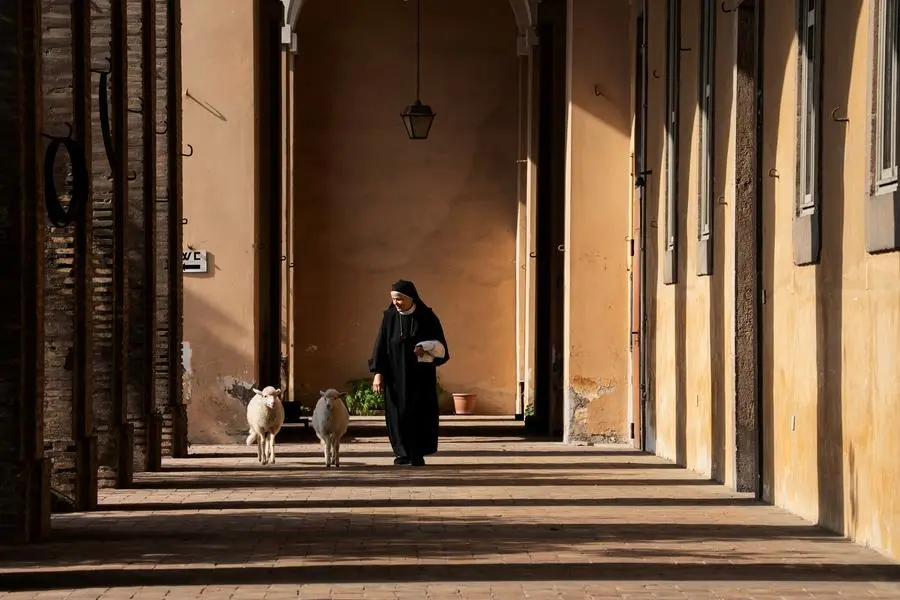
After his debut in ’82. Venice International Film Festival and a journey through the main international festivals, Agnus Dei by Massimiliano Camaiti arrives in Italian cinemas from 20 April, distributed by Kinèa Distribuzioni. Presented in the Biennale College Cinema section, Agnus Dei he obtained the Michel Mitrani Award for best first film at the FIPADOC in Biarritz and was awarded as best documentary of the year by the Italian Documentaristi Association.
In the quiet silence of the Monastery of Santa Cecilia in Rome, the film follows the delicate bond between the nuns and two newborn lambs, entrusted to their care thanks to a thousand-year-old Catholic tradition. In the daily gestures of care, an unexpected form of motherhood unfolds, made of presence, dedication and listening, which crosses and redefines the very meaning of the vocation.
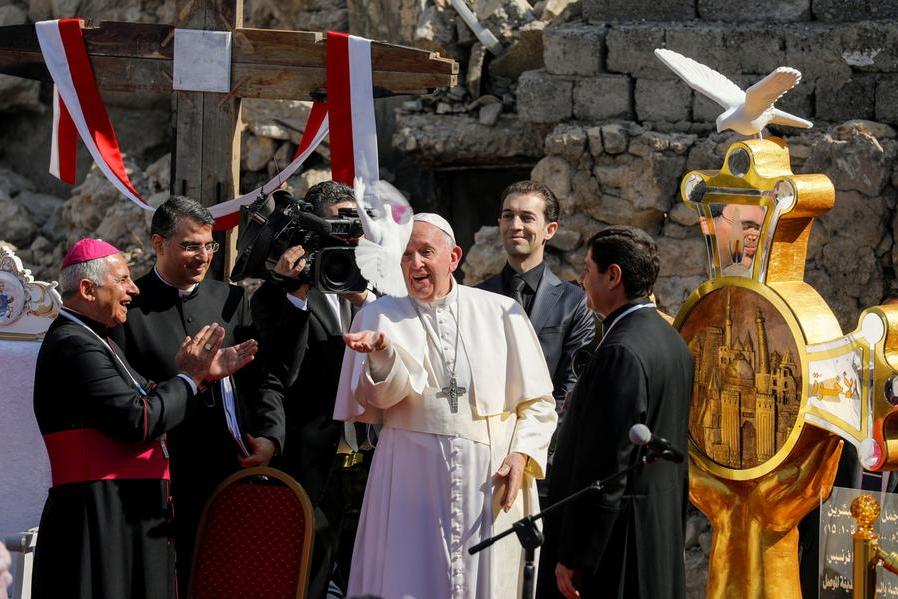
To undermine the slow progression of the ancient rite of pallium And the sudden illness of the Pope, which introduces a fragile tension between the eternal and the contingent.
THE TRADITION OF THE PALLIUM
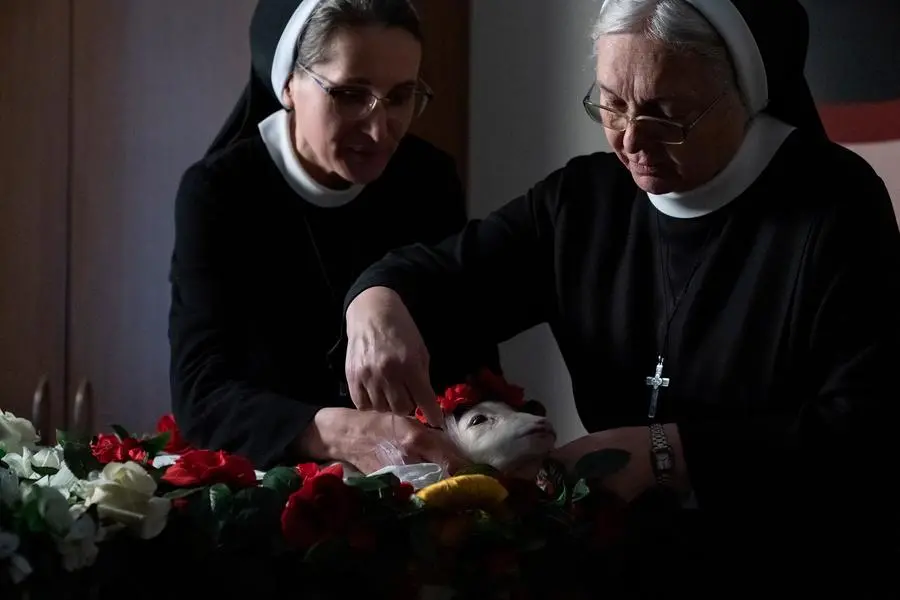
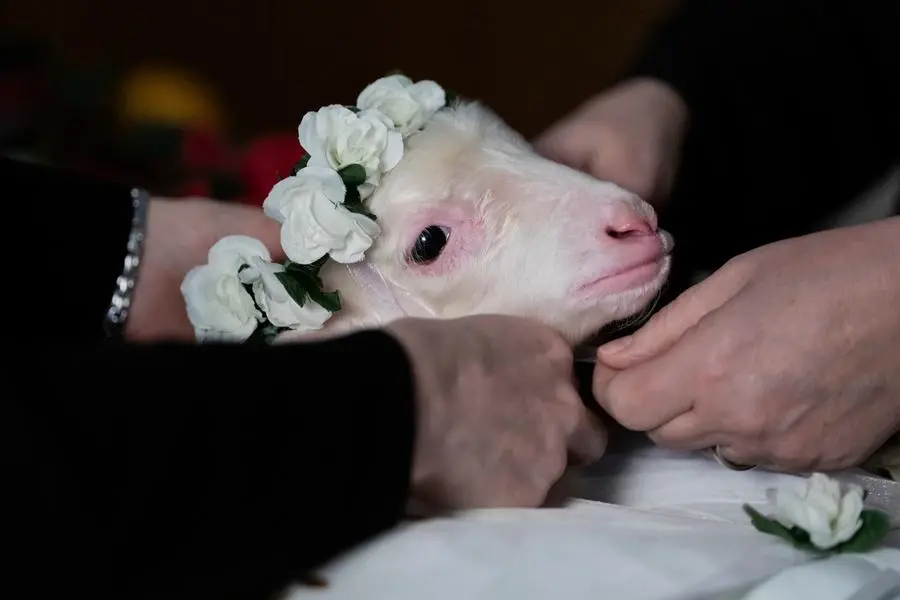
The tradition of the papal pallium consists in the blessing of two newborn lambs on the day of Saint Agnes (21 January), a martyr pierced with a sword in the throat, in the way in which lambs were killed. The animals are placed on the altar above the relics of Agnes and Emerenziana, whose foster sister She was a catechumen and was preparing to receive Baptism. They found her praying on Agnes’ tomb and after taking her out of the church, they stoned her. This animal symbolizes the bond between the Pontiff, the metropolitan archbishops and theirs role of “good shepherd”, who carries the lamb on his shoulders, with a symbolic reminder of Christ who carries the lost sheep on his shoulders. The blessing takes place in the basilica of Sant’Agnese in Agone in Rome. They are subsequently entrusted to the Benedictine nuns of the monastery of Santa Cecilia in Trastevere. These nuns take care of them until spring, when the shearing takes place. With the wool of these lambs, the nuns weave the strips of white fabric that make up the palli. The pallium is a white wool band decorated with black silk crosses. The palliums are then blessed by the Pope and placed near the tomb of St Peter, before being imposed on the metropolitan archbishops on 29 June (solemnity of Saints Peter and Paul) as a symbol of their special bond with the Pope.
Through an essential cinematic language, attentive to silence and time, Massimiliano Camaiti he signs a contemplative work that questions the themes of care, faith, solitude and the search for meaning: «The approach to documentary is totally secular. I tried to leave a space between the camera and the filmed events, obviously I’m not talking about physical space allow the viewer to create their own personal point of view. I observe what happens, without suggesting anything».
Produced by Olivia Musini and Giovanna Nicolai for Cinemaundici, in collaboration with Rai Cinema, Agnus Dei is distributed by Kinèa Distribuzioni, an independent company active in the promotion of documentary cinema. «The cinema of reality is a choice of field», declares Dario Cangemi, founder of Kinèa. «It means investing in a language capable of describing the complexity of the present. With Agnus Dei we inaugurate our journey in theaters with a work that fully embodies this vision: restoring space, dignity and centrality to a cinema that arises from reality and dialogues with the community.”