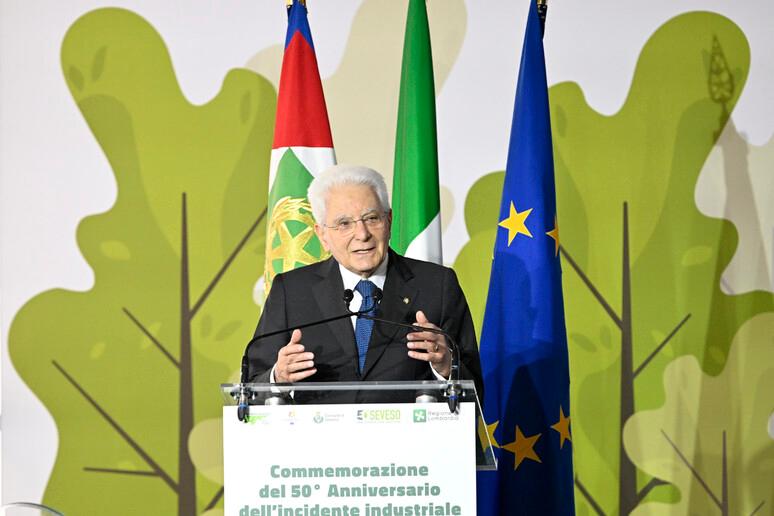
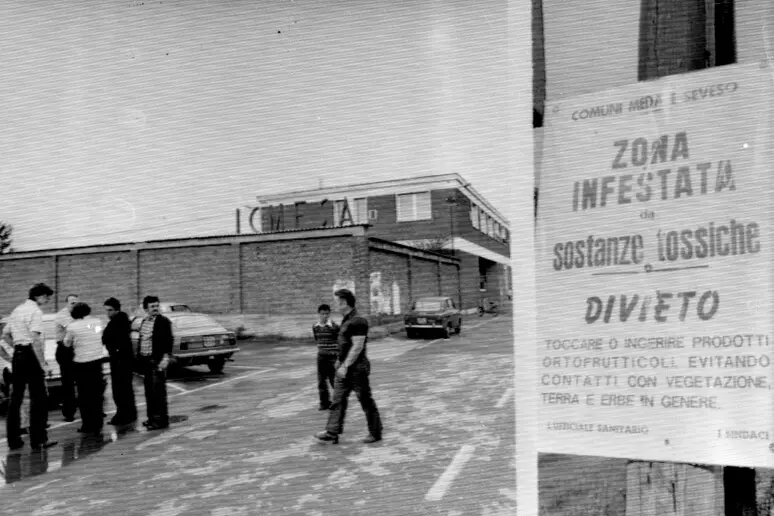
It was symbolically the large monumental black poplar of Oak Forest to welcome the President of the Republic first Sergio Mattarella arriving in Seveso – on the morning of Friday 10 July – for the celebrations of the 50th anniversary of the dioxin disaster. The poplar is the only tree left to commemorate the areas contaminated by the accident at the Icmesa factory: in its vital resistance and the majesty of its foliage, it anticipated Brianza’s unanimous embrace of the President. Mattarella’s visit, on the exact day ofanniversary of the 1976 chemical accidentis a recognition that passes through the entire community, capable of learning to live with its wound but also of generating an example of commitment, hope and determination. “A civil recovery” the President of the Republic defined it.

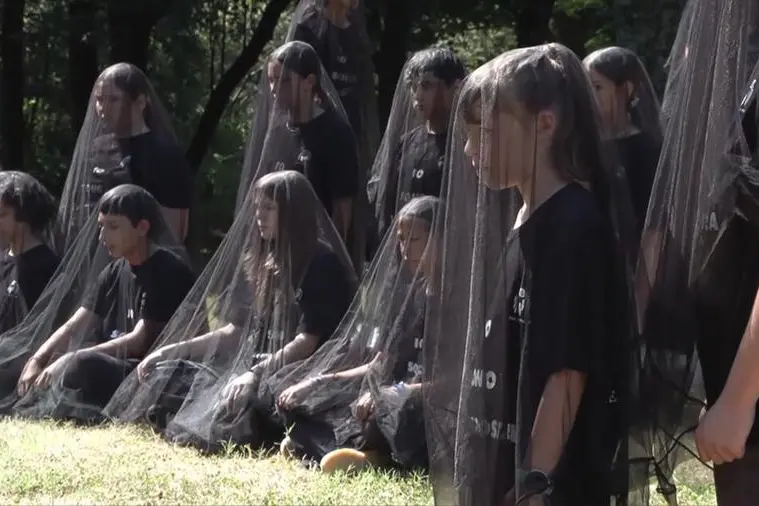
Right under the poplar tree, the mayor of Seveso Alessia Borroni and the president of the Lombardy Region Attilio Fontana awaited the arrival of Mattarella, accompanied by a group of very young people, who gave life to the flash mob “The Forest of the Future” to give voice to the poplar, in dialogue with future generations. Because the Bosco delle Querce truly represents the rebirth of a territory. Born as a reforestation project, where houses, animals, objects and contaminated trees were buried, it has become a living, participatory and educational ecosystem; a regional natural park that has recently obtained the European Heritage Label (EHL).
A place that commemorates one of the most serious industrial disasters in history: the area was entirely reclaimed through the demolition of existing buildings, the removal of surface soil and the construction of two safety tanks, where everything contaminated was deposited. An important environmental recovery, planting and valorization project followed, which is still carried out today, with the commitment of Ersaf, the regional body for agricultural and forestry services.
And it was in the Bosco delle Querce that the entire commemoration ceremony took place. «Dioxin is among the most dramatic events that the country has been forced to face. The whole of Italy was dismayed” recalled President Mattarella, “ed it is clear that the direct witnesses of that drama will never be able to forget the anguish and fear. But that moment was also a turning point for the culture of safety and prevention, which the Seveso emergency gave a necessary, significant acceleration.
What happened was unacceptable, the rules subsequently developed on a continental scale had historical value because they were based on the protection of the lives of people, communities and the environment as a primary human right. Icmesa is the sad paradigm of what should not be done, the presence of dioxin in the air was first silenced, hidden, then minimised, but here the rebirth has gone far beyond reclamation and reconstruction”. Mattarella spoke about the vitality, tenacity and commitment of a community. «Here the future has returned – underlined the President of the Republic – and the memory also goes to the women and men who showed civic sense and great solidarity on that occasion”.
Mattarella quoted, among others, Carlo Galante, a worker in the Icmesa department where the accident occurred: «With only one mask on his face he activated the cooling valve; without his intervention, the consequences of dioxin would have been even more devastating. His was a gesture of true heroism.” That intervention earned Galante, who had been missing for years, the silver medal for civil valor.

«This park is a place of life – said Mayor Borroni – here we want to help our kids grow, here we want to share the future of Seveso. In 1976 I was a child, I remember well the soldiers with weapons stopping me to ask where I was going. Today we want to remember those dramatic years but we also want to move on. Because today we are contagious with life.” Even President Mattarella was moved by the testimonies of Giuseppe Cassina, in 1976 councilor of Francesco Rocca’s council – the mayor of dioxin, remembered for his tenacity and humanity – and, in the years of the reclamation, himself mayor and of Giuliana Zorzi, inhabitant of one of the houses closest to the Icmesa. «On July 10, 1976 I celebrated my 18th birthday. There was a family party at my house, but there was also an acrid smell – reminiscent of sevesina. – My mother closed the windows, my aunt looked for information».
That smell didn’t go away and the news about it didn’t arrive. Giuliana still remembers when her kitten, in the following days, began to feel ill and she felt helpless: «It dragged itself, just as dad realized that the birds were no longer singing. With a suitcase with a few things we were sent to a residence. There, my grandfather never spoke again. We had left everything we had built with great sacrifices.” There is one thing more than others that Mrs. Zorzi remembers: her doll Marcello. He was buried forever, together with his house, his bedroom, his objects, his memories as a child, in one of the safety tanks. Yet, she returned to Seveso. She built a family here. He often walks in the Bosco delle Querce: «It’s beautiful here, and yet, a part of me continues to look for the way home». Today, with the presence of President Sergio Mattarella, perhaps, Giuliana – and like her many others – has at least been able to rediscover a stretch of that road home. History cannot be changed, but here the future has returned.