
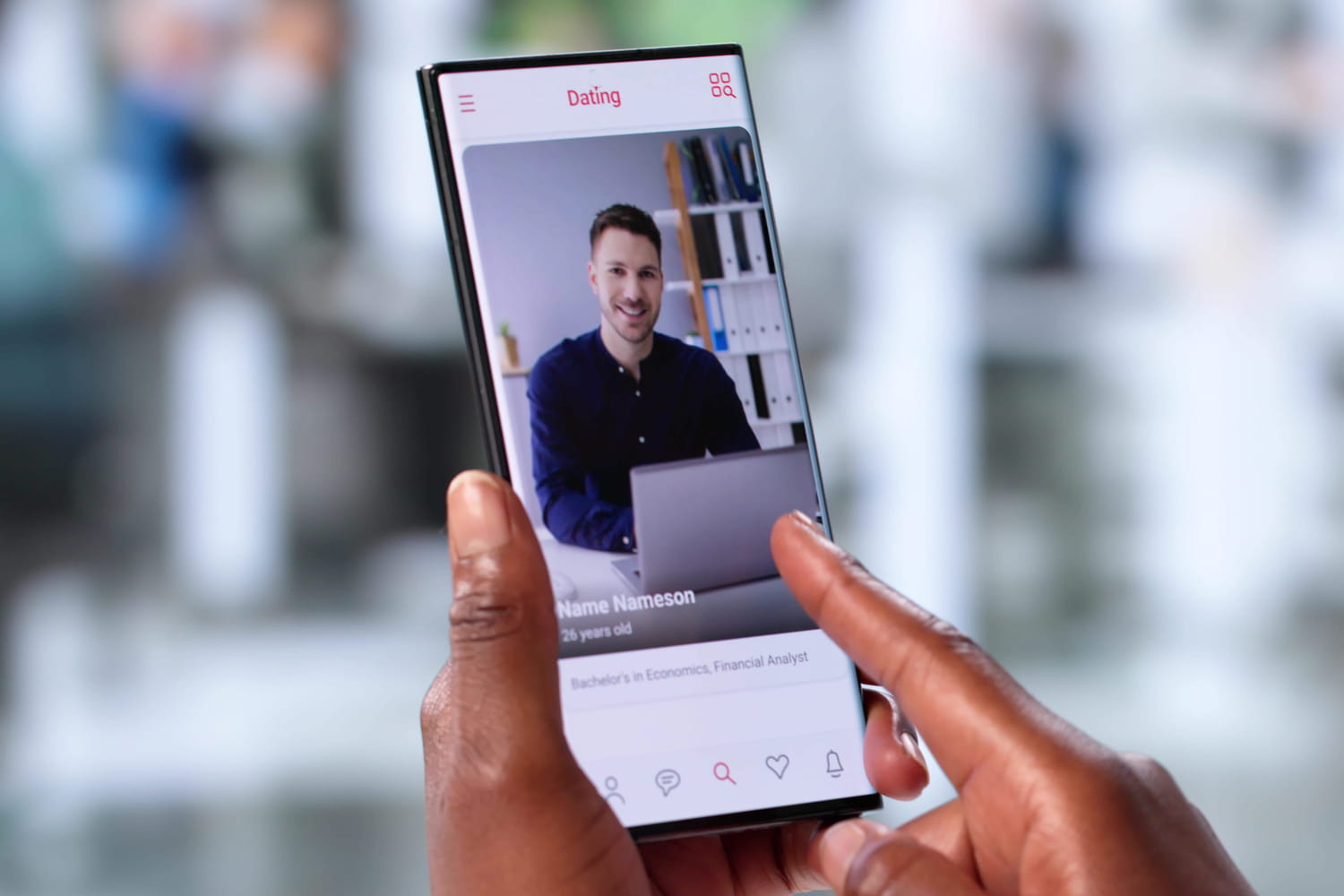



Behind the sweet words and perfect love stories sometimes hide dreadful scams, which trap the most vulnerable people. Faced with these very realistic fake profiles (far from the “fake Brad Pitt”), a new device promises to avoid the pitfalls.
In France, nearly 200,000 people are affected each year by romantic scams. Behind these scams are most often fake profiles, created to establish a relationship of trust before extracting money from their victims. On social networks, dating applications or private messaging, scammers primarily target the most vulnerable people, weakened by loneliness, a breakup or a need for attention. Under the cover of sincere feelings, these psychological traps can have serious emotional and financial consequences.
From now on, scammers perfectly manipulate artificial intelligence to make exchanges more fluid, more personalized and therefore more convincing. Today, the most frequent scams in France follow fairly clear geographical logic. Networks based in West Africa mainly target women, while those from countries of the former USSR target more men. The stories adapt: an engineer stuck on an oil platform, a woman who wants to escape a conflict and is looking for quick support. In all cases, the mechanics are progressive and it becomes difficult to spot fake profiles. Attachment is built before any financial request, often through simple and repetitive phrases like “I love you”, “I imagine our meeting and our life together” or even “I need help”. The request for money comes later, when the emotional bond is already well established.
According to Dmytrii Berezniakov, founder of a system aimed at combating these scams, three signals should immediately alert: “The man is abroad or leaves abroad immediately after the first exchanges”, “The man is handsome, athletic and has a profession that is both respectable and can require a lot of travel: soldier, engineer, doctor” and finally “Very limited access to the internet, no possibility of making video calls or being online at all times.” This trio often comes up in the files analyzed. It allows you to justify the absence of physical meetings while maintaining emotional closeness.
It is in this context that Verified Love was designed to structure these verifications and support people who have doubts. This completely free service allows you to analyze a profile, photos or conversations, then obtain confidential feedback in less than 48 hours. Designed as a prevention system, it works in several stages: identification of the profile, analysis of the elements provided, then discussion with a specialized team to understand the risks.
And, you should know that no one is really safe from this type of manipulation. “In 90% of cases when it comes to international online dating, you are dealing with a scam“, explains Dmytrii Berezniakov, while specifying that this does not mean that all international relationships are fraudulent, but that scammers massively occupy the field. Their objective is simple: to increase contacts and refine their methods. Some victims, already identified in their databases, can even be targeted several times with different identities. And with the improvement of tools, in particular AI, inconsistencies in messages are becoming increasingly rare, making traps even more difficult to detect.
A few reflexes can also help you keep perspective. Reverse image search can sometimes help you spot a stolen photo, but it’s no longer enough on its own. Some scammers anticipate this verification and use previously unseen images or their own identity. We must therefore broaden the analysis: consistency of exchanges, ability to respond precisely, systematic refusal of videoconferencing. When in doubt, it is also useful to talk about it with those around you, even if the person concerned is already emotionally involved. The outside view can help break the mechanics.