





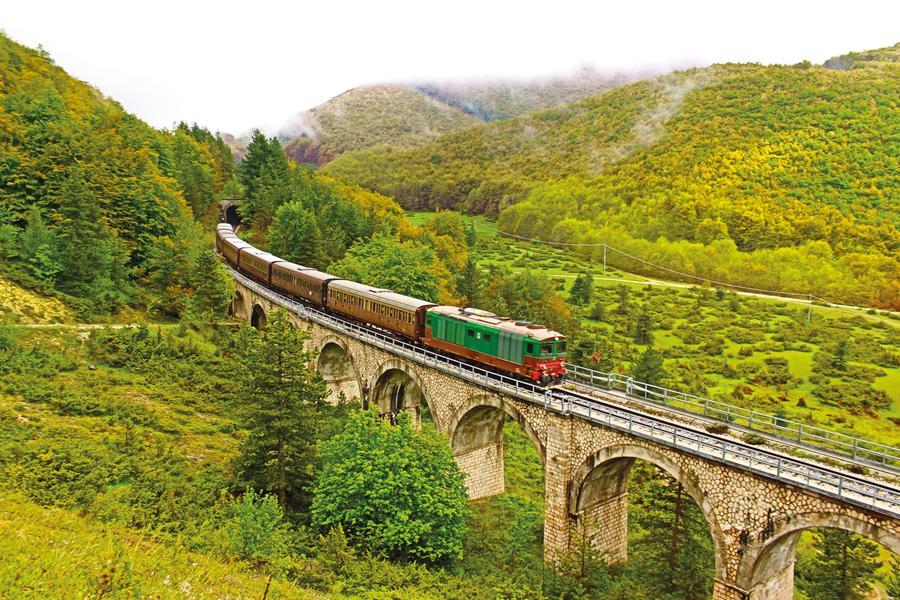
The party is here. On platform 1 of Sulmona station, just before 9 in the morning on a summer Sunday, an accordion, an accordion and a tambourine embellish the air with the insistent rhythm of a skip. The three musicians of the Banda dei Briganti play, sing ditties and the travelers who crowd next to the platform accompany the music by clapping their hands. Maybe someone would start dancing, but then their hands grab their cell phones because they have to photograph and film the arriving train. Here it is “the little Trans-Siberian of Italy”, the Parks Railway, which crosses the heart of Abruzzo and Molise on a route that alternates mountains, plateaus, woods and valleys.
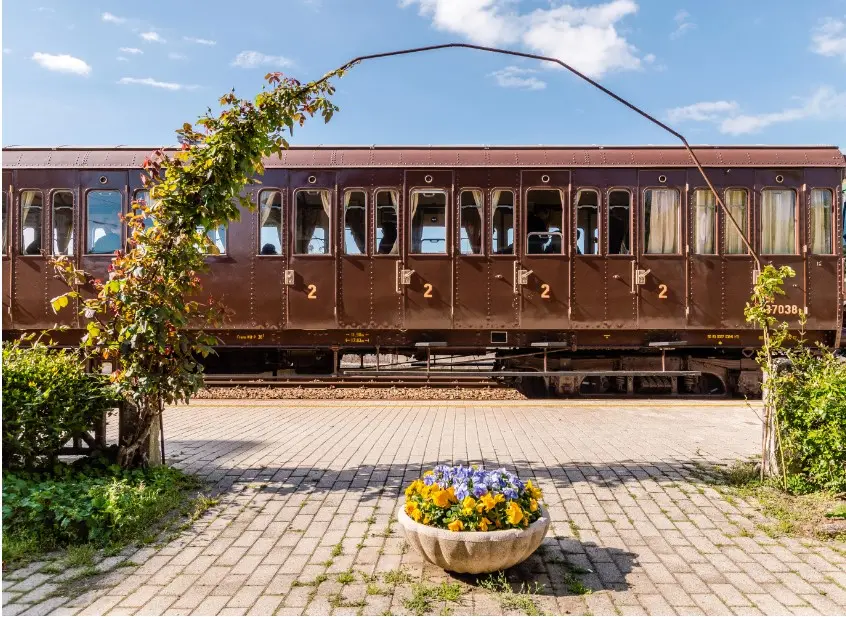
The train, hauled by a powerful Diesel D.445 locomotive, is made up of carriages called Centoporte. Entered into service from the mid-1930s, they owe their name to the multitude of doors present along the sideswhich allowed quick access to the numerous compartments, making them extremely efficient for regional traffic and for the flow of passengers in crowded stations.
Today around 400 people are boarding. Italians and foreigners, of all ages. Also joining the three musicians, the guides of Pallenium Tourism (travel agency specializing in railway tourism) and the train conductor, who is called Marcello, was born in Campo di Giove (where the train will stop) and has worked in the railways for 43 years.

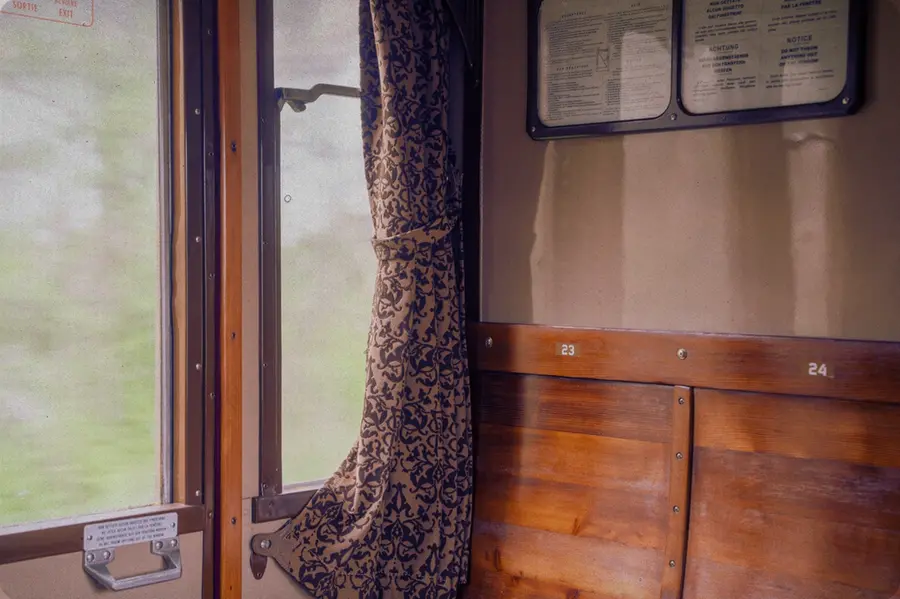
You are immediately fascinated by the beauty of the interior: the wooden seats, the shelves for luggage, the heavy brown curtains on the windows, the lamps hanging from the ceiling. A spartan, but at the same time elegant environment. The bathroom is tiny, with a sink in the corner, a wood-framed mirror, and a toilet only for use when the train is moving.

Today our train covers the journey from Sulmona to Castel di Sangro, on other dates the train reaches Carpinone, in Molise, even if the line ends in Isernia. The Sulmona-Isernia section was inaugurated on 18 September 1897 and is considered a masterpiece of railway engineering. 128.73 kilometers long, it crosses 25 kilometers within 58 tunnels. The route also reaches the second highest railway station on the Italian network, that of Rivisondoli-Pescocostanzo, located at 1,268.82 meters above sea level.

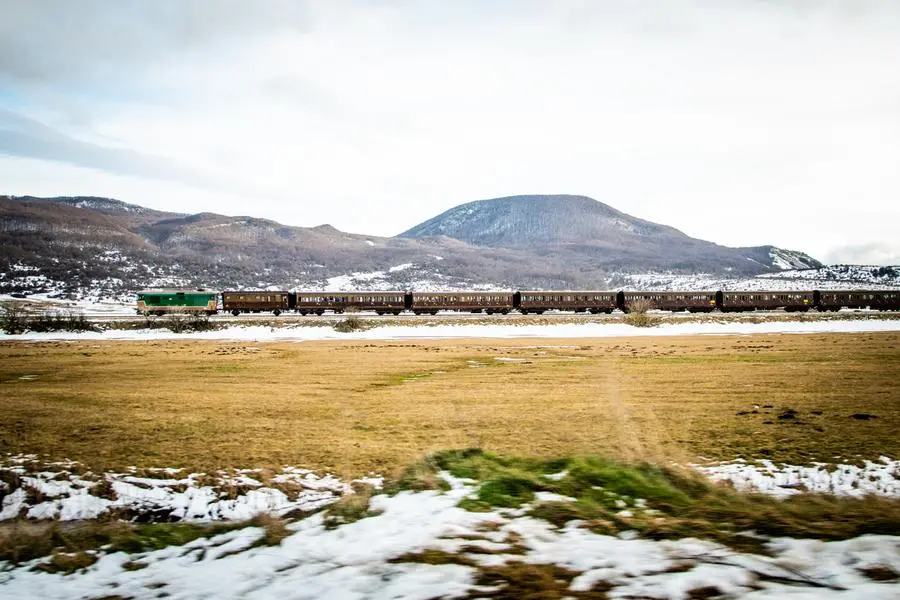
For over a century the line was an important route between the Adriatic and the Tyrrhenian Sea, between the internal provinces and Naples. Destroyed by the Germans during the Second World War, it was rebuilt and reactivated in the mid-1950s, but was never electrified. Then steam locomotives were used and then diesel railcars. From the mid-1990s the decline began and passenger traffic was increasingly reduced. The line was officially “suspended” between 2010 and 2011, but was not completely abandoned thanks to the tourism revival promoted by historic train enthusiasts in synergy with the FS Italiane Foundation.
The calendar includes departures all year round with return trips on the weekend. Even in winter, when the presence of snow makes the definition of the Italian Trans-Siberian a little less exaggerated for this route which would represent only a tiny fraction of the real Trans-Siberian.
We set off accompanied by the timely explanations of the guides. Leaving Sulmona, you go up the Gizio valley and pass first on one side and then on the other the picturesque village of Pettorano sul Gizio, which throughout history has had one of the highest migratory flows in the whole of Southern Italy. Then you cross an undulating plateau that leads to Campo di Giove, located at 1,064 meters on the south-western side of the Maiella. The train stops for just over an hour, giving you the opportunity to visit the historic center and refresh yourself with pizza and local sweets. It then continues crossing the long Maiella tunnel and the green plateaus of Abruzzo, treeless prairies surrounded by wooded slopes. A restful view.
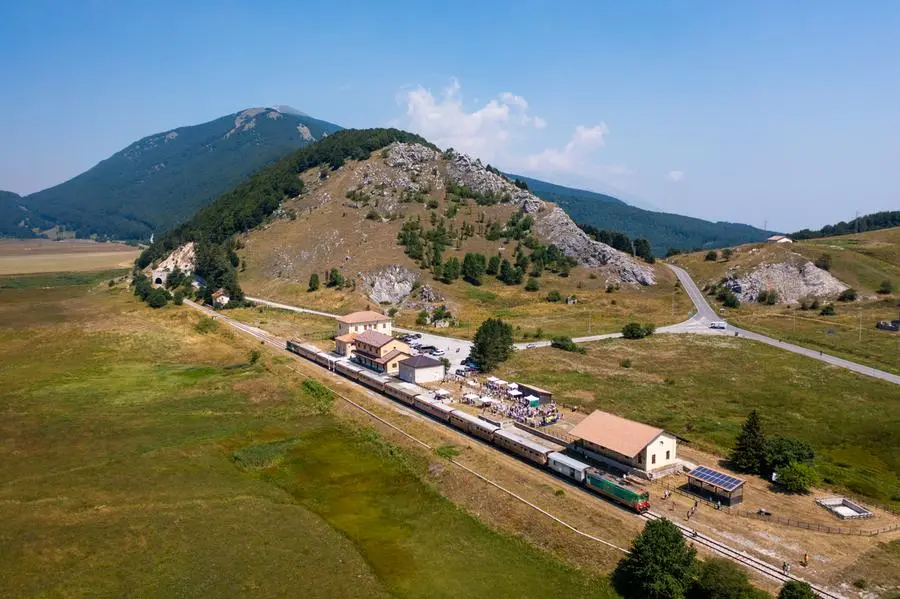
The next stop is in the Alfedena-Scontrone station (878 meters above sea level) where three different excursions depart for which you can sign up when booking: a guided excursion to Alfedena, a guided trekking in Scontrone, a visit to Barrea, immersed in the valley of the lake of the same name, territory of the Abruzzo National Park.
Those who remain on board finish the race in Castel di Sangro. There are just under four hours to have lunch, explore the historic center and its museums, relax in the cool along the banks of the Sangro river, one of the most fishy in Italy. The meeting point at the station is at 4.30pm, attracted by the animated rhythms of the musicians who accompany the return to Sulmona, scheduled for 6.30pm. Still time to have a feast of sugared almonds.