



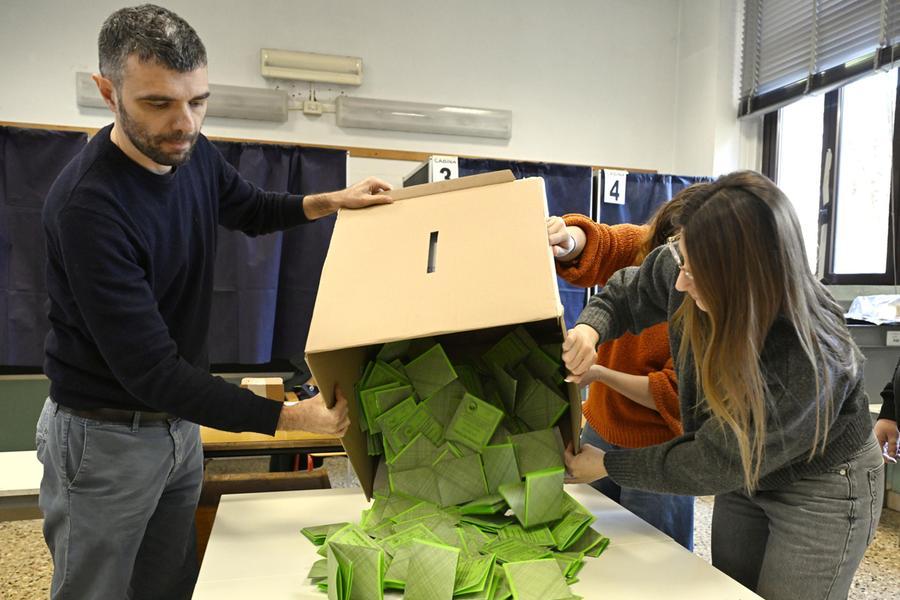
The turnout recorded in the constitutional referendum on justice reform represents a political and cultural fact of great importance, which deserves to be read beyond the simple numerical dimension. That 58.90% participation – over 27 million citizens – is not just a significant percentage: it is the signal of a country that, despite being affected by disillusionment and tiredness, has not given up on exercising its democratic responsibility when the institutional structure is at stake. A sign of clear discontinuity compared to the very low turnout of the last two elections: the 2025 repeal referendum (when 29.8% voted) and the 2024 European elections (49.7%).
In a time in which abstentionism seems to have become the dominant feature of electoral consultations, the return to the polls of such a large part of the electorate indicates that there are still issues capable of mobilizing consciences. The fact that it was a constitutional referendum – therefore without the quorum constraint – makes the data even more significant: those who voted did so by choice, not by necessity. It is an element that restores dignity to participation, removing it from purely instrumental logic.
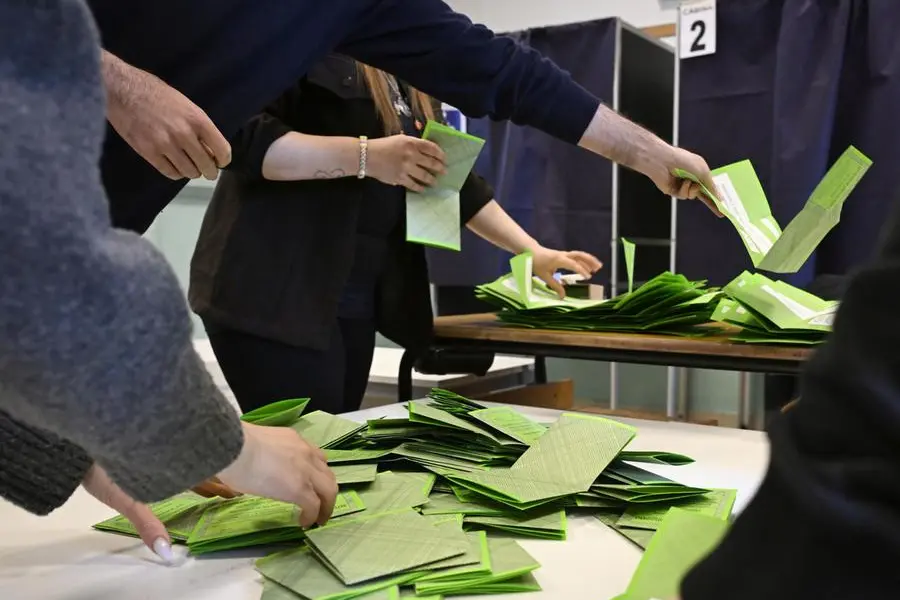
Furthermore, the territorial distribution of the vote is striking. The North was the driving force but the South, although lagging behind for various reasons (many students away from home who could not vote, a higher emigration rate than the rest of the country) shows less clear signs of disaffection than in the past. It is an Italy that remains divided in its electoral behavior, but which appears less resigned than is often said.
The regions where the most votes were cast, again according to partial data, are Emilia Romagna and Tuscanywith percentages above 66%. Umbria follows with 65%; Lombardy, Marche and Veneto with 63%; Piedmont and Liguria with 62%. Fewer votes were cast, however, in Basilicata (53.27%), Trentino-Alto Adige and Sardinia (51%), Campania (50%). As far as the big cities are concerned, there is a record turnout Florencewith 70%, followed by Milan (64.6%) e Rome (62.56%). In the South the figures are lower: turnout of 53.9%. Bariby 49.28% a Naplesby 46.42% a Palermo.
Another interesting element concerns the very nature of the question. Justice reform is a complex, technical matter that is not immediately accessible. Yet it did not discourage citizens. This suggests that, when public debate manages to make the stakes perceptible – including through political polarization – the voter responds. It is therefore not the excess of complexity that generates abstention, but rather the perception of irrelevance.
From this point of view, the referendum is part of a broader dynamic: the growing personalization and politicization of institutional choices. The vote is not just about a reform, but also becomes a judgment on government action. It is a mechanism that can simplify participation, but which risks reducing the depth of discussion on the contents. However, the fact remains that it worked in bringing people back to the polls.
The comparison with recent consultations is eloquent. If less than half of those entitled to vote voted in the 2024 European elections and the most recent repeal referendums remained well below the quorum, this round marks a countertrend. We are not faced with a historical record, but with a turnaround that cannot be underestimated.
Participation is not just a civic act, but a form of co-responsibility towards the common good. In an era marked by individualism and fragmentation, the return to broad participation indicates that a fabric of active citizenship still exists, capable of questioning the future of institutions.
It now remains to be seen whether this momentum will be episodic or whether it could translate into a renewed habit of participation. The challenge, for politics and for intermediate bodies, is not to disperse this heritage. Because a democracy lives not only on its rules, but on the vitality of the people who live there. And when they return to vote en masse, it means that – at least for a moment – that vitality has been rekindled.