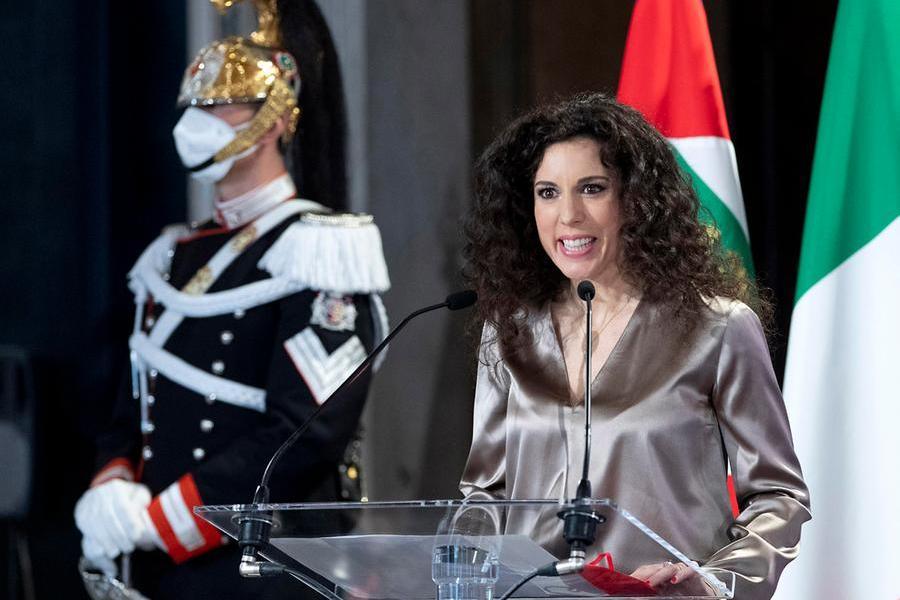






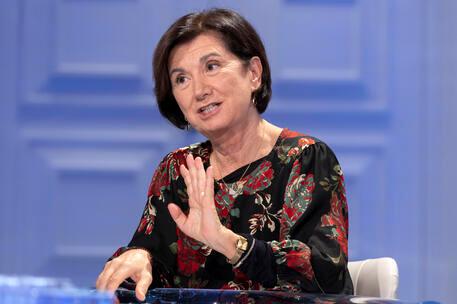
There is one word that runs through the entire message sent by the Minister for Family, Birth and Equal Opportunities, Eugenia Roccella, at the conference promoted by FISM at the Catholic University of Milan: listening. Not as a formal gesture or pedagogical slogan, but as a shared responsibility between parents, children, school, institutions and territory.
The conference, significantly titled “Listen to families… and listen to each other”concluded a research and training journey dedicated to the relationship between school and family, focusing on a crucial question for our time: who educates today? And above all: who really listens?
In her speech, the minister identifies the family as the first place for mutual listening. “Listening to the little ones”, he writes, means recognizing them as people and not simply as recipients of rules or services; but it also means educating children to listen to adults, within relationships that do not erase educational responsibility. It is a call that comes in a historical period marked by profound relational fragility, social isolation and the growing difficulty of many parents in feeling supported.
According to Roccella, in recent decades the family would have been progressively “emptied of weight and meaning”while social policies would have ended up fragmenting family units into separate categories, intervening almost exclusively on emergencies or fragilities. A criticism that the minister also extends to the relationship between institutions and educational realities: too many times, she observes, external support to the family has been interpreted “not from the perspective of an alliance but from an alternative perspective”, as if the educational network should replace the parents’ task instead of accompanying it.
The theme of contemporary loneliness also emerges forcefully in the message, aggravated by the demographic crisis and the pervasiveness of the digital. The rarefaction of parental and community networks, the minister claims, has produced a more fragile society and less capable of listening. Children often grow up immersed in virtual relationships that multiply connections but not necessarily human closeness. And adults, for their part, risk oscillating between two opposite extremes: educational absence or permanent sense of guilt.
This is where the concept of “educating community” comes in, referred to several times by the minister. A community in which family, school, third sector and institutions do not perceive themselves as separate worlds but as co-responsible subjects. For Roccella, subsidiarity is not an administrative slogan: it is the method with which politics should support relationships without replacing them.
In this context, the network of Family Centers represents one of the main tools on which the Government is focusing. The minister recalls the 115 million euro financing intended to strengthen these territorial structuresdesigned as permanent points of reference for orientation, services and educational support. A sort of “caf for families”he defines them, capable of offering an ear to teenagers and parents and of building links between the different realities of the territory.
The passage dedicated to the relationship between family and school is also particularly significant. In recent years, the educational dialogue has often appeared to be fractured by mutual mistrust: on the one hand families left alone, on the other teachers perceived as exclusive delegates of education. Roccella instead claims the need for a stable alliance, made up of co-responsibility and mutual presence. Hence the reference to measures such as the strengthening of the nursery bonus and the summer opening of schools, interpreted as tools to encourage greater integration between family time and educational time.
The minister’s message intercepts a decisive issue also for the Catholic world and for entities such as the FISM, which have always been committed to keeping education, relationships and territory together. In a society that tends to delegate everything to structures or algorithms, the call to listen to each other sounds like an invitation to rebuild concrete bonds. Because educating, the Milanese conference seems to say, is not simply transmitting skills: it is first and foremost creating spaces in which someone can feel seen, recognized and listened to.