





Far from being an exception, there are actually many species capable of changing sex during their lifetime. Fascinating reproductive strategies, which prove that animals will never cease to amaze us.
No, humans are not the only ones who can change sex: many animals can do it too. For them, there is no need to go through surgery, their metabolism does the work on its own when it becomes necessary. We all know the term hermaphrodite, which refers to having both male and female reproductive organs. The best-known example is the snail, but it is also the case for earthworms, or certain scallops. On the other hand, few of us know of the existence of other types of hermaphroditism: we speak of successive hermaphroditism when the same individual changes sex during their life.
According to scientists from the Geneva Natural History Museum, “sex change in animals is not rare at all” but “it is impossible to quantify the number of species” capable of carrying out such a transformation, quite simply because we do not yet know all the species present on Earth. On the other hand, we already know a certain number of animals which manage to modify their biology, in one direction or the other: protandrous hermaphrodites are born male and then become female, while protogynous hermaphrodites are born female and then become male. Moreover, some can even change sex several times, as is the case with oysters for example. Fascinating survival strategies, which differ according to each species, and which above all prove that the animal kingdom is much more complex than one might think.
Successive hermaphroditism is mainly observed in fish and molluscs. One of the most telling examples is undoubtedly that of the clownfish. But the Disney animated film is not entirely faithful to reality: in real life, Nemo’s father would surely have become a female after losing his wife. Clownfish live in a matriarchal diet, where a female dominates a group of males. Only the dominant male can reproduce with the female. But if she dies, he takes her place. He changes sex to take the lead of the group and become the new reproductive female, thanks to a modification in his hormonal production: his male organs regress, while ovarian tissues develop.
In the brown grouper, it is the opposite: it does not have sex before the age of 4 years, lives as a female between 5 and 12 years, then becomes male until the end of its life (around 50 years) if the dominant male disappears. Its cousin, the common sapphire, is even more special. In 2016, researchers at the University of Florida discovered that it could change sex around twenty times a day! And the reason behind this extraordinary ability is even more incredible: they alternate their sexual role with their partner in order to maintain their cooperation… and to avoid deception.
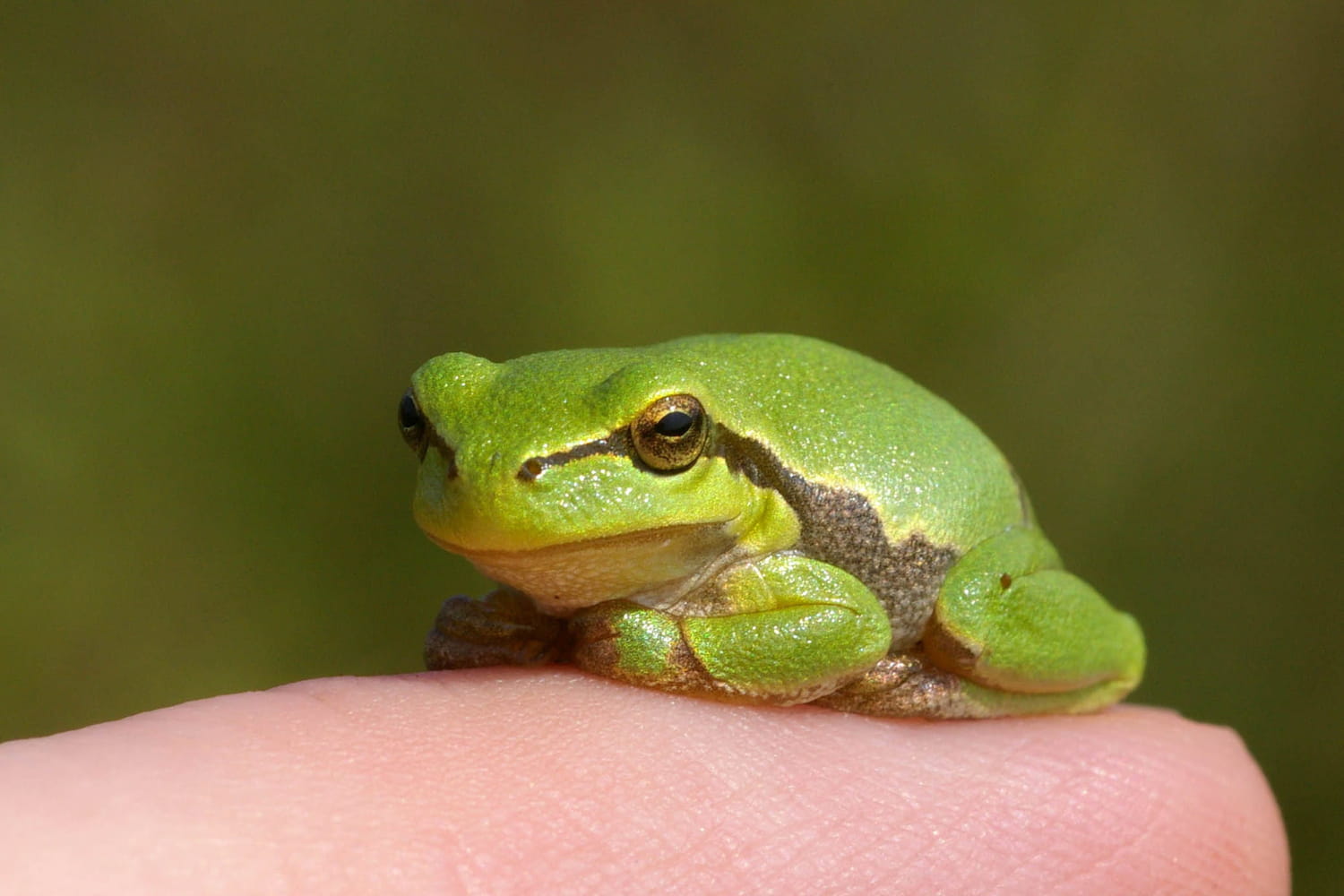
Unfortunately, other animals are undergoing sex changes due to climate change. If certain species of frogs transform in the absence of an available partner, other sexual inversions can be attributed to humans: as explained GEOmale tadpoles can become female after being exposed to certain pollutants. Although it is no longer officially on the list of threatened species since the end of 2025, the green turtle is also a victim of human activity: its sex is determined by the temperature of the nest. Eggs become male in a cold environment and female in a warm environment. With global warming, there are more births of females than males, which could ultimately cause problems for the reproduction of the species.
Concretely, sex change can take multiple forms within the animal kingdom. Whether triggered by internal factors such as age, or by social dynamics such as the loss of a dominant individual, this phenomenon shakes up our certainties. It demonstrates that biology is far from being fixed and that transition, far from being an anomaly, is a perfectly natural adaptation mechanism.