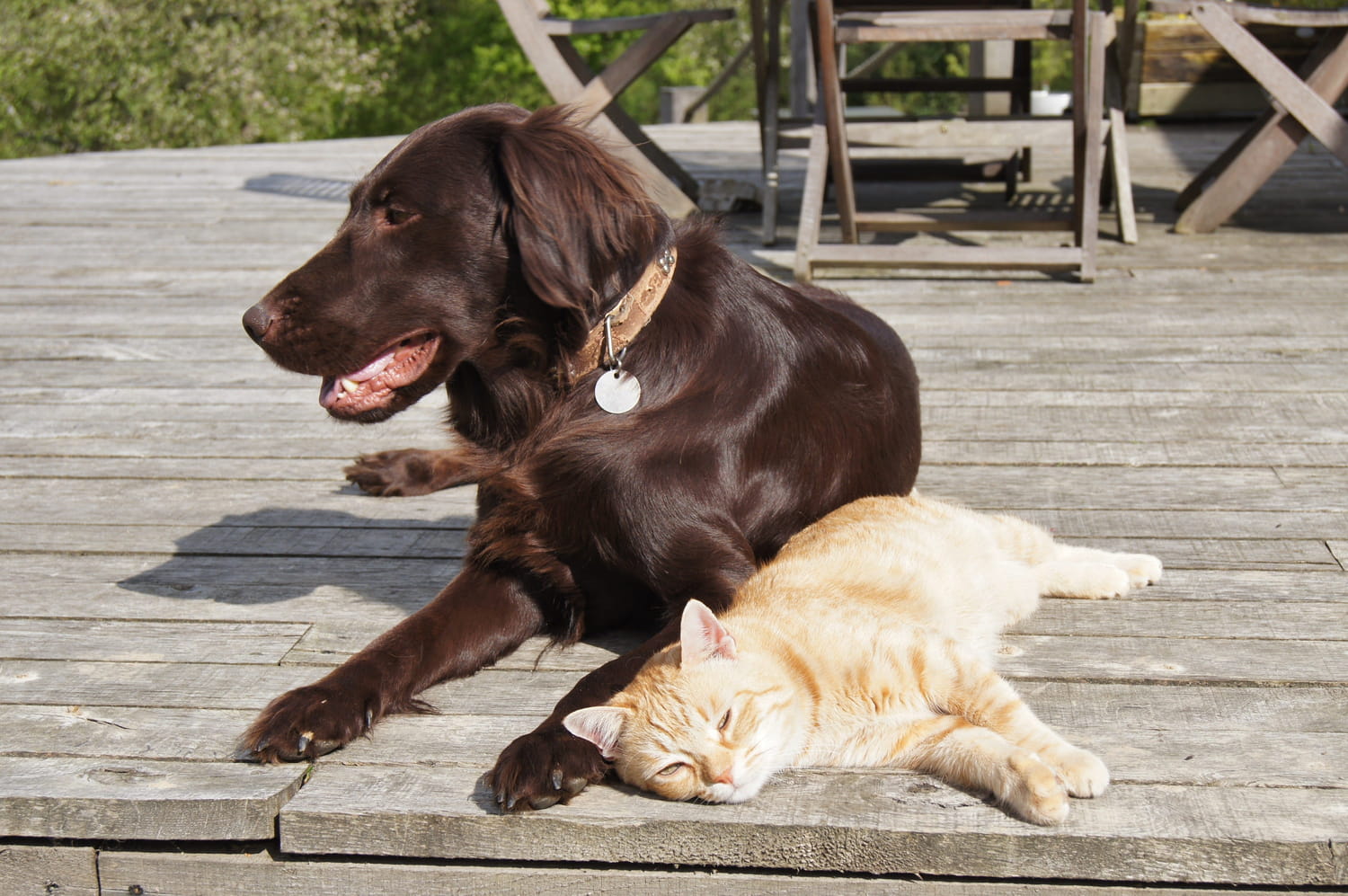
While all dogs and cats can suffer when the thermometer soars, certain breeds find themselves in particular difficulty. Their main problem: they struggle to breathe properly when it is too hot.
When temperatures exceed 35°C and the nights remain sultry, veterinarians always see the same problems recurring. Dehydration, exhaustion, heat stroke… The risks increase rapidly for pets. Many owners still think that a bowl of water is enough to protect their dog or cat. In fact, the heat can put a strain on their bodies in just a few hours. Unlike humans, they hardly sweat. To lower their body temperature, they rely mainly on their breathing. And, when this system malfunctions, the problems begin.
A walk in the middle of the afternoon, a garden without shade or a few minutes in a parked car can be enough to raise an animal’s temperature. Even when it’s “only” 22°C outside, the interior of a car can become a real trap. Indoors, temperatures can reach dangerous levels in a very short time. Verandas exposed to the sun or certain corners of a terrace can produce the same effect. Every summer, veterinarians therefore remind us of the same instructions: never leave an animal in a closed space heated by the sun.
And, among the breeds most exposed during a heatwave, we find the pug in dogs and the Persian in cats. Their very flattened muzzle, which often makes them popular with the public, becomes a real handicap when temperatures rise. It reduces their breathing capabilities and prevents them from panting as effectively as other animals. Result: they dissipate heat less well and can find themselves in distress much more quickly. Among the warning signs, we note very rapid breathing, significant salivation, agitation or even difficulty moving normally. At this stage, you must react immediately, put the animal in a cool place, offer it water and contact a professional.
However, before these behaviors appear, a few reflexes must be adopted. They must be able to access fresh water at all times, easily find a shady place and enjoy a little air. Owners also tend to forget another important point: pests love high heat. Fleas and ticks multiply more easily during the summer. Maintaining antiparasitic treatments therefore helps to avoid itching, infections and some unforeseen visits to the veterinarian.