



Between the GPS on the holiday highway and the videos filming on the terrace, the battery of smartphones is once again becoming a sensitive subject. Above all, a bad habit accelerates the wear and tear of the phone and no one notices it.
Smartphone batteries have remained surrounded by conflicting advice for years. Some swear that you should never let your phone go too low, others say on the contrary that you should regularly drain the battery completely. Between the tips seen on social networks, the advice of friends “who know about it” and the settings hidden in the settings, many end up applying routines without really knowing if they are good or bad for their device.
However, specialists who work on lithium-ion batteries are quite clear: certain everyday habits really accelerate the chemical aging of smartphones. And this aging ends up becoming visible over time. At first everything seems normal. Then one day the phone lost 12% battery after 20 minutes of Spotify and three voice notes. A few months later, you already have to look for a charger in the middle of the afternoon.
According to Chao-Yang Wang, director of the Center for Electrochemical Engines at Pennsylvania State University, one specific charging habit can accelerate the overall wear of a battery by about 10 to 15 percent over its life: consistently charging your phone to 100 percent. Specialists explain that a lithium-ion battery supports repeated partial charges better than constant maintenance at maximum capacity. Experts therefore recommend keeping the smartphone between 20% and 80% on a daily basis, even if a full charge remains useful before a trip, a big day or a long journey.
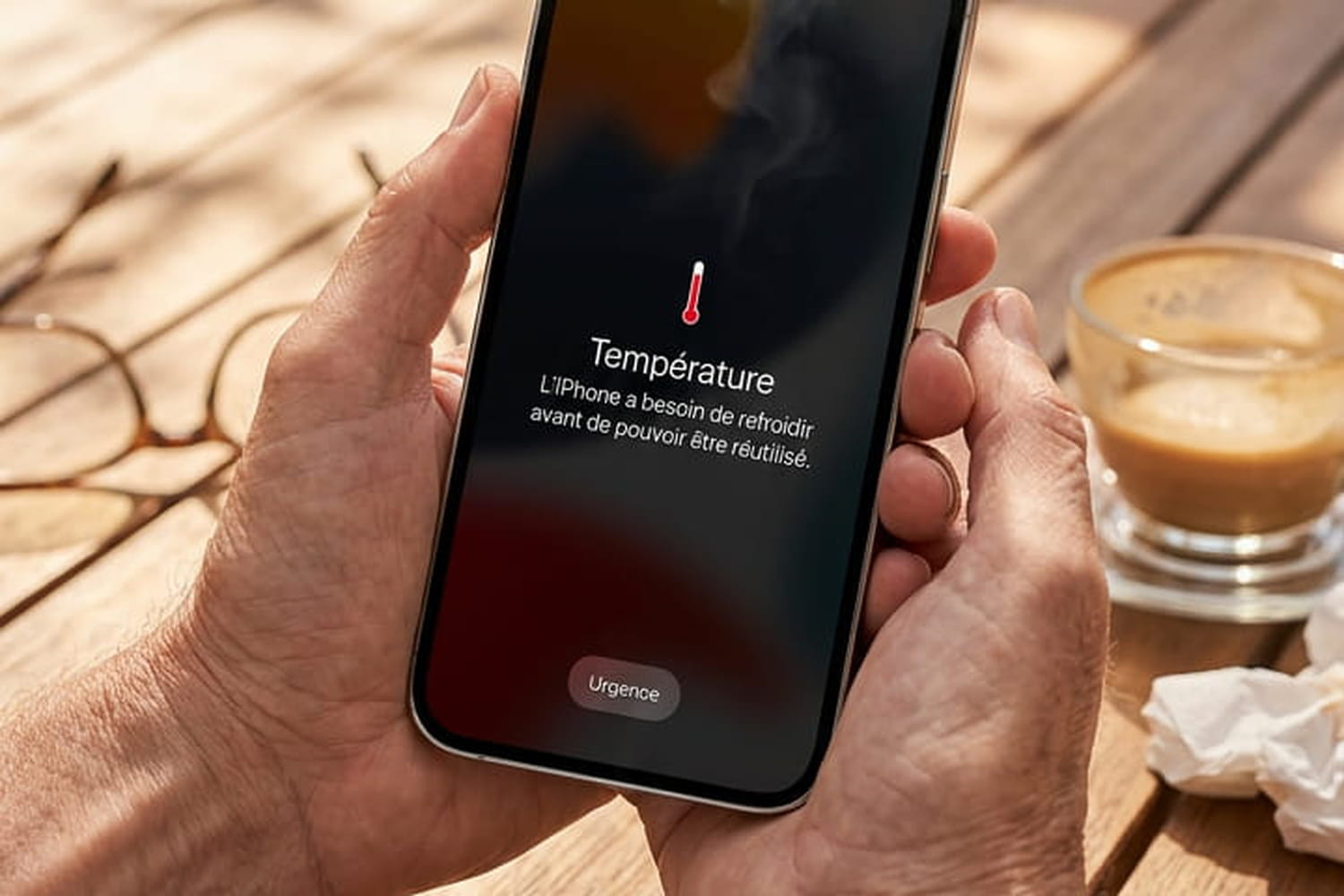
Note that heat also plays a role, especially at this time of year. Leaving your phone in direct sunlight on a coffee table, in a car or on a towel at the beach can quickly cause your internal temperature to rise. And batteries hate that. Same thing for those who use fast chargers. Speed produces a lot of heat. Dibakar Datta, professor of mechanical and industrial engineering at the New Jersey Institute of Technology, therefore recommends not systematically using ultra-fast charging when it is not necessary.
And for those who already feel their battery getting tired, it is possible to check its status directly in the settings of their smartphone. When the capacity drops below 80%, specialists often advise replacing the battery rather than changing the entire device. An operation which costs much less than a new phone costing more than 1,000 euros. Especially right now, when the vacation budget is already melting faster than a battery left in the sun.