





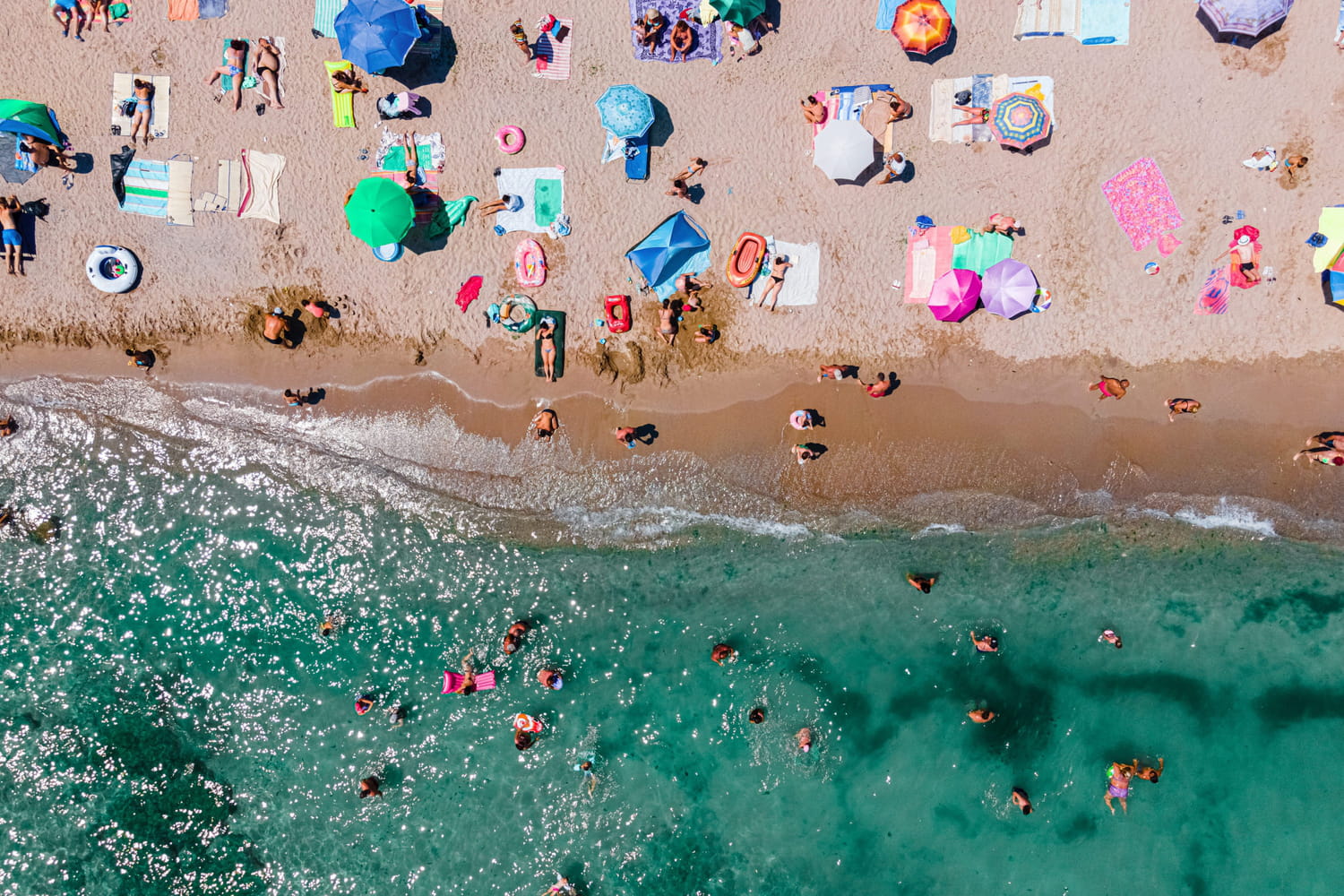
The summer solstice is an astronomical phenomenon that marks the start of the summer season in the northern hemisphere.
The summer solstice is an astronomical event which corresponds to the longest day of the yearthat is to say that the duration of sunshine is maximum on that day. Indeed, night falls later than other days. The summer solstice especially marks the change of season : countries in the northern hemisphere move from spring to summer. But how can we explain such an astrological phenomenon? Here is all the information you need to know about the summer solstice.
When is the summer solstice in 2026?
In 2026, the summer solstice will take place Sunday, June 21 at 10:24 a.m. sharp (Paris time, i.e. UTC+2 in summer), according to data from the Institute of Celestial Mechanics and Ephemeris Calculation. The summer season will then officially begin on this date until September 23, the day of the autumnal equinox.
Furthermore, the date of the summer solstice does not always fall on June 21. Indeed, this celestial phenomenon can also take place on June 19, 20 or 22. It depends on the evolution of the Earth’s rotationbut also the introduction of the Georgian calendar in 1582. This new calendar introduced the leap year every 4 years, in an attempt to reduce the gap between a calendar year which lasts 365 days and the revolution of the Earth around the Sun which generally lasts a total of 365 days, 5 hours and 48 minutes.
What is the summer solstice?
The summer solstice is an astronomical event which is observed beyond the Earth once a year. At this time, the northern hemisphere is most oriented toward the sun. As a result, the southern hemisphere is far from the sun. In the following days, the sun remains visible in the sky for longer, making the much longer summer days.
What is the meaning of the summer solstice?
In France as throughout the northern hemisphere, the summer solstice is the longest day of the year. The Sun is at its highest height in the sky of the year, early in the morning until late in the evening.
What is the summer solstice festival about?
Some countries in the northern hemisphere celebrate the change of season by organizing a summer solstice celebration. It’s a tradition that goes back several years. Originally, in the Celtic calendar, it was a pagan festival, named Lithawhich was dedicated to the power of the Sun, an essential element for all forms of life. Even today, in France, a few days close to the summer solstice, there is St. John’s Day which celebrates summer and the harvest. In the Pyrenees and in certain regions of Spain, we also find summer solstice fire festivals which traditionally take place on the night of June 23 to 24.
What are the rituals of the summer solstice?
Several rituals surrounded the summer solstice festival. During the Litha festival, interior and exterior rituals were respected, such as a salutation to the Sun in the morning, a walk in nature to reconnect with the elements, a bonfire to celebrate the element of fire and light. In France, solstice fire festivals have some similarities with the pagan festival, since at nightfall, the inhabitants seize torches to light pyres from the tops of the mountains. During these festivals, communal meals, songs and dances are also organized. The general idea is to regenerate social bonds and strengthen feelings of identity for some. For adolescents, this moment would symbolize the transition to adulthood.
- Summer solstice from 1583 to 2999. IMCCE: https://www.imcce.fr/newsletter/docs/Solstice_ete_1583_2999.pdf