






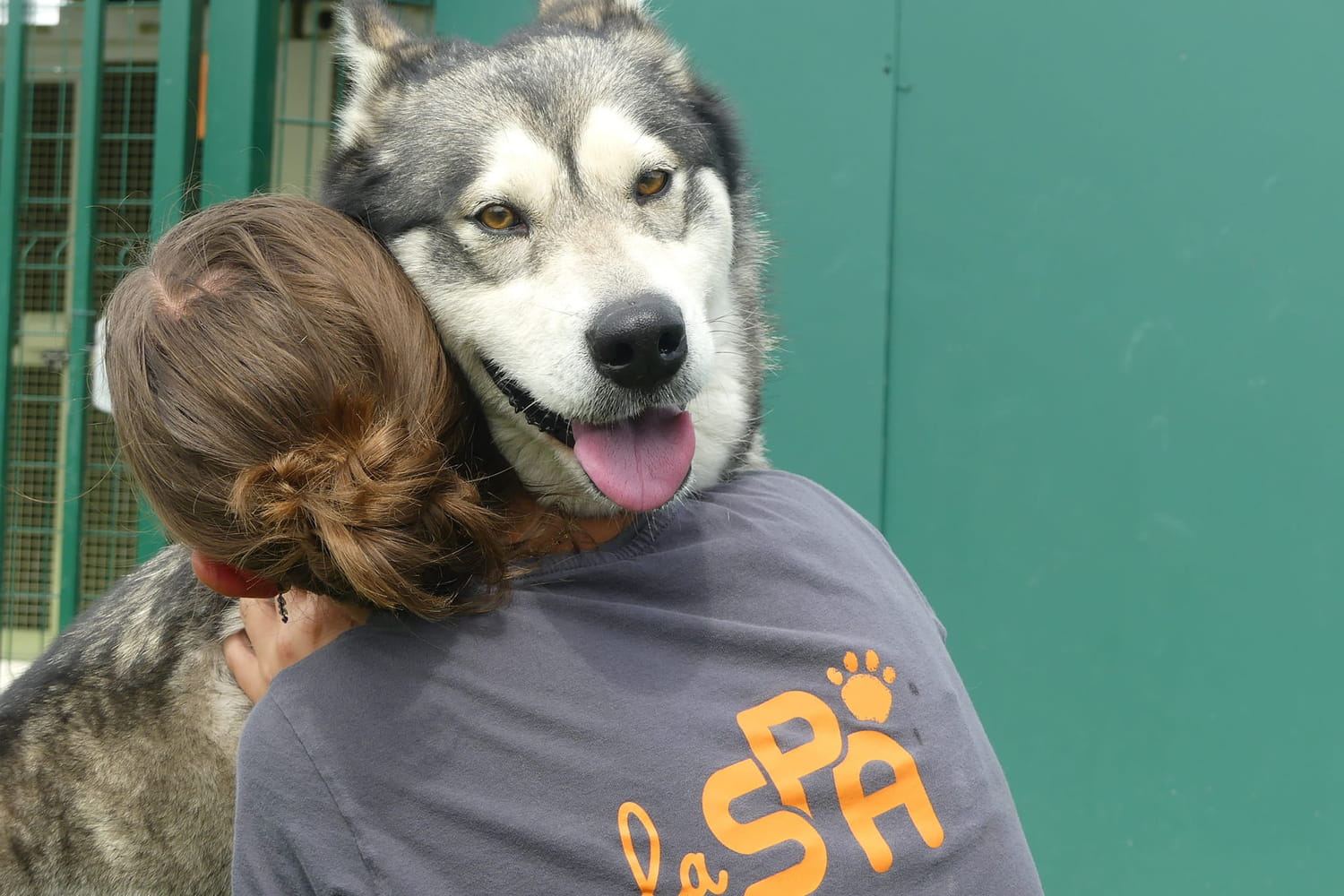
Each year, the SPA collects more than 40,000 abandoned animals, many of which are dropped off directly at the counter by their owners. Jacques-Charles Fombonne, president of the association, explains to us how these “ethical” abandonments happen.
If there is one subject on which everyone seems to agree, it is the ignominy behind animal abandonment. And yet, each year in France, the number of animals left behind is estimated between 200,000 and 300,000. If the figures are difficult to quantify for associations, which use different methodologies, the SPA alone collected no less than 42,373 animals in 2025: “Two thirds cats, one third dogs, then about 3 000 new pets (NAC), and a few hundred equines”lists Jacques-Charles Fombonne, its volunteer president.
But in the law as in the eyes of the Animal Protection Societythere are actually two types of abandonment. On the one hand, the reprehensible abandonments that we all imagine, “by the side of the road” or in the forest. These are punishable by 3 years of imprisonment and a fine of 45,000 euros, or even up to 5 years and 75,000 euros in the event of aggravating circumstances leading to the death of the animal, for example. And on the other hand, there are more “ethical” abandonments, when the owner goes to a shelter to entrust their animal. “When it is done for the benefit of an association, it is not considered as abandonment in the criminal sense of the term. It is a transfer of property. It’s purely the intention: I’m bringing you my dog because I’m transferred to the other side of France, I can’t keep him in my little apartment… It’s obviously abandonment, but it’s not reprehensible.”explains to us Jacques-Charles Fombonne.
It’s a lesser evil and obviously, it is better to bring your animal to an association rather than leaving it on the side of the road, where its life could be put in danger. But unfortunately, in addition to the absence of criminal risk which many ignore, “being ashamed” and fear “to be taught a lesson” are two “huge obstacles to ethical abandonment”. So, to prevent fear of judgment from pushing owners to abandon their animals in cruel conditions, the SPA has a clear policy: “We never ask people why they give up. The reasons are always bogus anyway. We don’t ask the question because they lie to us, and because it must be very humiliating.” The only thing that a volunteer or an employee of the association will be able to say is rather “Thank you for abandoning him to us rather than leaving him by the side of the road.” A strong message which aims above all to “make people responsible, even if they only come there to get rid of it”.
But the president of the SPA assures him, “ultimately there are very few abandonments at the side of the road” because the identification of domestic animals is obligatory: “We see that nearly 95 % of dogs are identified, unfortunately less among cats. So it’s still infinitely more difficult to give up. And then, even if we know that the law is relatively effective, when you incur a fine of 45,000 euros, it’s a bit of a deterrent.” Moreover, according to the experience of Jacques-Charles Fombonne, abandonment happens very often.reluctantly”because the owner is no longer able to take care of his companion, following a life accident or financial difficulties for example.
A recent study carried out by Ipsos for Santévet shows that more than one in four French people have already deprived themselves of outings, vacations or even clothes for their pet. “From an emotional point of view, it must be unbearable to abandon an animal that you love simply because you deprive yourself of eating to give it its food, and you can no longer do it. Even though the dog loves you, and when you put the leash on the SPA counter, he looks at you as if to say ‘What are we doing this afternoon?’ So we never ask why.”concludes the president of the SPA.