Unlike raw vegetables which can irritate the intestines and cause bloating, this vegetable made up of 92% water facilitates digestion even after a rich meal.
At the moment, the digestive system and intestinal transit are in great demand between barbecues, repeated aperitifs and a change of pace. Bloating, heaviness and abdominal swelling then occur without warning. In the collective imagination, to keep a flat stomach in summer, the immediate reflex is to turn to large salads of raw vegetables, such as peppers or onions. While it is true that they provide freshness, they are often rich in hard fiber or fermentable sugars which cause the intestine to swell. At the same time, a seasonal vegetable succeeds in establishing itself as the true ally of digestive comfort.
Research in digestive nutrition, in particular the work carried out by Monash University on irritable bowel syndrome, highlights the benefit of foods low in FODMAPs, these very poorly absorbed short-chain carbohydrates which ferment in the colon. Consumed regularly during the summer season, this vegetable significantly reduces gas production and abdominal distention. Totally full of water and protective fibers, it has excellent digestibility while being very low in calories (around 25 calories per 100 grams), which makes it a real anti-bloating shield. This is also the case for fennel seeds, which we do not hesitate to sprinkle on our dishes in summer.
The superstar vegetable for digestive comfort is eggplant. According to the official ANSES nutrition table (Ciqual), eggplant is made up of more than 92% water and contains almost no fermentable carbohydrates compared to other summer vegetables. By trapping excess water and facilitating elimination without attacking the mucous membrane, it allows for rapid deflation. However, be careful when preparing it: its spongy flesh absorbs fat very easily, which can make digestion difficult if it is cooked in too much oil.
Eggplant also provides an interesting quantity of soluble substances (notably pectin), which forms a soft gel on contact with water in the digestive tract. This gel regulates transit without irritating the intestinal walls, unlike the insoluble fibers of certain raw vegetables. It also contains powerful antioxidants, such as nasunins housed in its purple skin, which protect cells from oxidative stress.
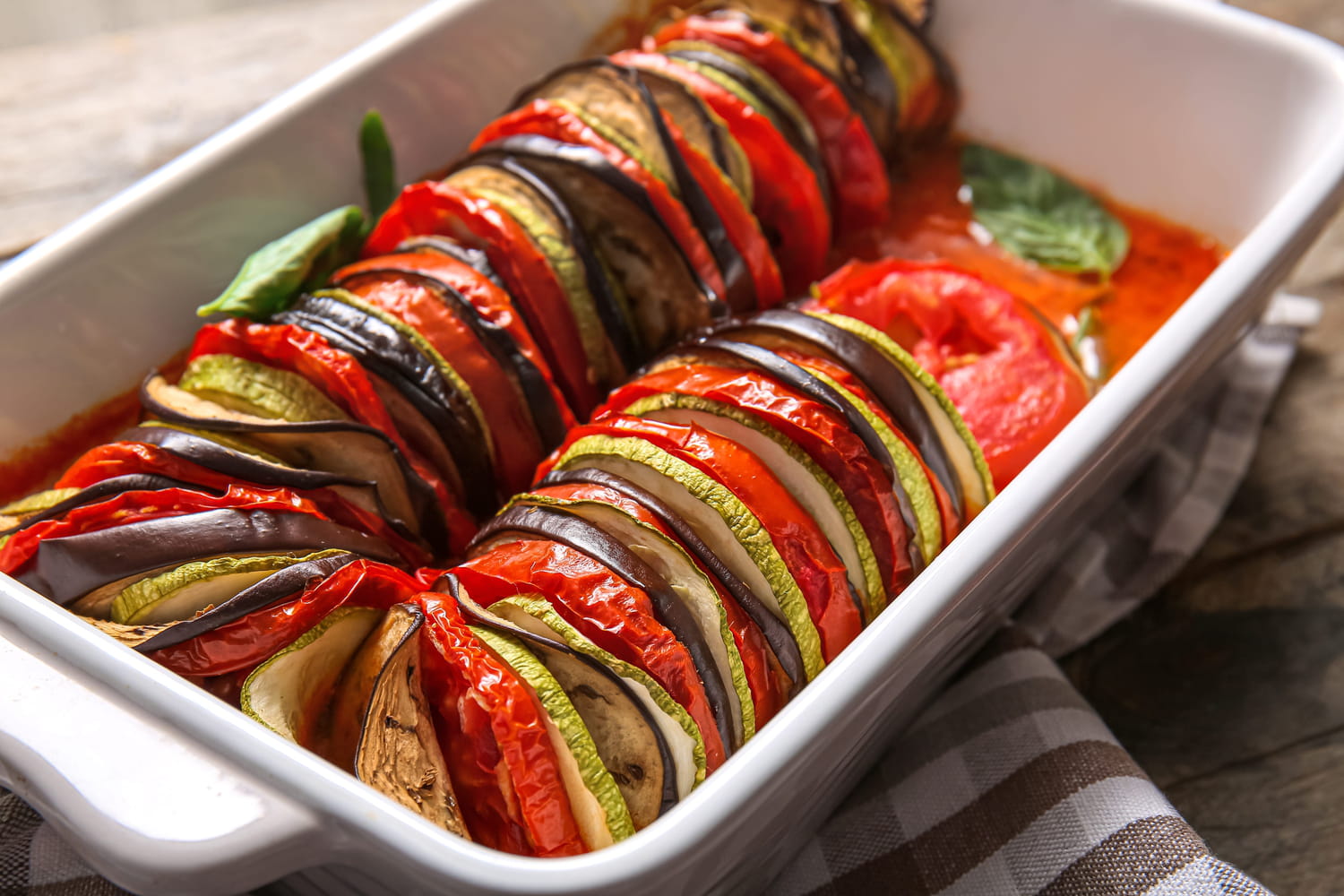
A must in July and August, eggplant is very easy to cook: grilled on the plancha or on the barbecue with a simple drop of olive oil, candied in the oven into light eggplant caviar, or even simmered in a homemade ratatouille. Its melting and sweet flavor makes it a comforting dish for the stomach, perfect for resting your digestive system after a richer meal.