






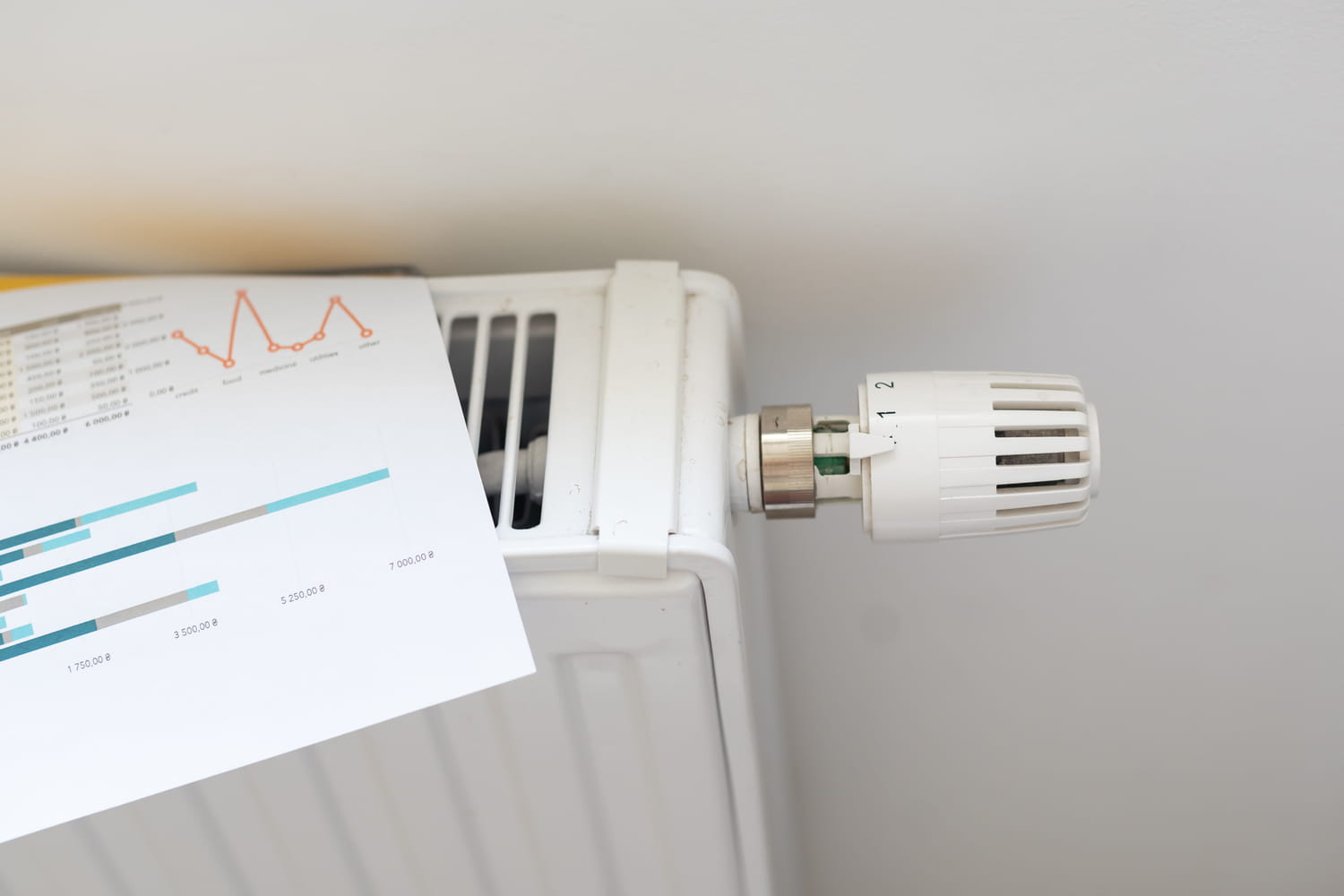
Do you want to limit your heating bill while enjoying a comfortable temperature? All you have to do is apply the very simple 3 degree rule.
Every year, it’s the same thing: heating weighs on the energy bill and everyone is looking to reduce costs without losing comfort. And in this quest, two clans clash. Some people loudly proclaim that you should never turn off the heating, while others say that the savings will be substantial if the heating is not on all the time. It’s difficult to navigate as experts disagree. To see things more clearly, you just need to adopt a very simple rule that allows you to limit heating-related expenses. This is even a recommendation from ADEME, the ecological transition authority.
Of course, turning off the heating whenever you are away limits energy consumption immediately: if it is not running, it does not consume electricity. On the other hand, if the temperature of the home drops too low, a peak is then expected to bring back the heat. And too low a mercury can also create problems with condensation and mold in the walls and behind furniture.
What you need to know before adjusting your heating is that just one degree less represents 7 to 10% savings on the bill. It is therefore in your best interest to play with the thermostat to reduce your bill. And especially in case of absence. The 3 degree rule therefore recommends turning down your heating as soon as you leave your home: if your comfort temperature is set at 19°C, you will therefore need to go to 16°C in the event of a short absence such as a day of work or a long outing for example.
This advice, almost mathematical, is also valid in unoccupied rooms. You can lower the temperature, taking care not to drop below 16°C to avoid heat loss to neighboring rooms and to limit condensation. In a bedroom, hallway or office, it is therefore the ideal temperature when no one is using it.
By adjusting the temperature and adapting your heating to your habits, everyone can successfully combine well-being and energy savings. The main thing is to find the right balance because ultimately, there is no single solution, but a set of small actions which, cumulatively, can have a significant impact on the energy bill.