






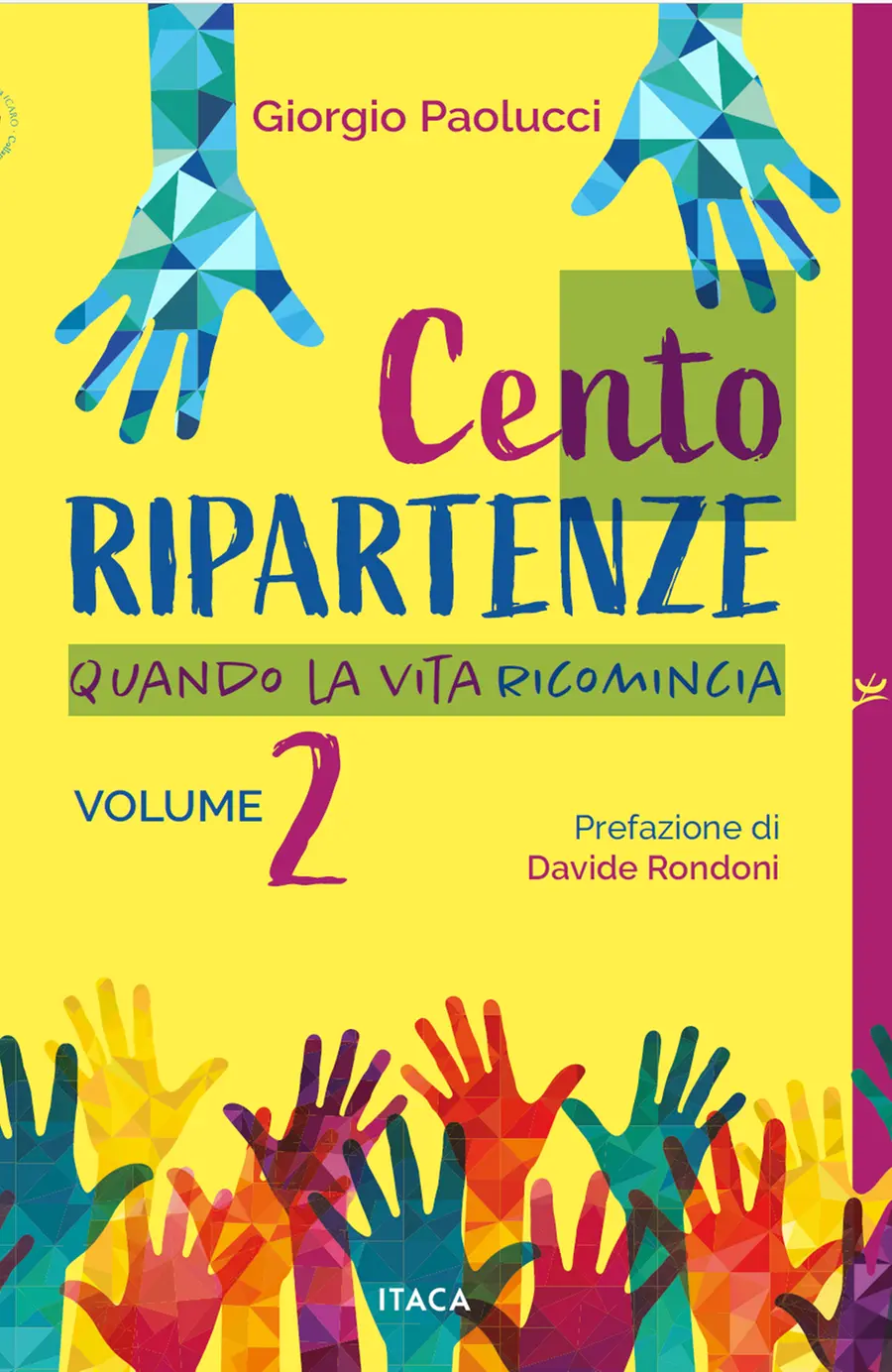
There are books that are read and then forgotten, and there are others that remain with us because they tell life as it is: fragile, wounded, but capable of starting again when everything seems lost. One hundred restarts. When life begins again – Volume 2 by Giorgio Paolucci belongs to this second category. It is not simply a collection of stories, but a sort of journey into humanity, a map of those little lights that continue to shine even when time seems dominated by fear and resignation. I would like to make a small introduction: I have known the author for more than thirty years due to our common youth experiences in everyday life Future and it was difficult for me to keep the motivations of friendship away from the professional rigor with which I approach a book review. But I am ready to swear that I would have written the same things even if I had never met the author, given the material that caught my eye on every page.
The book was born from a lucid observation: we live in years marked by wars, loneliness, precariousness and confusion. The author himself recognizes this with great realism, observing how many people find themselves fragile and disoriented while easy and illusory promises of happiness multiply around them. Yet precisely within this scenario Paolucci chooses a different path: to search for the signs of good hidden in reality, those “nuggets” that rarely make it to the front pages of newspapers but which continue to nourish men’s hope.
The author moves like a gold digger. Sift through the folds of the news, the marginal places of society, the forgotten stories. The result is a book composed of one hundred short chapters, each of which tells of a restart. These are not idealized or consolatory stories. On the contrary, almost all of them arise from harsh situations: prisons, illnesses, poverty, serious mistakes, lives that seemed to be over. But right there, where everything seems closed, something happens that changes the course of things.
The pages dedicated to the world of prison are especially striking. And it is no coincidence, because the author, who was central editor of the bishops’ newspaper, always thirsty for humanity (he was among the first, at the end of the 80s of the last century, to discover the theme of non-EU immigration, when no one in Italy was yet writing about it) after retirement dedicated himself to volunteering precisely in this environment. Paolucci rtells of men who have committed serious crimes and yet discover, in the most unexpected place, the possibility of a new life. There is the mafioso who, finding himself faced with his brother’s killer, renounces revenge and embraces him. There is the former drug boss who, after his arrest, understands the harm caused and decides to study philosophy, graduating and dedicating himself to the poor. There is the tattooed prisoner who, listening to the chaplain’s homilies, asks for baptism because for the first time he hears about Christ as a living presence. In these stories, prison stops being just a place of punishment and becomes a space in which man can rediscover himself. And we have the possibility of living the same internal experience, of answering this fundamental question, precisely by reading these pages.
Alongside prison, another major theme emerges: education. Paolucci shows how meeting a teacher, an educator or a volunteer can change a destiny. The story of Albert Camus’ teacher, who recognized the talent of a poor child and accompanied him on his journey to the Nobel, becomes a symbol of what it means to truly educate: noticing someone and betting on him. Likewise, the author tells the story of a retired teacher who returns to help kids in difficulty for free and that of a principal who builds a cathedral of Lego bricks with his students to show that life, like a building, grows detail after detail.
The book does not avoid confrontation with the most radical pain. The pages dedicated to illness and death are among the most intense. The writer tells of people who discover fragility as an unexpected opportunity to look at life with new eyes. There is the hospital chaplain who lives with Parkinson’s and defines his illness as an “intrusive friend” capable of teaching him what really matters. There is the story of a kidney transplant that saves two brothers in an unpredictable way. There are parents who lose a child and find the strength to rebuild their lives in the ordeal.
The author’s style is clear, essential, almost like a narrative chronicle. The chapters are short, often built around an encounter or testimony. There is no rhetoric or moralism: Paolucci lets the facts speak, convinced that reality already possesses sufficient narrative strength in itself. It is precisely this sobriety that makes the stories even more credible and incisive.
The result is a profoundly counter-current book. In an era where the dominant narrative tends to focus almost exclusively on evil and failure, One hundred restarts makes a simple but radical gesture: telling the good that continues to be born, the seed that bears fruit. Not an abstract or ideological good, but the concrete one that manifests itself in daily gestures, in bonds, in faith, in the ability to forgive.
Page after page a clear belief emerges: life is never definitively lost. Even when everything seems closed, there is always the possibility of a new beginning. This is the heart of the book (a profoundly evangelical heart) and the reason why reading it leaves a rare sensation: that of emerging from the pages with a more confident gaze on reality and man. If it doesn’t seem like much…