




Saying thank you is one of the first rules we teach children. However, most parents do a poor job of instilling good manners over the long term, according to a psychotherapist.
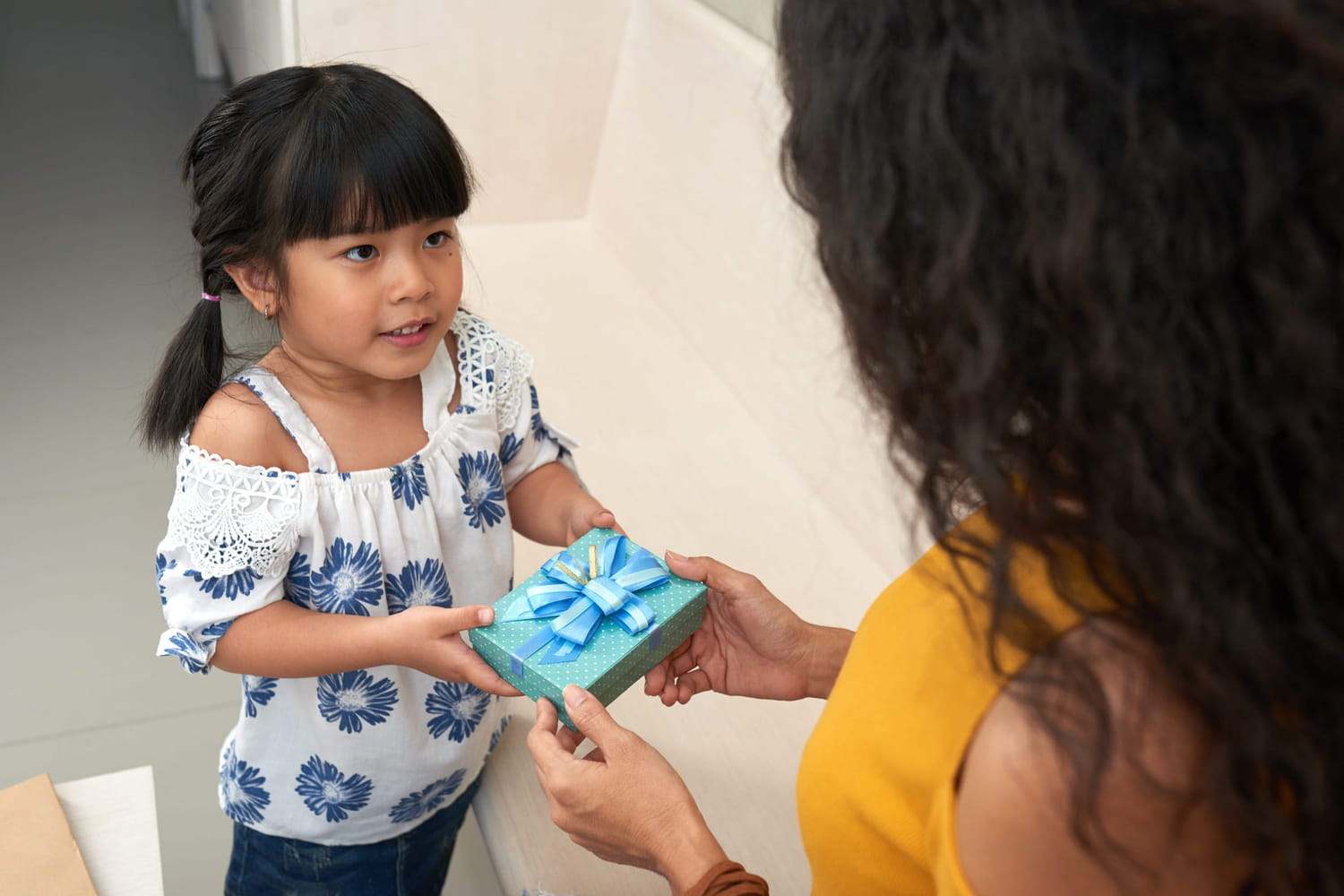
It’s one of the first things we teach children as soon as they start speaking: politeness. “What do we say…?” Or “What’s the magic word?” are phrases that parents have uttered many times, to teach their toddlers the importance of saying “thank you”. When we give them a gift, give them a compliment, do them a favor, lend them a toy, or simply when they want to ask for something… This is the very basis of education, an essential notion to remember from a very young age to later become a caring adult who respects others, who integrates perfectly into life in society.
However, against all expectations, this method of learning “thank you” would not be the most effective. It could even be counterproductive. This is what Jennifer Kelman, child psychotherapist, explains to the American magazine PureWow. According to the specialist, the classic formula “what do we say…?” is a rather clumsy, if not downright problematic, approach: it amounts to putting words in the child’s mouth for him. Often parents tend to intervene immediately whenever the opportunity to thank presents itself. “If someone gives their child a cookie, the parent is usually quick to say, ‘Oh, don’t forget to thank the nice lady. She gave you a cookie.'”underlines Jennifer Kelman. But for her, “it’s not teaching, it’s forcing” a rule without the child even being able to really understand it.
“In this case, the child becomes a simple robot, repeating what he thinks he should do because the parent told him to.” Result: the child obeys an order and therefore appears polite on the surface, but will not really develop the thinking which is the basis of good manners. To truly teach a child the importance of politeness, the psychotherapist recommends above all setting an example. Advice that may seem banal, but which she explains with a new eye: the important thing is that “thank you” is no longer an order to be carried out, but a reflex naturally integrated by the child.
In the situation of the cookie offered for example, Jennifer Kelman therefore recommends that parents thank the person directly themselves, rather than asking the child to do so. Then, later, to emphasize this mark of politeness to him: “Wasn’t it sweet of the lady to give you that cookie earlier? Did you notice how mom thanked her ?” The idea is also to avoid associating the absence of “thank you” with a feeling of shame. A child who is told “it’s not good, you forgot to thank the lady” – moreover in front of the woman in question – will once again associate good manners with a constraint, which deserves a reprimand if not respected, rather than with natural behavior.
But this feeling of shame often comes from the parents themselves, who fear being seen as bad parents if their child does not immediately say thank you. “Every parent has been through this situation before, and the feeling of judgment you feel, in all likelihood, comes more from within yourself than from outside.”recalls Jennifer Kelman. Moreover, making mistakes is also the foundation of all education, including in matters of politeness. Perhaps it is time to adopt the FAFO mentality, this parenting method which replaces the famous “positive education”, so that little ones discover for themselves the consequences behind the absence of a “thank you”.