


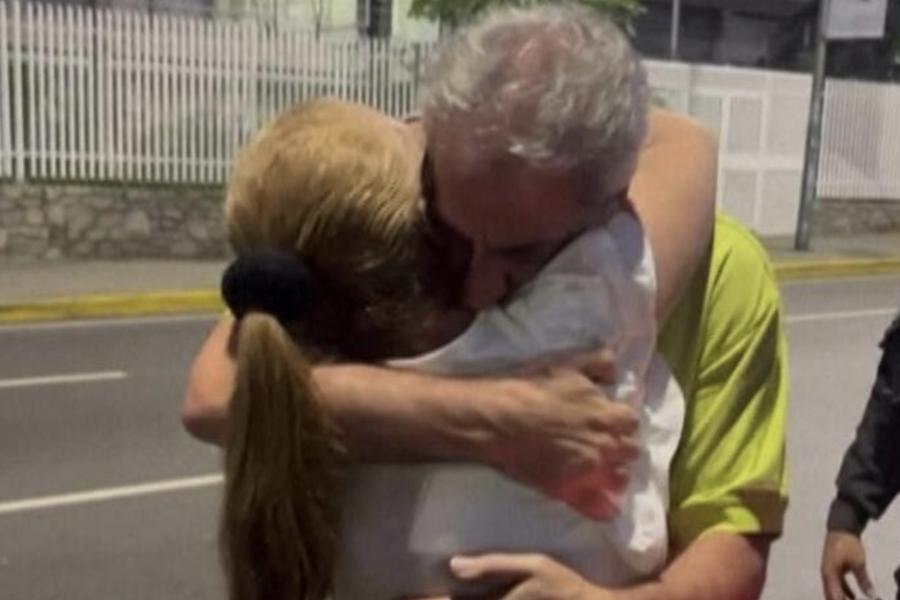
After months of anguished waiting and silent diplomacy, a breach of light has opened in the cells of Venezuela. Caracas freed two Italian citizens – Luigi Gasperin and Biagio Pilieri – as part of a broader release of political prisoners involving around 250 people, including numerous foreigners. A gesture that the new interim president Delcy Rodríguez defined as “unilateral”, carried out in the name of “peaceful coexistence” and the search for peace.
But while two Italian families can finally return to hug their loved ones, others remain in suspense. First of all Alberto Trentini, the Venetian aid worker detained for over 400 days without formal charges, and Mario Burlò, a Turin entrepreneur locked up for more than a year in still unclear circumstances. In total, there are 28 Italians, many with dual citizenship, held in Venezuelan prisons for reasons ranging from political activism to professional activity, up to the simple expression of opinions unwelcome to the regime.
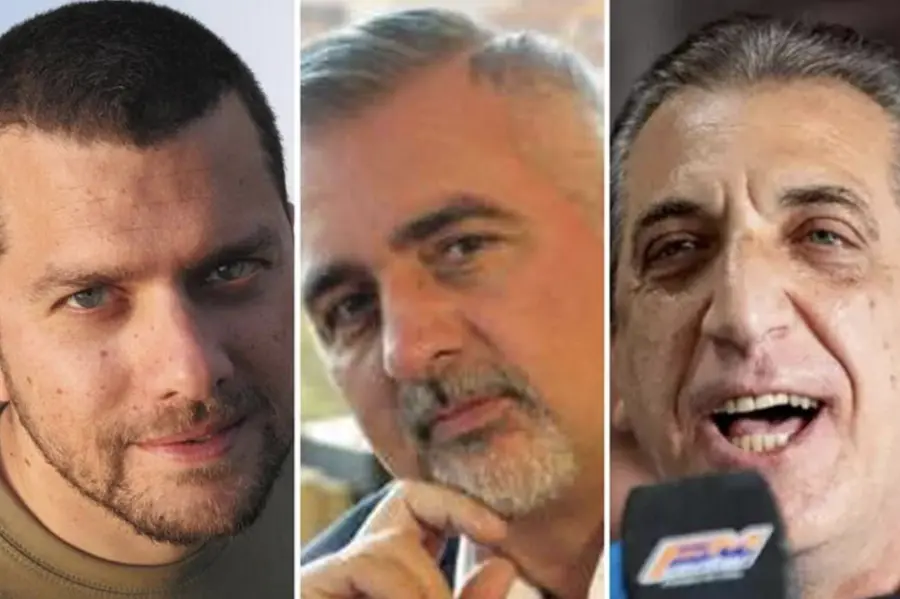
Luigi Gasperin: the seventy-seven year old entrepreneur
Luigi Gasperin, 77 years old, entrepreneur with only an Italian passport, had been arrested on August 7, 2025 in Maturín, in the State of Monagas. The charges brought against him concerned the alleged possession, transportation and use of explosive material at the offices of a company of which he was the majority shareholder and president. Detained in a center in the Prados del Este area, in the capital Caracas, Gasperin suffers from heart disease, hypertension and breathing difficulties. His release, according to diplomatic sources, was accompanied by immediate access to the necessary medical care. Now he is finally in contact with his family and the family’s lawyer.
Biagio Pilieri: the journalist who challenged censorship
After a year, four months and eleven days of unjust detention, Biagio Pilieri was able to hug his family again. Sixty years old, of Sicilian origins, with dual Italian-Venezuelan passport, Pilieri was a symbol of the battle for freedom of information in Venezuela. Journalist and leader of the opposition party “Convergencia”, founded in 1993, was arrested on 28 August 2024 due to his support for the democratic opposition and his commitment against editorial censorship.
Locked up in the infamous Helicoide prison – sadly known for its isolation and harsh interrogations – Pilieri lived through dramatic months, also witnessing the death of his cellmate Alfredo Díaz, former governor of the state of Nueva Esparta. The Maduro regime had accused him of terrorism and treason. Suffering from fibromyalgia and irritable bowel syndrome, his health conditions had progressively deteriorated.
«This is a phrase that I have dreamed of repeating for some time and which today has become reality», wrote his son on social media, expressing gratitude for «all the support, prayers, messages and strength of so many people». But he adds a prayer: «May this joy soon be shared by all Venezuelan families who suffer the injustice of political imprisonment. May they all be free.”
Alberto Trentini: 400 days without charges
The case that worries Italy most is that of Alberto Trentini, 46 years old, Venetian aid worker with long experience in crisis areas. Arrested on November 15, 2024 while traveling from Caracas to Guasdualito for the NGO Humanity & Inclusion, which assists people with disabilities, Trentini was stopped at a checkpoint together with the local driver Rafael Ubiel Hernández Machado.
From that day on, an ordeal of silence and uncertainty began. For 181 days the family had no news, until the first phone call in May 2025. In these fourteen months Trentini was able to speak to his parents only three times and met the Italian ambassador in Caracas on two occasions. Detained in the maximum security prison El Rodeo, he was never formally charged with specific charges.
In Lido di Venezia, in the family home, the “Alberto Trentini libero” banner remains hanging from the balconies, symbol of a battle that parents Armanda and Ezio lead with dignity and determination. The mother, in a recent press conference, expressed with pain the feeling that her son was being used by the regime as a bargaining chip in a bigger game.
The Inter-American Commission on Human Rights granted precautionary measures in his favor as early as January 2025, recognizing that he is “in a serious and urgent situation”, with the rights to life and personal integrity at risk. But Venezuela never responded to these requests.
Mario Burlò: the entrepreneur who disappeared into thin air
The other case that keeps Italy in suspense is that of Mario Burlò, accountant and entrepreneur from Turin. Having left for Venezuela in 2024 to explore new business opportunities, Burlò has been detained for over a year. His family members report that there are no clear reasons for his detention. “I haven’t seen him since November 2024. He told me he was leaving for Venezuela”, his daughter said in an interview with Corriere della Sera in Turin, explaining that she heard from him “last October, after eleven months without any contact”.
Communications with him are controlled and sporadic. During a phone call, the daughter heard a voice in the background chanting in Spanish: “Tres minutis, dos minutis, un minuti más…”. Reportedly, Burlò apparently lost around 20 kilos during his detention.
The other faces of the emergency
But the list doesn’t stop here. There are other Italians in Venezuelan prisons whose fate remains uncertain. Daniel Enrique Echenagucia, entrepreneur from Avellino, was arrested on 2 August 2024 together with his family. After the release of his family, he disappeared for weeks in what is described as an “enforced disappearance”. Today he is detained in El Rodeo I, in almost total isolation, and has apparently lost 18 kilos.
They are still in the Helicoide prison Gerardo Coticchia Guerra, Juan Carlos Marruffo Capozzi, Perkins Rocha and Hugo Marino among the missing, dated 2019. All of them are included in the list of Italian citizens detained for political reasons, with stories of long weeks of isolation, difficulties communicating with families and serious health risks.
The silent work of diplomacy
Behind every name there is intense and confidential diplomatic work. The Foreign Minister Antonio Tajani he has repeatedly reiterated that the government is doing “everything possible and impossible” to bring all his compatriots home. The dialogue is continuous with the ambassador in Caracas, the consular network, representatives of the Catholic Church and Venezuelan civil society. Italian intelligence is also at work, as is the undersecretary of the Prime Minister’s Office Alfredo Mantovano, who coordinates the most delicate operations. The dialogue with the United States was fundamental. Several phone calls between Tajani and US Secretary of State Marco Rubio, with Washington guaranteeing its full commitment to facilitate the liberations. The change of scenario after the American blitz that led to the capture of Nicolás Maduro and his transfer to New York, with the consequent appointment of Delcy Rodríguez as interim president, has opened up new possibilities. A special envoy was appointed to manage the crisis: Luigi Vignali, general director for Italians abroad of the Farnesina, already protagonist in 2022 of the release of Marco Zennaro, the Venetian entrepreneur held in Sudan for a year.
Meloni’s words: «A sign of pacification»
In the press conference at the beginning of the year, Prime Minister Giorgia Meloni commented on the liberations with cautious optimism: «I joyfully greet the release of Biagio Pilieri and Luigi Gasperin. I am confident and I want to say that I consider the signal given by President Rodríguez to be a signal of great value, a unilateral signal that goes in the direction of pacification in the country. We fully grasp it and I think it can also represent a very important element in the definition of new and different relations between Italy and Venezuela.”
Even before the press conference began, Meloni had issued an official note: «I am carefully following the situation in Venezuela and I hope that with President Delcy Rodríguez a new season of constructive relations will open between Rome and Caracas. In that sense I express gratitude for the choice to initiate the release of political prisoners, including Italiansand I sincerely hope that this path continues with further steps in the same direction. It is very painful not to be able to give answers in the time I would like.”
The Venezuelan situation remains extremely fluid. According to the latest report by the NGO Foro Penal, there are 863 political prisoners in the country, of which 86 are foreigners or have dual citizenship. The releases announced by Caracas – around 250 out of 400 expected – represent the largest release of prisoners in recent decades.
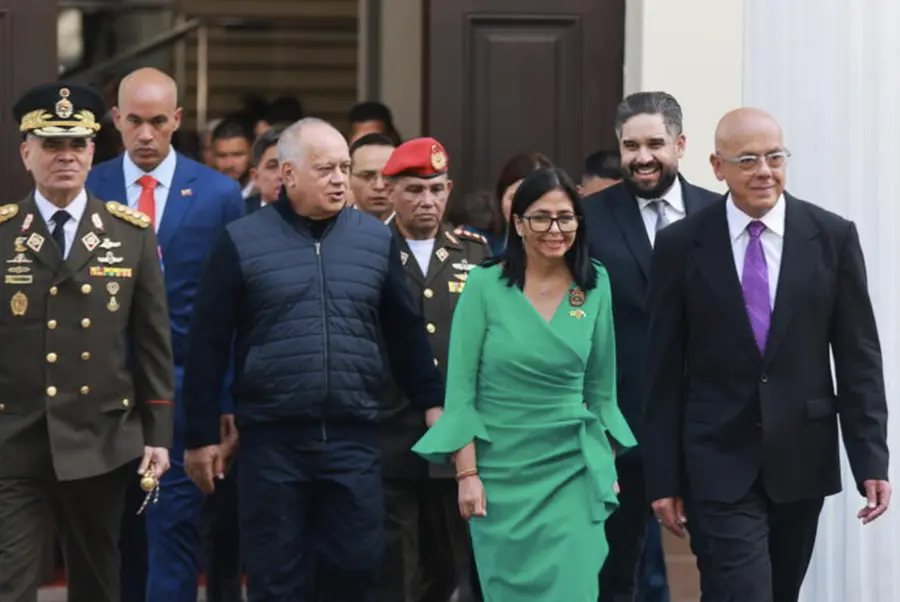
Rodríguez’s gesture is part of a delicate phase for Chavismo, divided between anti-Western regurgitations and attempts to find a dialogue with Washington to overcome Maduro’s capture without trauma. The Venezuelan opposition, led by Corina Machado, has relaunched the appeal for a general amnesty for all political prisoners, also finding a hearing in some sectors of the regime.
A hope that does not give up
While two Italian families celebrate the return of their loved ones, others continue to hope and pray. The case of Alberto Trentini closely resembles that of Cecilia Sala, the journalist freed by Iran one year ago, on 8 January 2025. She herself, on the anniversary of her release from prison, wrote a message of hope: “One year ago my most beautiful day, now it becomes one for him too.” At the Lido of Venice, in front of the balconies with the banner calling for freedom for Alberto, the parents wait with discretion and dignity. Throughout Italy, communities, associations and ordinary citizens continue to raise awareness of these cases, aware that behind every name there is a person, a family, a life suspended.
Today’s Venezuela is not what Simón Bolívar dreamed of. But perhaps, in this opening signal from Delcy Rodríguezthere may be the beginning of a path towards reconciliation. And hope – that Christian virtue that Saint Paul called “anchor of the soul” – continues to support those who await the return of their loved ones. Because no one should be deprived of freedom for their ideas, for their work, or for the simple fact of being in the wrong place at the wrong time. As Biagio Pilieri’s son said: «We pray to God that this joy will soon be shared by all Venezuelan families who suffer the injustice of political imprisonment. May they all be free.”