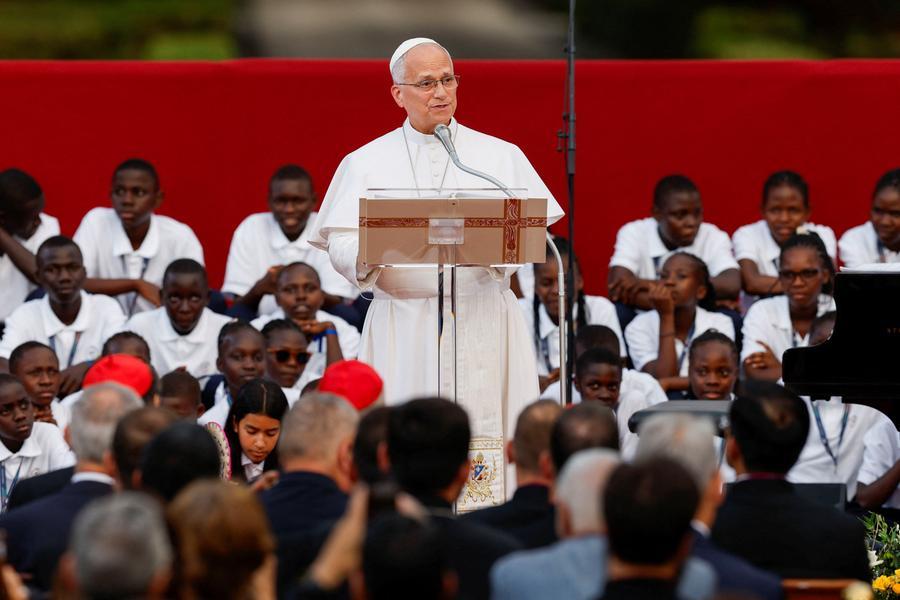






There are reforms that make noise and reforms that change the balance without raising a voice. The one with which Leo XIV rewrote the Statute of the Financial Supervision and Information Authority belongs to the second category. Twelve articles, a few pages, no proclamations, the essential technically perfect, in the style of the canonist Prevost. Yet they mark the end of a model born sixteen years ago.
The acronym remains the same: ASIF. The basic functions remain. However, their position in the Vatican organizational chart changes.
The Authority will no longer be governed by a president and a council. In their place there will be a director and a deputy director appointed directly by the Pontiff for five years, supported by consultants. A leaner, more vertical structure, closer to managerial models than to those of independent authorities.
It is a choice that tells a lot about the new phase of Vatican governance.
When Benedict XVI established the then Financial Information Authority in 2010, the Vatican had a specific urgency: to further strengthen and demonstrate its international credibility. International bodies called for more controls, more transparency and independence. The key word was precisely this: independence. To be credible, whoever controls the money must be perceived as autonomous from whoever manages that money.
In the following years Francesco further strengthened that system. In 2020 the body changed its name to ASIF, expanding its competences on prudential supervision and financial information.
Then came the trial over the management of the Secretariat of State’s funds. A procedure that produced a little discussed but significant side effect: the search of the Authority’s offices by the Vatican Gendarmerie. Those images raised doubts in the circles of international anti-money laundering cooperation. If even the supervisory body can be the subject of such invasive investigative interventions, how autonomous is it really?
Leo XIV’s response does not consist in restoring that distance. It does the opposite: it takes note of the new reality and fully inserts the Authority into the architecture of the Curia.
The new Statute in fact places ASIF under the umbrella of the Secretariat for the Economy. The budget must be approved by the Council for the Economy, to which the annual report will also be sent. The funding will come from the Administration of the Heritage of the Apostolic See, from the Governorate and from the supervised bodies, with quotas always determined by the Council for the Economy.
In other words, less independent authority and more integrated administration.
Of course, no one questions the technical skills of ASIF. The Statute confirms, indeed strengthens, the exclusive competence in the prevention of money laundering, terrorist financing and the proliferation of weapons of mass destruction. The reception of suspicious reports, financial analysis, international cooperation and prudential supervision of financial institutions remain. A new function also appears: that of an alternative dispute resolution body between users and financial operators.
On an operational level, therefore, the range of action does not narrow. On the contrary.
What changes is the relationship between technology and institutional politics. Leo
It is a logic that recalls that adopted by many large international organizations after the financial crises of recent decades: fewer parallel bodies, more integration in the chain of command, greater accountability, i.e. greater reliability. UA supervisor inserted into the machinery of the Curia can be just as independent in decisions as it was, at least on paper, when it sat a step higher than the administration it was called upon to supervise.