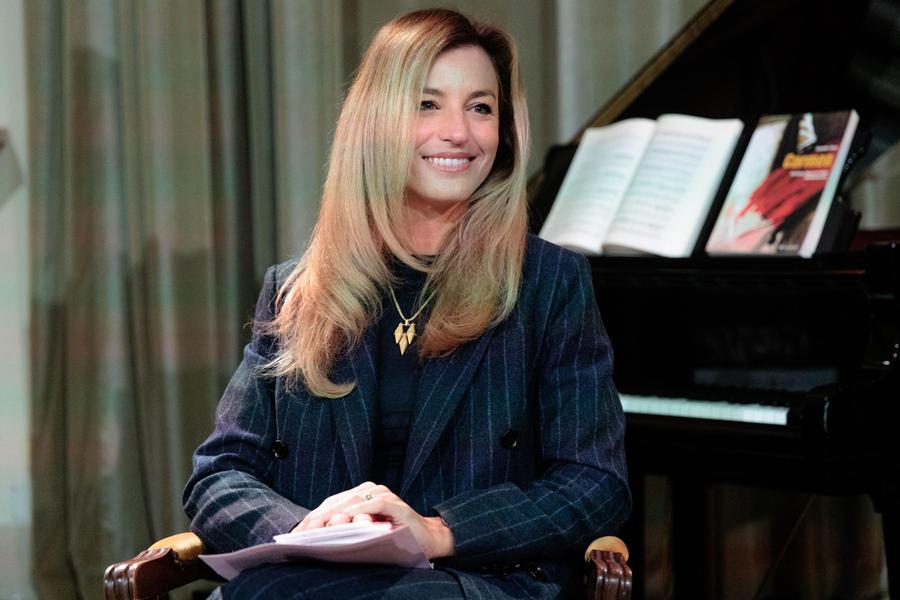


Superintendent Nicola Colabianchi appoints on 22 September 2025 Beatrice Venezi, 36 years old from Lucca, Musical Director of the Teatro la Fenice in Venice starting from October 2026. It does so without first having obtained the opinion of the theater’s Board of Directors, much less the orchestra’s representation. The controversy immediately mounts and becomes a national case, which as such takes on those connotations of low politics typical of public debates on complex and specialized matters. Because Venezi has always been supported by the Government and by members of the right, e.g the orchestral players are immediately labeled as elements of the left.
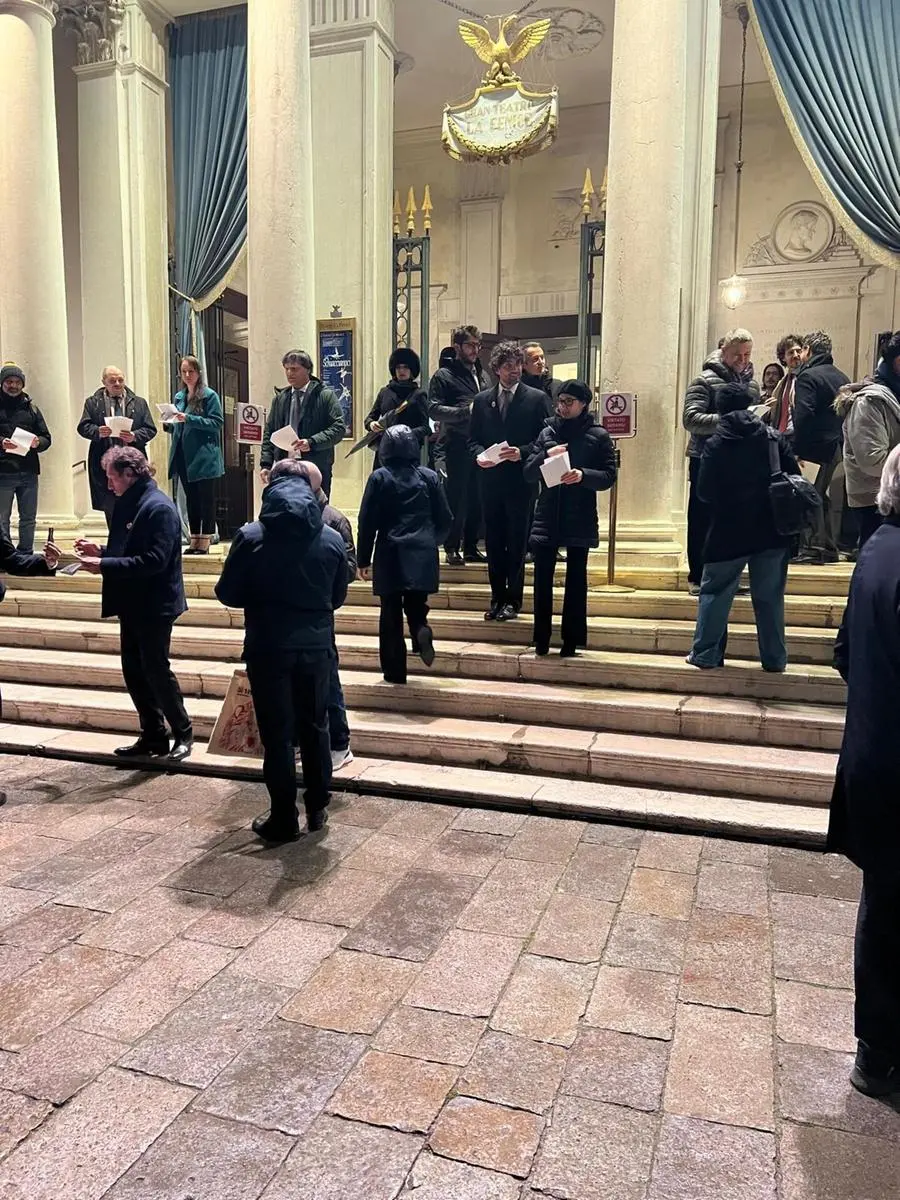
The orchestral protest leaflet at the entrance to the theater (Ansa).
Rarely has a purely musical issue like the appointment of a director occupied the front pages of the information world and inflamed souls. And, after months of mutual accusations, controversies and surprising, to say the least, judgments on the Venice Theater and its audience (even on the part of its managers, or the mayor, or Venezi itself), a few days ago the nomination was ratified by the Board of Directors.
But who is Beatrice Venezi, and what are the reasons for such fury? For his supporters he is a young talent who deserves to gain experience. For the critics she is not young at all (Riccardo Chailly or Daniel Harding – musical director of the Accademia di Santa Cecilia – in their early twenties had already conducted the former at La Scala, and alternating with Claudio Abbado the latter), she is a conductor who does not have a good gesture (but it is relative: the gesture is evaluated by the orchestra during work, rehearsals, concerts. Chief conductors have had a terrible gesture) and above all he is a figure who does not have a profile worthy of the Phoenix: which is absolutely true, if placed in relation to the history of one of the most important theaters in the world.
For supporters, his appointment falls within the rights of the superintendent and politicians and the orchestra’s revolt is a union stance. For detractors it is an imposition. And it is this last point that is decisive. There is no rule that obliges a superintendent to consult the orchestra and choir to proceed with the appointment of a director (musical or permanent), but it is a practice that is always respected (the Berliner they choose the permanent director, i Wiener choose who to invite) and dictated by a very simple reason: between director and orchestra (and choir) a relationship of complicity, familiarity, compatibility is established which excludes the hypothesis of an imposition.
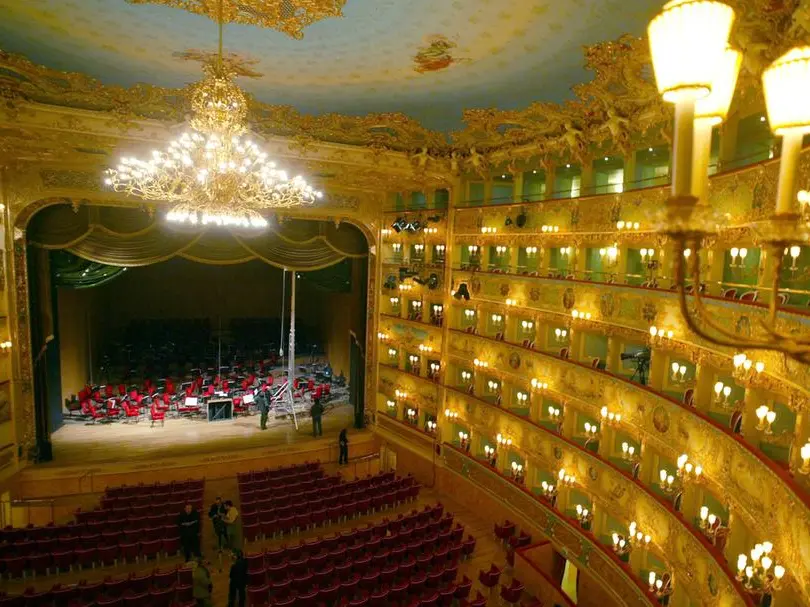
The marvelous interior of the Fenice in Venice (Reuters).
The conductor plays nothing: it is the musicians who do it, following his indications, his gesture, working and collaborating with him, interpreting their intentions already from their looks and sharing their repertoire choices. A work in synergy and sympathy that can only develop from experiences prior to the appointment that have given good results: Venezi has never been on the podium at the Fenice and the orchestra members, as mentioned, were not involved in her choice. Therefore politics can and must give direction to Culture or School, it can choose the person in charge of a Theatre, but the work between artists is different.
The great Daniel Barenboim, to explain the intimate relationship that is created with one’s orchestra, quoted the words of his teacher George Szell: «With the best orchestra in the world you will never work as well as with an orchestra of lesser value, but “yours”». Also for this reason, the artists of La Fenice immediately obtained the solidarity of their public and of all the great Italian institutions, in fact denying that it was just a hostile attitude on the part of the internal unions. But how will the Venezi affair end? It’s difficult to predict, even if knowing that you aren’t liked is certainly not a great incentive to start a new artistic adventure.