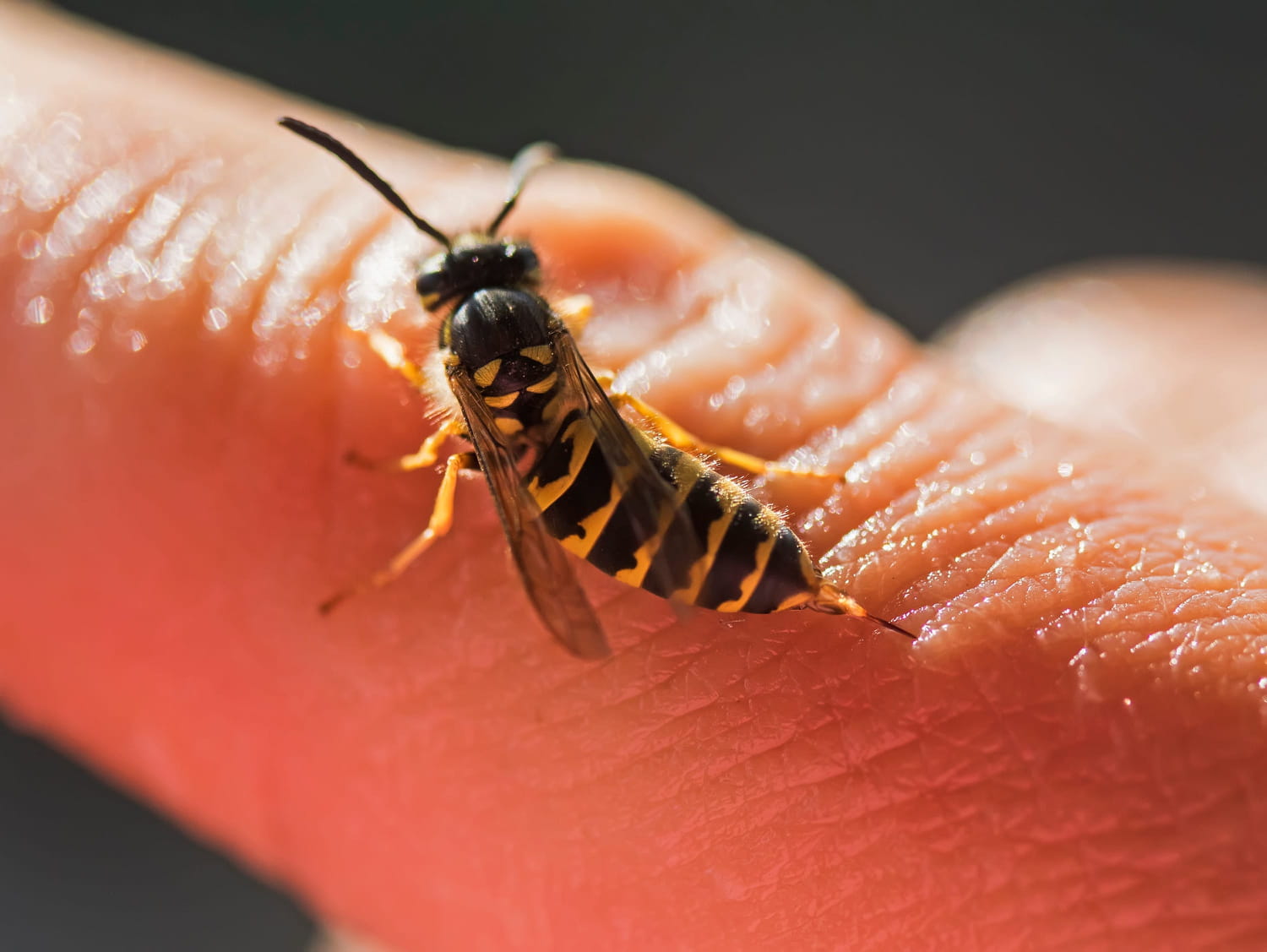
A wasp sting causes immediate pain, the appearance of edema and then itching. This is what to do when you get stung according to Dr. Jean-Marc Chavigny, dermatologist and allergist.
After hibernating, the wasp wakes up in spring and is very present in summer. Wasp season runs from April to October with peak sightings in July and August. A wasp sting causes immediate pain. The reaction can be much more violent when the person is allergic to the wasp’s venom (1 to 4% of the population are allergic to wasp or bee stings). Vinegar, ointments, creams… Here’s what to do to relieve a wasp sting according to Dr. Jean-Marc Chavigny, dermatologist and allergist.
The first sign is a sharp pain that appears immediately after being stung. Most often it is followed by redness, sometimes itching and swelling in the stung area. This is called “local edema” which “forms a small ball of a few centimeters, informs Dr. Chavigny. Depending on the stung area, the swelling may be more significant – on the face (eyelids, ears, lips, etc.) or in the neck for example – and the reaction can be much greater. The swelling can then spread to a joint. A sting in the mouth or throat may swell to the point of choking. In the event of multiple bites, the symptoms can be more intense: vomiting, diarrhea, headaches, drop in blood pressure, more rarely convulsions or even loss of consciousness. If the person has more than 20 wasp stings, they should be taken to the hospital immediately.
Photo of a wasp sting


When it stings, the wasp does not leave its stinger unlike the bee.
What to do in case of a wasp sting? The day after ?
“The first thing to do is to disinfect the wound (with an antiseptic), as the wasp’s stinger can bring microbes“, explains Dr. Chavigny. “One of the good reflexes to have is to use an aspi-venom, even if we don’t always have it with us,” adds Doctor Jean-Pierre Mercier, general practitioner. Cortisone ointment can calm inflammation. If the stung area remains very red, swollen and painful after 24 hours (the next day), consult a doctor for stronger treatment in case of infection and/or antihistamines if the itching is severe.
Should we put cold?
“The cold helps to calm the pain: you can put ice cubes in a damp glove and apply it to the painful area”, advises the doctor. Approaching the lesion with a heat source (such as a lighter) is not recommended due to the risk of burns, particularly in children who may move.
What are the best ointments and creams?
“Applying a low-dose cortisone ointment calms inflammation“, informs Dr Jean-Marc Chavigny. In the event of a localized allergic reaction (significant swelling), an antihistamine cream reduces the edema. Seek advice from a pharmacist. He will be able to prescribe the ointments to apply to the wasp sting.
Should I use cider vinegar and/or essential oils?
Applying apple cider vinegar to a cotton ball can relieve a wasp sting. Certain essential oils such as aspic lavender essential oil have anti-inflammatory and anesthetic properties; simply apply 1 or 2 drops directly to the sting (without exposing yourself to the sun). However, be careful of the risk of allergies. Lavender aspic essential oil should not be used by children under 7 years of age, pregnant or breastfeeding women.
Is baking soda effective on a wasp sting?
Used as a poultice, baking soda – also called Vichy salt – helps relieve wasp stings. The recipe: three parts baking soda to one part witch hazel water. Apply this white paste to the stung area for a few minutes. If the sting is not relieved, it is better to consult a pharmacist or doctor who will prescribe appropriate treatment.
When to consult?
In the event of anaphylactic shock, i.e. swelling that hinders breathing. It’s a medical emergency. An intramuscular adrenaline injection should be given as quickly as possible. Hives after a wasp (or bee) sting should also lead to medical consultation. “Desensitization is recommended but should be discussed with the allergist because this desensitization, although it gives good results, is not without risk.” indicates the allergist.
What to do if you are allergic to wasp stings?
“If two joints swell in the area of the sting, it is an allergic reaction“, explains the dermatologist and allergist. The person most often has urticaria (appearance of itchy red patches). In more serious cases, it is anaphylactic shock. The signs: malaise, dizziness due to a drop in blood pressure, nausea, swelling of the lips, throat, tongue, difficult breathing, rash… Obstruction of the airways and cardiovascular shock can lead to the death of the victim. In the event of an allergic reaction, call the 15 (Samu) or 112 for emergency transport to hospital.
Aspivenin and allergy risks
Aspivenin helps remove fractions of the venom and reduce the quantity of venom but it does not prevent the acute allergic reaction. “People who have a known allergy to wasp or bee stings should carry an emergency kit with a protocol“, warns the dermatologist and allergist. This contains in particular a self-injectable adrenaline syringe.
Desensitization to wasp sting allergy
This desensitization, which is carried out in the form of an injection, requires 2 phases:
- The first phase is carried out in a hospital environment and lasts half to a day: it is rush therapy, a phase during which the patient receives regular injections at a pace determined by a precise protocol so as to reach the maximum tolerated and protective dose.
- The second phase consists of carrying out a monthly injection, which can be carried out by an allergist doctor, for several years.
- Do not walk barefoot in nature, especially grass.
- Do not carry substances that attract wasps and bees (perfume, hairspray, scented sunscreen, etc.)
- Avoid the vicinity of hives or nests.
- Stay a safe distance from poorly closed trash cans.
- Avoid clothing in too bright colors that may resemble flowers
- If an insect is circling around you, stay calm. Avoid sudden gestures and disorderly movements, push him away gently.
- If you are allergic, avoid eating outside.
- Outside, avoid canned drinks; you risk a throat sting if you swallow a wasp that has fallen into your drink.
- People with allergies can ask their doctor to prescribe an emergency kit consisting of injectable adrenaline (such as Epipen® 0.3 mg), an antihistamine (e.g. Zyrtec®) and an oral corticosteroid. Also warn those around you and friends of this allergic risk.
You can call the firefighters to destroy a wasp’s nest. For a swarm of bees, contact a beekeeper.
Thanks to Dr Jean-Marc Chavigny, dermatologist and allergist.