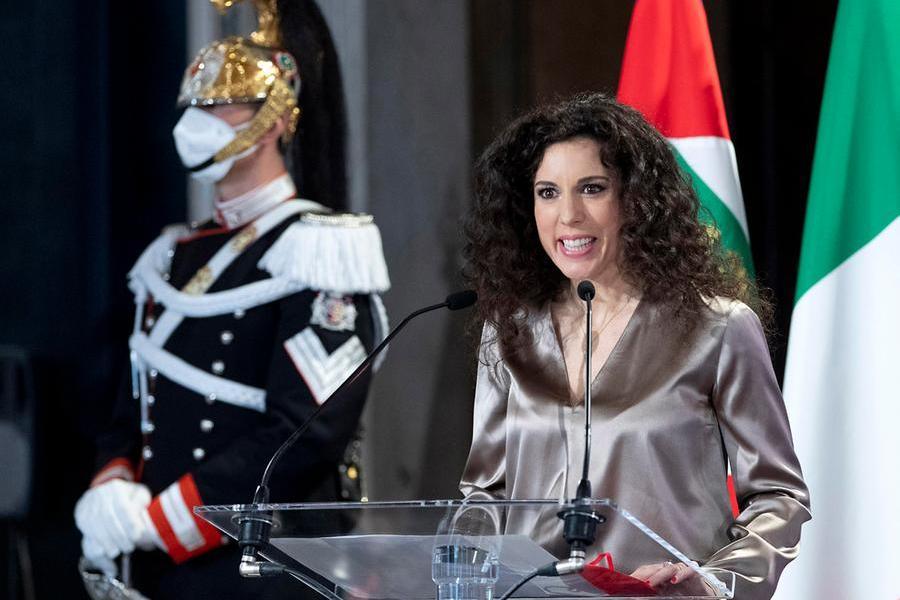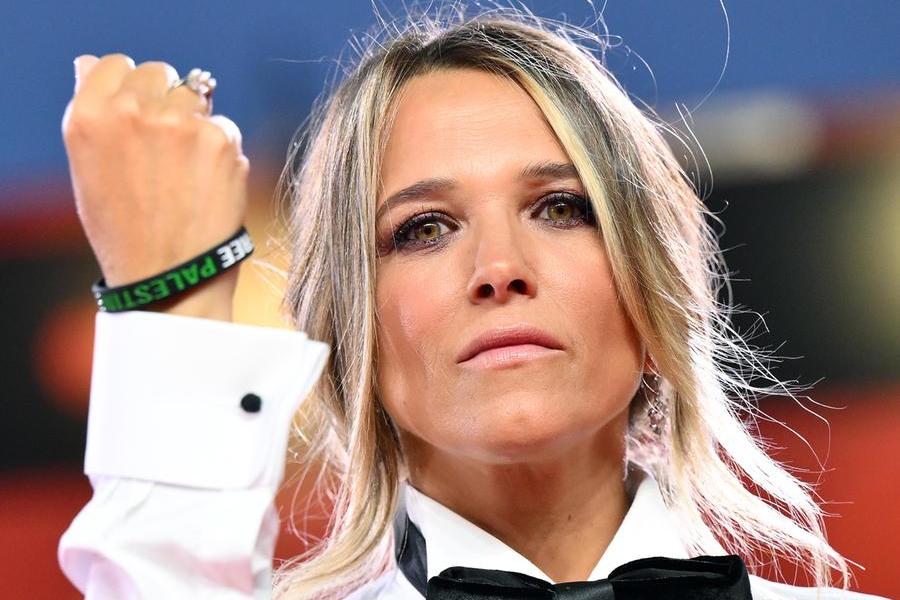
No, it is not true that The show must go on, that is, that the show must go on anyway, at any cost. The painful decision of the journalist Francesca Barra to leave the co-hosting (with Roberto Poletti) of “4 di sera Weekend”, the in-depth Rete4 program broadcast on weekends throughout the summer, teaches us this above all: it denies an “unwritten law” which, from the world of entertainment, where it was born, seems to extend to all the working and professional areas of a society, ours, who sometimes seems to forget that there is a ne momentwhich needs to stop. That the show can stop.
It seems that the show must go on is an expression born in the 19th century in the circus worldwhich is then at the origin of all the entertainment and media spectacle of the following century. At the time, if an artist fell or some other accident occurred, everything was ready for the show to continue, without the public noticing anything, or almost nothing. In this unwritten rule it is necessary to distinguish two aspects: there is the level of the spectacular machine that must not and cannot stop, and then there is the more intimate, personal and subjective dimension of those who choose to stop (as Francesca Barra did) and those who choose not to.
On the first aspect, television and the world of entertainment is full of examples in which we have not stopped. Even on occasions in which the personal and social dimensions have merged: the most striking case is that of the suicide of Luigi Tenco, in Sanremo, in January 1967. So the Festival regularly continued its ritual, despite the tragedy, in compliance with the diktat of “business as usual” which today appears incomprehensible. Yet there are many cases. The show tried not to highlight the equally tragic accident that happened to Mario Riva at the Verona Arena in 1960.
Raffaella Carrà remembered, astonished, how Rai decided to broadcast the recorded episode of Ma che sera in the days of the Moro kidnapping (but then, the public service managers justified themselves, there was also the need to give a reassuring sign to the Italians, who could only follow two channels, in the last years of the public TV monopoly). Domenico Modugno also continued to record a television program despite the illness which later revealed a stroke. On this first level, I believe that today’s television, which is still the medium of the here and now, of the collective sharing of experiences and emotions, would have different sensitivities.
In terms of personal choices, the matter is certainly more complex, and it is always advisable to avoid judgmental attitudes. Unfortunately, in the age of social media, judging others, even showing insensitivity or even malice, is a national sport.
https://www.famigliacristiana.it/attualita/francesca-barra-e-altre-donne-vittime-dellia-specchio-di-una-societa-fragile-yh65kicv
In the case of Francesca Barra, the words of the journalist and presenter have already explained everything: sometimes you manage to keep everything together, manage the mourning of the serious loss of your father and, together, continue to do a job that is based on performance. Sometimes, however, you need to stop, and Barra did very well to do so. A choice which, in the few truly critical comments that appeared on social media, also had the merit of raising a serious question: does our society, and our work commitments, recognize a suitable time for mourning? From the world of entertainment, the principle of the show must go on seems to extend to all professions, in today’s time which does not provide for breaks or slowdowns. It is an important topic for reflection, for which Francesca should be thanked. She said that she will stop for now and that she will think about what to do later, when she is close to her family. Work on TV will resume. We are sure that the Mediaset company will recognize her courage in stopping, and will bring her back on air as soon as she herself feels up to it.