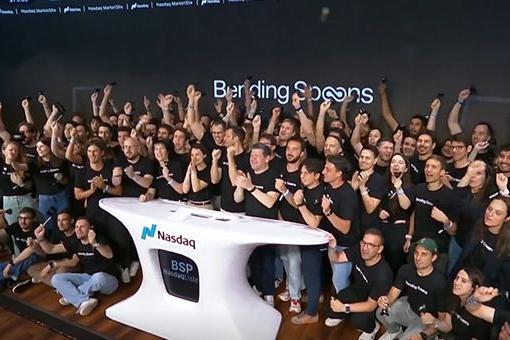
On Wall Street, a bell rang for an Italian company born thirteen years ago in the back room of a bankruptcy. Bending Spoons, the Milanese technology company that has made the resurrection of moribund apps its corporate name, has been listed on the New York Stock Exchange raising 1.68 billion dollars, approximately 1.5 billion eurosselling 58 million shares at $29 each. At the close of trading the stock was already worth $40.50, almost 40 percent more: the market, which rarely grants free enthusiasm, bet without hesitation. The company’s valuation thus went from 18.4 billion dollars to approximately 25.7 billion, the equivalent of 22.6 billion euros: a figure that places Bending Spoons among the most valuable Italian companies ever, just a hair away from Luxottica’s 130 billion which its CEO has indicated, without too much shame, as a declared goal.
It is no coincidence that the choice fell on New York and not Milan. The American stock market is deeper, more liquid, more crowded with patient capital: there, between Apple, Microsoft and Alphabet, an Italian company can compete with the giants it has always had as a point of reference, even when the offices remain in Corso Como.
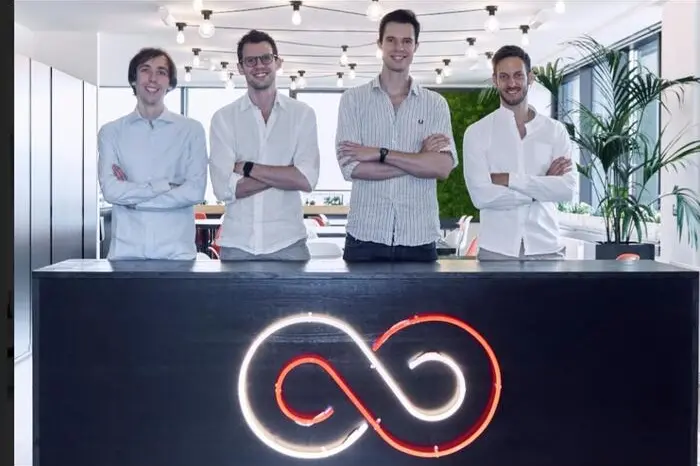
The story of Bending Spoons, however, begins far from the spotlight of Wall Street, and begins with a failure. In 2010 three Italian engineers, Luca Ferrari, Francesco Patarnello and Matteo Danieli, moved to Copenhagen to complete their studies. Together they founded Evertalea digital diary that wrote itself by drawing on smartphone data: an idea that anticipated generative artificial intelligence by years, but which the market was not ready to embrace. The project closed a few years later. From those ashes, in 2013, Bending Spoons was born, a name that is both a manifesto and a quote: bending spoons with the strength of the mind alone, as in the most famous scene of The Matrix. “We have learned to minimize the chances of a second mistake”, said Ferrari several times, now CEO and public face of the company, together with the fourth partner, Luca Querella, who arrived later to complete the founding quartet.
The general Italian public learned about the company through two different paths. The first was the Live Quiz smartphone game, a fleeting phenomenon but capable of taking Bending Spoons out of the industry niche. The second, much more serious, was Immune: the infection tracing app developed for free during the pandemic, when the country was desperately looking for tools to orient itself in the darkness of the contagion. But neither the quiz nor the state app really tells us what the company has become: its job, from the beginning, has not been to build products from scratch, but rather to identify poorly managed or struggling digital apps and services, buy them and make them profitable through deep restructuring, staff cuts, product renewals and, often, price increases. Profits are reinvested in the next acquisition, in a self-sustaining mechanism.

It is a hybrid model, halfway between a technology company and a private equity fund: Ferrari himself defined it, in an interview, as “25 percent private equity, 75 percent technology company”, rejecting comparisons with the Canadian giant Constellation Software. “They buy a lot of small niche companies and let them operate without transforming them,” he explained in an interview. “We buy fewer, larger ones, and change them profoundly to integrate them into our platform“. More than fifty companies have passed under this care in just over a decade. Among the best known, the notes app Evernotewhich became almost synonymous with digital productivity before falling into crisis; WeTransferthe service with which half the world exchanges files too large for an email; Vimeothe video platform created as a cultured alternative to YouTube; and Eventbritethe system with which tickets are organized and sold for events all over the planet. To these have been added, over the years, names such as AOL, StreamYard, Meetups and Remini.
The numbers remain conflicting, and tell of a company still looking for stability beneath the surface of growth. In 2025 Bending Spoons recorded revenues of 1.31 billion dollars, but closed the year with a net loss of 204 thousand dollars, after profits of 161 and 89 million respectively in the previous two years. The company claims 500 million monthly active users and 9 million paying users, which alone generate 84 percent of revenue; the rest comes from advertising and other minor sources. Today there are around 2,200 employees, selected with a rigor that the company considers its true competitive advantage: this year, Ferrari said, 800 thousand applications arrived for three hundred open positions.
Behind the story of success, however, there remains a gray area that has accompanied Bending Spoons since the first acquisitions: the controversy over personnel management. The mass layoffs that follow each operation, and the radical transformations imposed on products loved by historic user communities, have fueled recurring criticism, in Italy and abroad, from those who see in this model a purely financial logic applied to services created with other ambitions.
Yet it is precisely this discipline, almost obsessive, that has made the company one of the most sought-after destinations for those who work in technology in Italy, and that has attracted sophisticated investors, from former Apple finance director Luca Maestri to former tennis player Andre Agassi. With the New York listing, the four founders, all around the age of forty and all raised between Verona, Padua, Vicenza and Turin before meeting in the corridors of a Danish university, officially become billionaires. It remains to be seen whether Wall Street’s debut will mark the beginning of a new phase, that of the large public company called to account quarter after quarter, or whether Bending Spoons will continue to move with the same silent ruthlessness with which, from a failed startup garage, it reached the heart of global finance.