

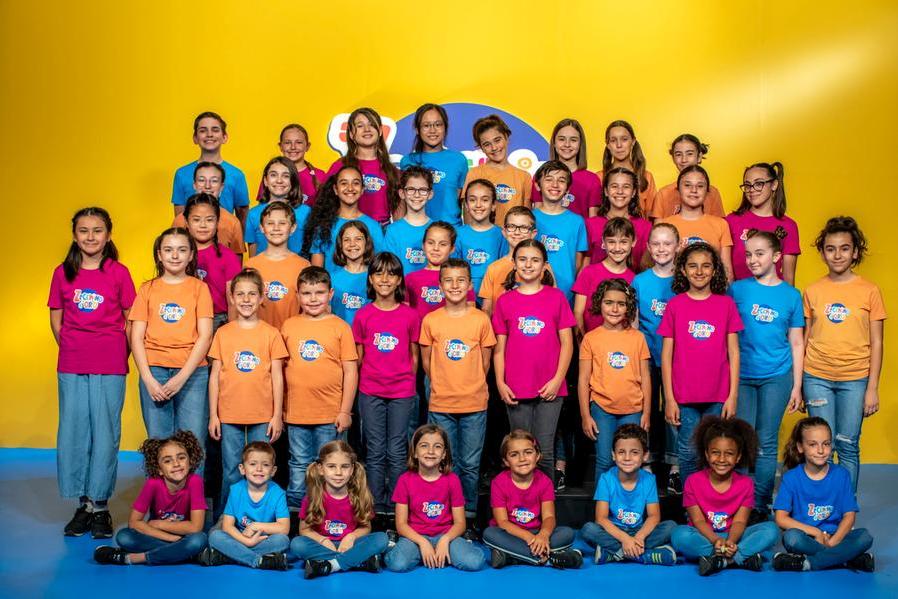



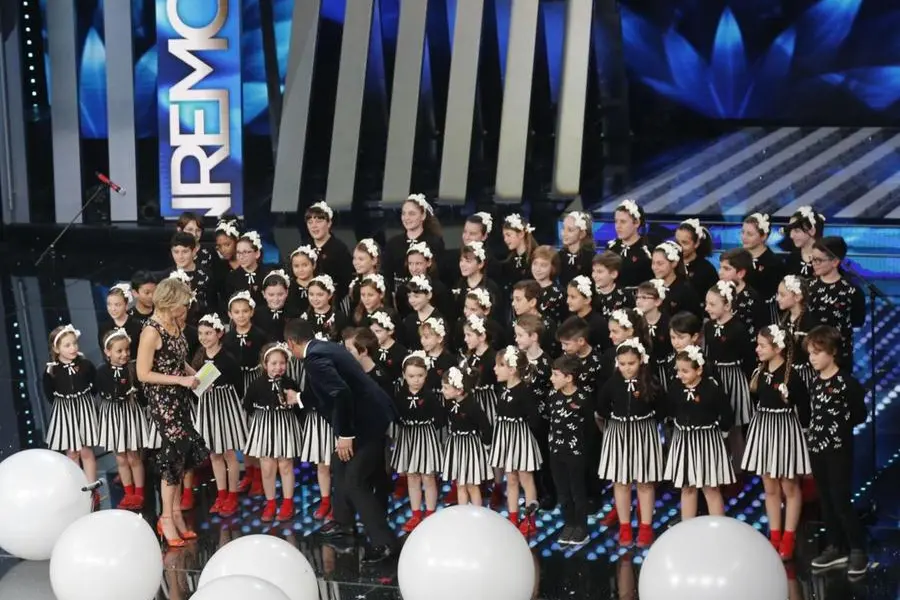
We were the first to hear their latest song live. The Piccolo Coro dell’Antoniano performed for us, with their little voices perfectly in tune under the severe and loving direction of Sabrina Simoni. A song that this time is not for children: it’s called Like fish, elephants and tigers and was written by Tommaso Paradiso (at the time frontman of Thegiornalisti ed) and Takagi & Ketra, the producers of many successful hits.
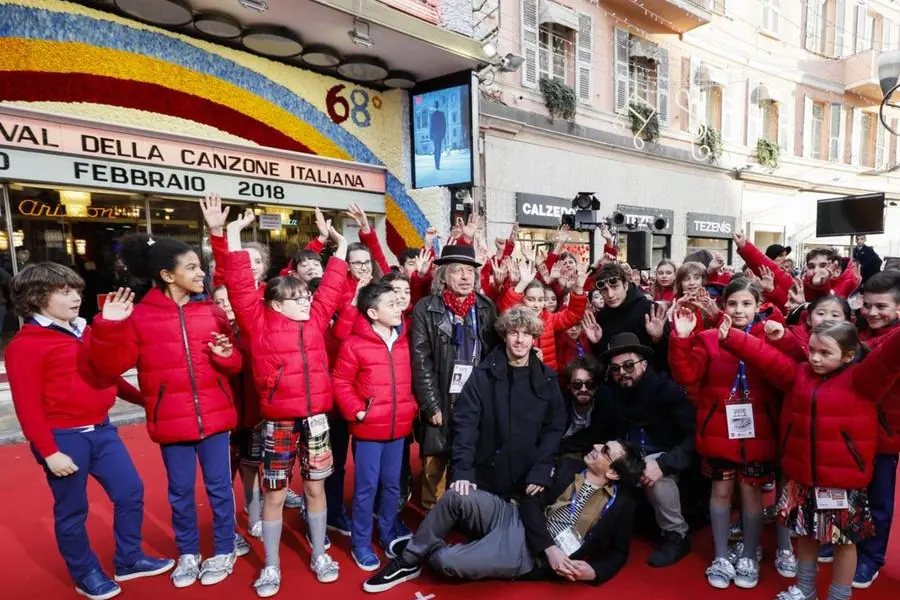
The Piccolo Coro is not new to these forays into pop music: in the 2018 edition of the Sanremo Festival he sang on the Ariston stage with Lo Stato Sociale, he accompanied Raffaella Carrà in her Christmas album and worked with J-Ax, Calcutta, Lorenzo Licitra (winner of X-Factor no2017). He has also collaborated with opera singers of the caliber of Luciano Pavarotti and Andrea Bocelli.
This song sends the message that life requires a “yes” from us from the moment we are born, and this unites us with all living beings. In the video, shot in Bologna at night, the children are an awake presence in a sleeping city, testifying that children exist: they do not rule the world, but they are the beating heart of life. «Like the white clouds in the sky / we move forward without making any noise / but with life, with life in our hearts».
To accompany the song, t-shirts were created with the animals of the title, worn as testimonials by a series of friends of the Zecchino, such as Francesca Fialdini, Veronica Maya, Carlo Conti and Chiara Tortorella, radio presenter and daughter of Cino, the famous magician Zurlì.
«It was important to make it clear that the Piccolo Coro has the artistic strength to stand alongside the big names» says Fabrizio Palaferri, responsible for Antoniano’s promotional activities. «And the great thing is that these children manage to remain themselves while working with great artists».
And as always, music is the vehicle for carrying forward solidarity initiatives. «In our DNA there is the Franciscan spirit of helping others», continues Palaferri.
How the Antoniano and the Zecchino d’Oro were born
It all began when Father Ernesto, who had experienced the concentration camp and therefore hunger during the Second World War, had the idea in 1954 of building a canteen where anyone would feel at home. At the time the poor were brutally fed, standing in front of a door with a pot of soup. Instead, at the Antoniano they were welcomed as if they were at a restaurant: the idea was to consider them as a whole as people and not just as hungry people.
In 1959 the singing event was born Gold Zecchinoof which the Piccolo Coro directed by Mariele Ventre was an integral part from 1963.
Sabrina Simoni, who has directed it for 25 years, explains to us how the choir works today. «It is made up of around sixty children, all from Bologna, given the need to rehearse at least three times a week (but there are many of foreign origins: Russians, Romanians, Jamaicans, Ivorians…). They range from 4 to 11 years old, but there are those who don’t want to leave anymore: like Filippo, who is 13 years old. His voice has changed, but he is still here with his classmates. OREvery year there are around two hundred who aspire to enter, but there are no more than ten places available, depending on how many children leave».
The voices of children
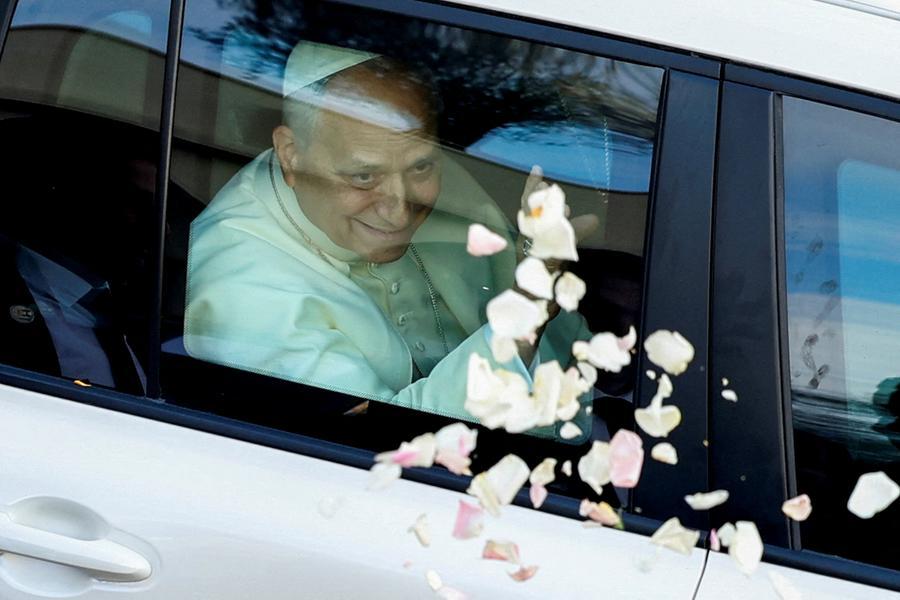
Being part of the Piccolo Coro is a fantastic adventure also because, as he says Giorgia, 11 years old: «When I sing I bring out my emotions». There are many opportunities to perform, in Italy and around the world. The children sang for the Pope and for the President of the Republic. And for a few years there has been a fixed appointment to travel to China.
«When we are away», says Beatrice, 11 years old, «I am surprised by the warmth with which people welcome us». He echoes her Filippo: «They even ask us for autographs».
Besides the song Like fish, elephants and tigers, another great novelty awaits the little choristers: fiction The Zecchino boys, which will be broadcast in November on Rai 1, with Matilda De Angelis in the role of Mariele Ventre. It was directed by Ambrogio Lo Giudice, a former child of the Piccolo Coro, who at the age of six had arrived in Bologna from Sicily with his parents and had found a sort of large family in the Antoniano.