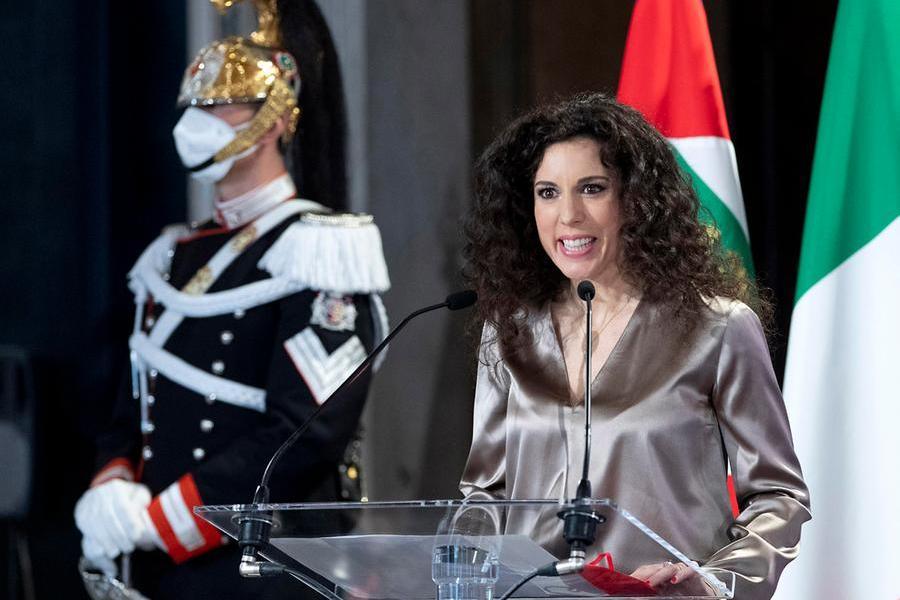






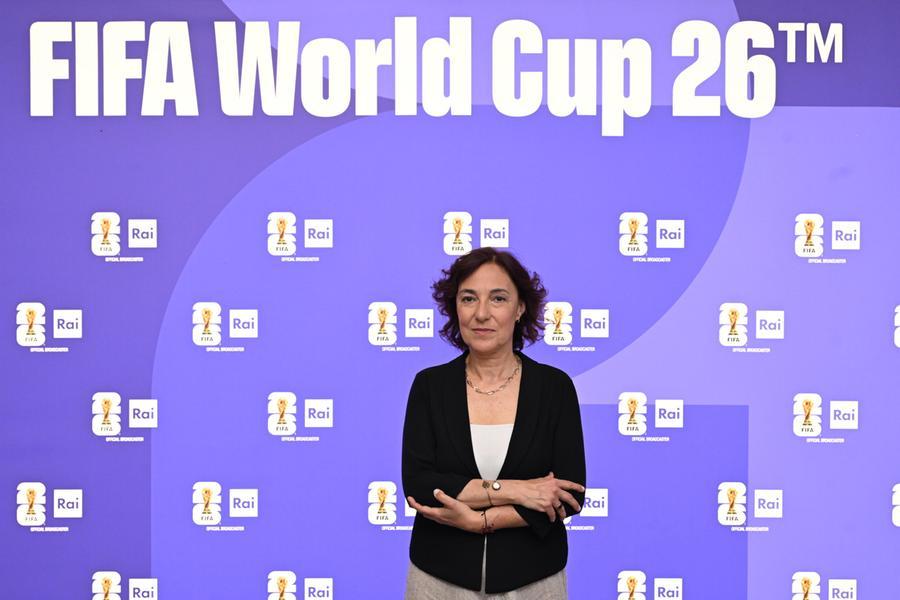
It took 73 years from 21 October 1953, the year of the first national football team commentary on TV, for a woman to debut at the microphones of a men’s football World Cup in public service commentary. It was the turn of Tiziana Alla, 61 years old, on 23 June 2026 in England-Ghana. Better late than never. Alla has a long history of television sports journalism behind her and had already been following the matches of the Italian national team from the edge of the pitch for four years. He had wanted her there, in the place where Alessandro Antinelli had been for 12 years, another prima donna, which is different from saying “primadonna”, Alessandra Di Stefano, between 2021 and 2023, a life following cycling, the only director so far in the history of Raisport.
Before Tiziana Alla, the historical female face of the national football team, but never a commentator, there was Donatella Scarnatisince 1990 special correspondent following the Azzurri, first for Tg1 then for Raisport, of which since 2015 she was responsible for the team during the official and friendly matches of the Azzurri, who retired in 2022 with a tribute from the coach Roberto Mancini and the national team: a blue number 36 shirt with her name.
Tiziana Alla, a graduate in political science, trained at the Urbino school of journalism, has actually been a football commentator for twenty years. His debut on the microphone took place in 2006, in Piacenza-Juventus, in Serie B, the time of the relegation of the Bianconeri due to Calciopoli, when he worked for Rai International. In 2019 he began commenting on the matches of the women’s national football team as a commentator.
When his name became official at the presentation of the Rai delegation for the USA Canada Mexico World Cup, he commented to Rai microphones: «I have become a symbol despite myself, because the dream would be for it to be normal: I have spent a professional life following football, I have been doing commentary for twenty years. I realize that the men’s World Cup means breaking the glass ceiling, the invisible but very resistant barrier that holds women back: a gap has opened up, thanks to Rai, but I hope that people can aspire through work to reach professional goals regardless of gender for their CV and that already at the next World Cup it will be an acquired asset and that no one will be surprised anymore to find a woman at the microphones. The emotion and pride are there, but then you have to prepare well and force yourself to think that this is a commentary like many others already done, otherwise you risk being subjected to pressure.”
Her being a woman had previously made the news in 2022 when Gigio Donnarumma was at the end of the match he had resented a question of hers after Germany-Italy 5-2, but she said she was always convinced that the piqued response would have come just as well from a male colleague. Although she admitted several times that she was the subject of prejudice, especially at the beginning, when she received emails in which they wrote to her that a female voice on commentary “just couldn’t be heard”.
But in twenty years we have come a long way, women in sports journalism have come a long way. Tennis, which is ahead of football, has for many years seen commentators taking turns at the microphones of the most important matches. And in print media, many women have been leading sports pens in sector and generalist newspapers for some time. At the Milan Cortina Games, for example, around the Milanese competitions in the mixed zone there was an equal distribution, if not sometimes a female predominance. The first was the writer Maria Ortese, in 1913, the first woman to follow the Giro d’Italia, when cycling was the center of Italians’ sporting passions.
And it was Emanuela Audisio, the only Italian to enter the Roll of Honor, the first woman in the world to receive, in 2018, the prestigious international sports journalism award named after Vázquez Montalbán, she said she was stopped many times in the United States in the Seventies on the threshold of the spaces reserved for journalists in the boxing matches she covered a lot, because it wasn’t believed likely that a woman was there to work. And even the writer could testify that it has happened to be asked, perhaps a little timidly, not exactly apris verbis, whether dealing with sport as a sector was, as women, a choice, a fallback, not to say a punishment. A question that comes, it is true, less and less now, but which comes more and more often from women. A sign that it is not genders but society that must walk.