




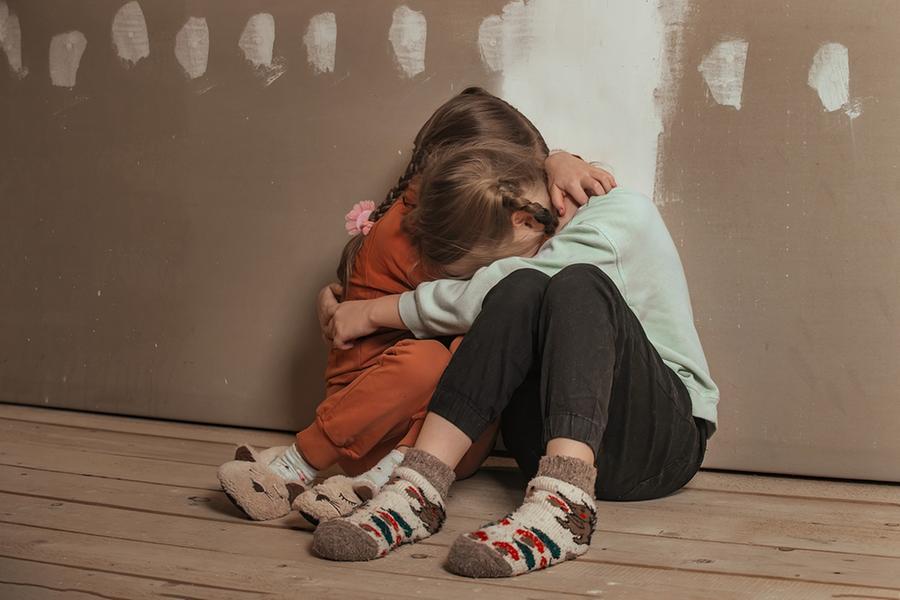
The death of Beatrice di Bordighera, who died due to the violence and torture repeatedly suffered by her mother and her partner, does not see her as the only victim of this affair. In fact, Beatrice lived with two older sisters aged 7 and 9 who have seen everything, heard everything, witnessed the crimes of a couple of adults totally incapable of taking care of his growth and convinced that they were silencing his nightly crying with beatings, pushing, banging against the wall.
There are two things to think about as adults. Stories of intra-family violence have direct victims, like Beatrice, and apparently indirect victims like her two little sisters. What happens in the mind of a little girl who daily witnesses scenes of unprecedented violence, unloaded on bodies that belong to vulnerable and helpless subjects, bodies inhabited by hearts and minds that do not know or cannot ask for help, to escape the hell in which they would never have wanted to be, but in which they are forced to remain? This theme, in psychology, is called “witnessed violence”. It happens to children whose mothers are beaten by the other parent. It happens to brothers and sisters who witness the violence to which a family member is subjected.
They watch, suffer and can do nothing. And somewhere – in their minds and hearts – fears and awareness arise. The fear that that victim family member may not survive the violence to which he or she is subjected. The fear of remaining at the mercy of that violence themselves, a condition that forces one to go through life as if one had to walk on a floor dotted with shattered glass: at all times you must be careful not to say or act anything that could trigger a violent reaction or crisis on the part of the feared adult. But the victims of witnessed violence experience, in addition to the impotence and anxiety that always inhabits them, also the false awareness that if someone from the outside hears and discovers everything, their life will be even worse than before. The children of violent and dysfunctional families live suspended between the shame that the world outside will discover and know that their family is a place similar to the fairytale wolf forest and the terror that someone will enter that horrible forest to bring order and restore peace.
When you are born and raised in an abusive, neglectful and dysfunctional family, you don’t know what it means to save yourself. You adapt to an environment that has no respect and protection of your rights, where you learn to live with adults who do not fulfill their parental duties and responsibilities, just as happened in Bordighera. Beatrice’s two little sisters knew that everything that was happening was very serious and wasn’t good. They tried to tell those two reckless and criminal adults. And while they did all this in vain, no one from the outside intervened before the crime was committed.
The Protection of Minors – and this is the second reflection that this case forces us to make – cannot tolerate belonging to a social and legal system that did not realize the seriousness of the crimes that were committed not only on Beatrice, but also on those two older sisters. It is not possible to know ex post that those little sisters tried in every way to save their little sister, begging her mother and her partner to stop beating her and have her seen by a doctor. They weren’t the ones who had to do all this. It was the village in which these three poor girls were born and raised that had to realize early and early the pain and inadequacy of that domestic environment.
The testimony of the little sisters, of which all the media today report distressing and horrifying details, serves to incriminate the culprits. But the words that those two little sisters are now telling the investigators should have been listened to first. As I wrote in this article, children often cannot express with words the evil they are experiencing, the pain they are feeling, the fear they are experiencing. However, they speak with their bodies, with their gaze, with what they do or don’t do differently compared to their peers. It is these indicators that must raise the alarm regarding family situations as compromised as those of Beatrice, in Bordighera. Those indicators were perhaps already present and visible in the two little sisters. But no one recognized them. And we must all feel responsible for this. Maybe even co-responsible.