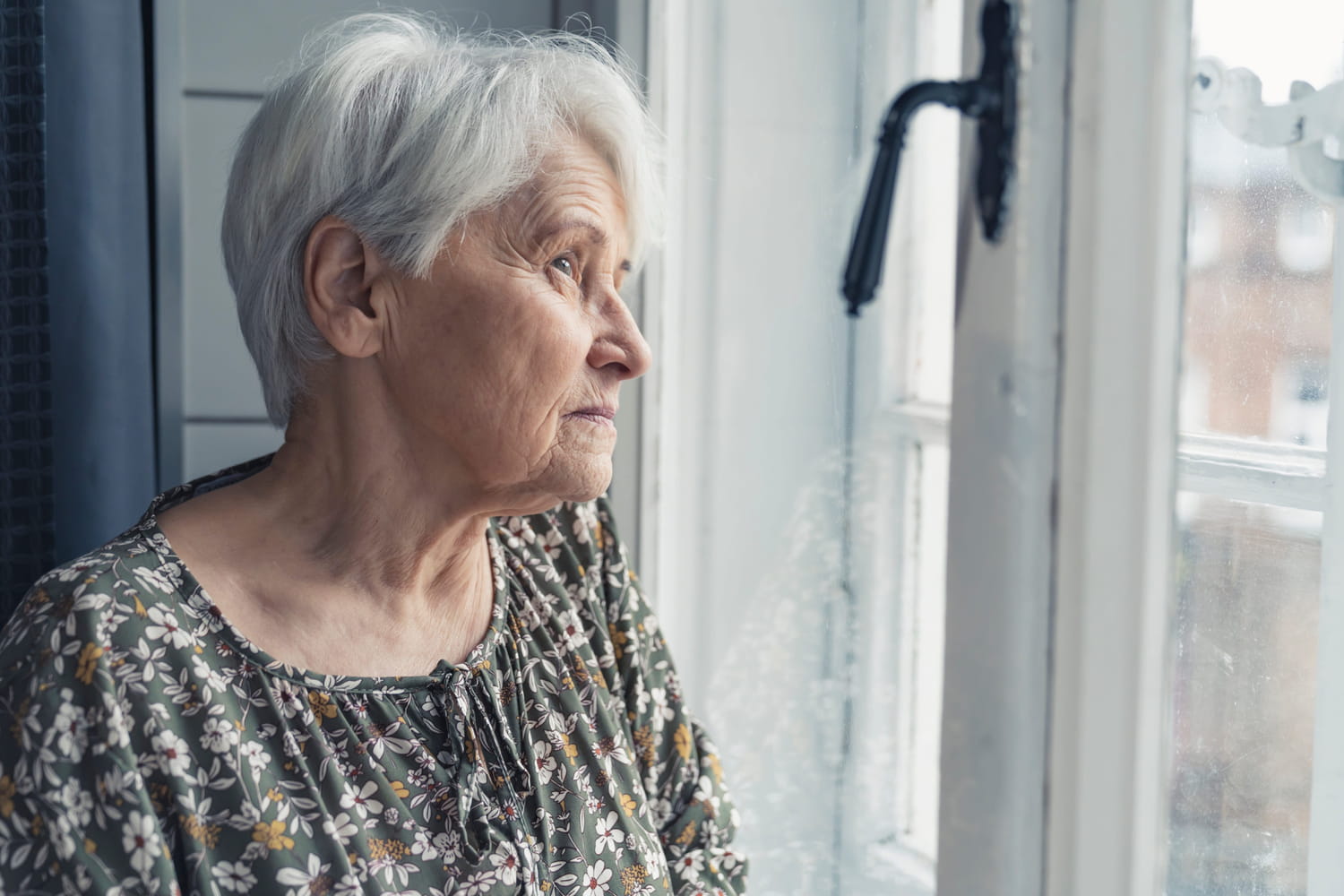
Posted behind their curtains, many retirees spend long hours scrutinizing the slightest movements in their street. Far from being a penchant for gossip, this habit hides an unsuspected need for their daily lives.
A neighbor leaving his house, the postman approaching, a car slowing down… From their window, it is very common for elderly people to observe these small everyday scenes with attention. After retirement, some people measure the passage of time and restructure their days by observing the active lives of others. And if we associate this habit with simple curiosity, or worse, unwelcome gossip from a grumpy old man, it is actually a very useful psychological mechanism.
Researchers explain in a study that looking out the window allows older people to stimulate their cognitive abilities and provides them with a feeling of continuity necessary for their emotional well-being. The human brain has a vital need for stimulation to stay awake. After interviewing homebound seniors, researchers proved that older people need to observe “a world in motion and perpetual evolution” to have the feeling of belonging there even though they are no longer in active life. Seeing children play, neighbors interact or the seasons change maintains a connection to society, even if it is only visual, and prevents the brain from regressing. The results suggest that these people “interact with this world to give it meaning”. This habit thus feeds their deep need for connection to their environment.
Some seniors go much further and do real imaginative work by observing the street from their window. They invent stories and create characters. “I see the same people going to work every morning (…) I call him Frank, he looks tough, look at his suit, I bet he’s a fierce businessman…”confides an 80-year-old man in The Conversation. This ability to “interact through stories” allows one to be integrated into the lives of others by proxy. In addition to stimulating creativity, it allows you to better experience solitude.
Beyond cognitive stimulation, this pastime is essential for the safety of the elderly person. After studying the daily lives of our elders for three years, researcher Graham D. Rowles explains in a study that the space visible from the window is a “surveillance zone”for the person observing, but also for the neighborhood. It is a space in which “visual reciprocity facilitates the emergence and maintenance of practical and social support from neighbors”. Clearly, this mechanism establishes a real contract of invisible trust: by standing at their window, the senior announces their presence to the neighborhood. Residents get used to this presence and, if it is missing, they know that an incident or health problem may have occurred and that it is necessary to ensure that everything is okay.
Graham D. Rowles even states that some older people need this activity so much that they spend “some time arranging their space to get a good view”. To help our seniors fully benefit from this ritual, particularly those who struggle to get around alone, he recommends arranging their interior around the view through their window, “rather than a house designed around the television”. In practice, we can install our grandmother’s or grandfather’s favorite armchair next to a window with a nice view, then add a table with the telephone as well as some activities, such as a book or the newspaper.