





Football has made away shirts, completely independent of club colours, a colossal marketing operation, whereby they try to sell the most disparate, colourful, improbable, second and third shirts after having sold the fans the first, official, not exactly cheap ones. The presence of an away shirt arose from the fact that it was up to (and up to the away team, for television and public usability needs) to change the livery if there was a risk that the colors of the two teams would get confused with each other, something that happened more often when, before the advent of color TV, the screen was a night in which all the lines were gray making the red of Milan and the blue of Inter appear identical on the black and white screen.
In tennis, with the net in the middle, this problem has never arisen and it could very well happen that two opposing players enter the court with the exact same colors on them.perhaps because that is theoutfitas is now fashionable to say in that sector, which the sponsor has chosen for that week. This even when in certain enormous basins those looking from above see the match very far away. And beware of getting distracted so as not to get confused.
WIMBLEDON AND THE ALL WHITE RULE
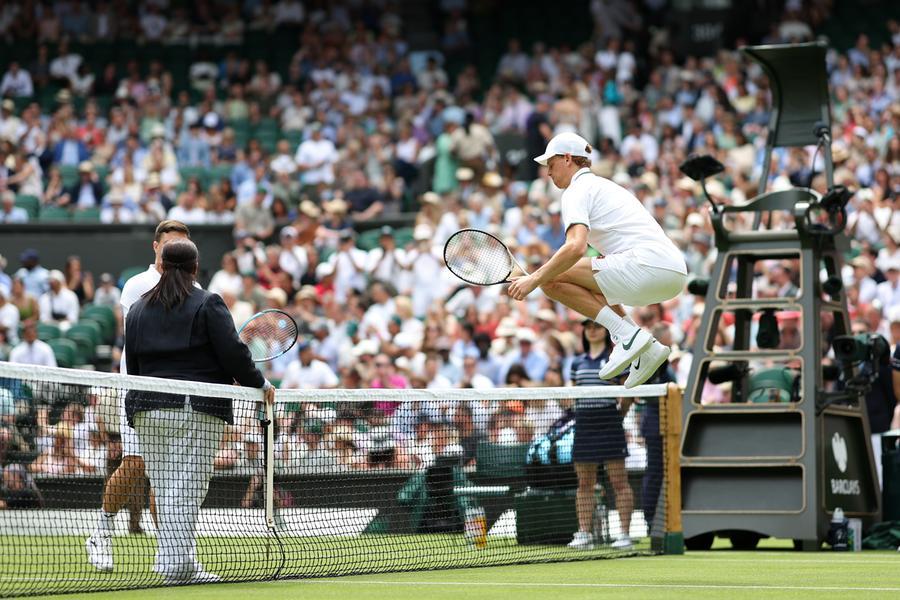
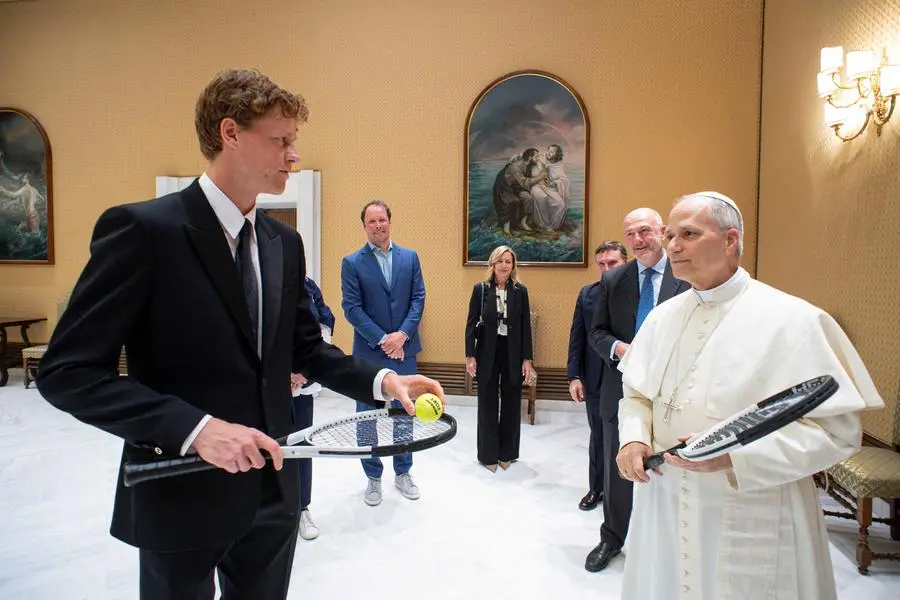
And then there is Wimbledon, where tradition also sends the sponsors out of the way when it deems it necessary: there it is obligatory for the players to take to the field wearing white. Pope Leo also knows this well, as a tennis enthusiast, who when, recently elected, met Jannik Sinner, he pointed to his recent outfit with a smile and commented: «So perhaps they would let me play at Wimbledon».
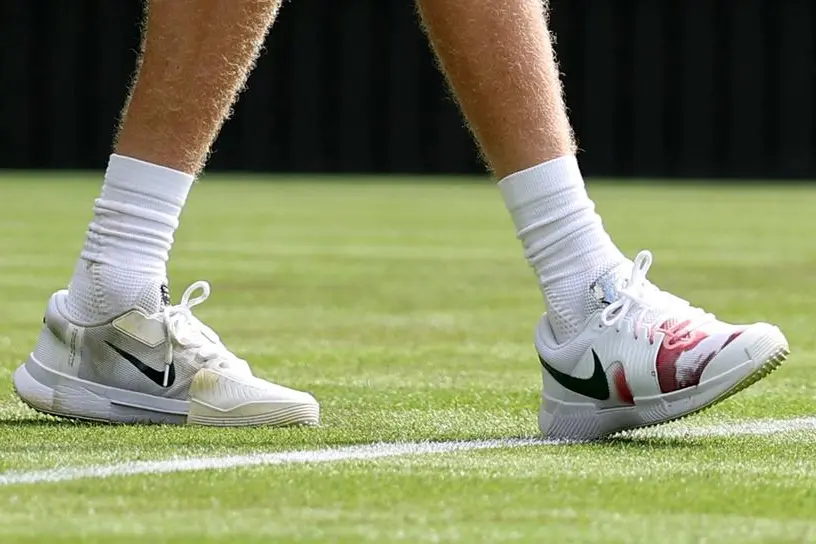
He was obviously alluding to the white rule, the same one that Sinner joked about on his 2026 debut, when a bloodstain, caused by a small wound on his foot, dyed his shoe red: “We hope we haven’t violated the white rule,” he said in the press conference, also mindful of the rigidity of a regulation that often causes headaches for tennis players.
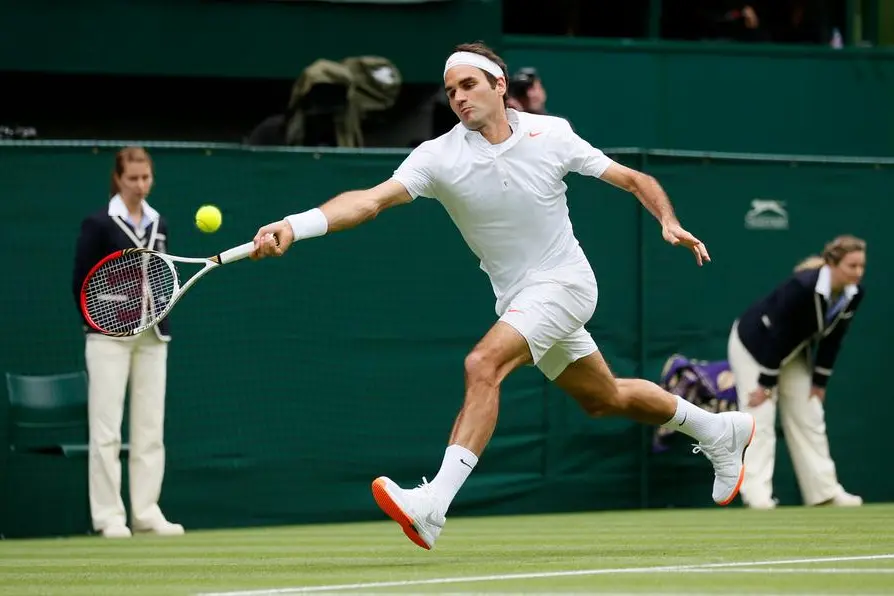
In 2013, for example, Roger Federer was sanctioned because the sponsor had provided him with all-white shoes but with orange soles. In the second round he had to change them.
A CUSTOM BORN IN VICTORIAN ENGLAND
The white rule has roots that date back to the origins of the oldest tennis club in the world, born in 1877 in the midst of the Victorian era: a period in which it was considered inappropriate for aristocratic gentlemen and ladies who enjoyed tennis to display unsightly patches of sweat in public: white would at least have made it less visible and would also have attracted the sun’s rays less.
Moreover, it was a color that the lower classes could rarely afford to wear, not very compatible with hard work and difficult for those who did not have servants to keep tidy for the time. White was in some ways inherent to Wimbledon and its club and was a custom almost taken for granted.
SCANDAL IN THE SUN IN THE SIXTY YEARS: MARIA BUENO
It was in the 1960s that the problem of defining in great detail the total white that came naturally at the time of trousers and long skirts à la Suzanne Lenglen began to arise.

The cornerstone of the scandal was Maria Bueno who in 1962, entered the court with a perfect little white dress which revealed on the first serve, and the associated flutter of her skirt, the mystery of a shocking pink double-face. Scandal. And running for cover. With written regulations on “predominantly white”. He explained the reason for the scandal in recent days tennis historian Rob Lake to the BBC «Being a conservative organization (both in the strict and informal sense), the AELTC (All England Lawn Tennis and Croquet Club ed.) would have found the ruffles on her dress… in bad taste and unbecoming for a lady. They were certainly out of step with the social changes happening outside the club in the 1960s. At that time – and until the 1980s – all members of the committee were men. They represented “the established order, with political affiliations and connections in other elite institutions. They were certainly not willing to promote social progress that could discredit them.”
THE STRIPES OF BJORN BORG, THE BLUE OF MARTINA NAVRATILOVA
Between the Seventies and Eighties, when sportswear began to be a business for sponsors, that predominantly white color began to be interpreted by companies producing t-shirts, skirts and various accessories, eager to differentiate their products in a looser way: in 1976 Bjorn Borg lifted the trophy with a white shirt with blue stripes and a blue collar, and four years later, even with an orange shirt over the white shirt.
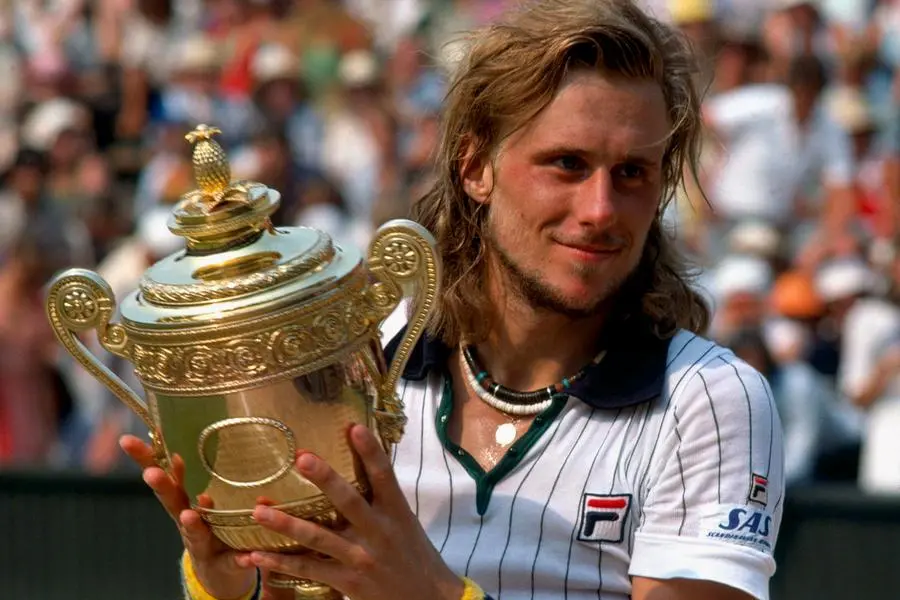
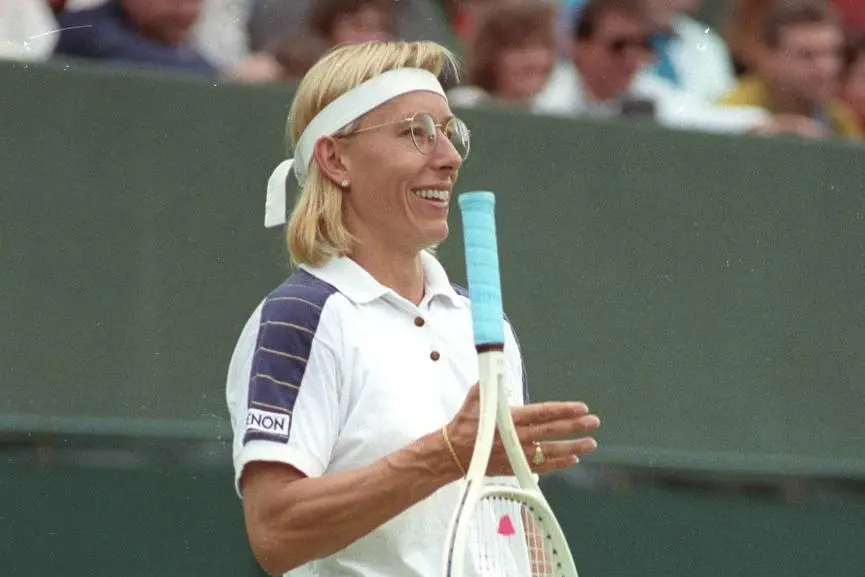
From there it began to be understood that the interpretation of “predominantly” was becoming too loose and the organizers began to reprimand the players who “exaggerated”. In the nineties Martina Navratilova was criticized for a sober blue insert in her skirt and shirt.
2014 AN (ALMOST) DRACONIAN DECALOGUE
The current rigid and very detailed regulation, drawn up in 2014, probably as a reaction to Federer’s instructions from the previous year, is a draconian 9-point vademecum (plus an exemption added in 2023). It can be summarized as follows: all clothing, from the moment you enter the pitch, must be almost entirely white (not cream, not cream, not off-white) including laces, shoe soles, bandanas, cuffs, caps. Not even variations in fabric which, although white, may form patterns are accepted, the only tolerance is a colored profile no wider than one centimeter. The white imperative also extends to medical devices, bandages, bandages, plasters, unless it is really impossible to do otherwise. White also applies to underwear that might show through due to sweat: Venus Williams, for example, was sent to change in 1999 because of a fuchsia shoulder strap protruding from under her dress. The only exception granted, an exemption obtained after a long battle by the women in 2023, is that which establishes that only female players «can wear plain underwear shorts in a medium/dark colour, as long as they are not longer than the shorts or skirt.
NAOMI OSAKA’S KIMONO
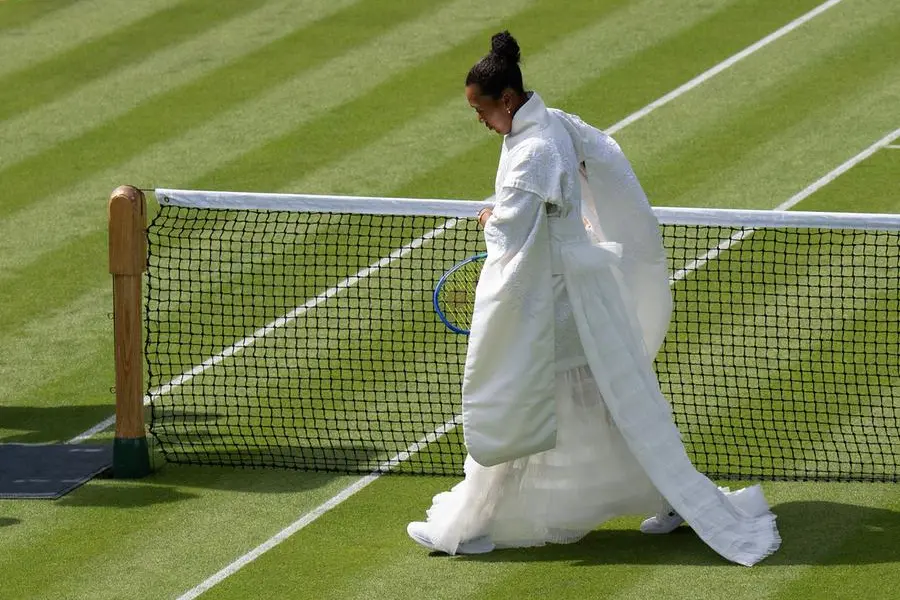
All this obviously does not mean that the sponsors have given up on showing themselves, not being able to do so by making the brand logos bold (which are allowed but contained) and with the fantasy of the colours, they indulge themselves with the styles, as evidenced by the sumptuous kimono in which Noemi Osaka entered the court, to cover her tennis outfit. But throughout history there are also those who have not adapted: like Andrè Agassi, who at the beginning of his career preferred to give up Wimbledon rather than strip his rock star look of his original denim shorts.
THE PROVOCATIONS OF SHRIVER AND WHITE
In 1985, however, Anne White took to the field wearing a tight white tracksuit, from a well-known sports brand, although total white, she was invited to show up the next day wearing «clothing suitable for the eyes of the All England Club». The reaction of Pam Shriver, her opponent that day, who a few days later showed up on the court with a white 1930s dress down to her knees, was prompt and ironic. Proof that the white rule, with one pretext or another, even after 150 years (it will be next year) never stops being talked about.