





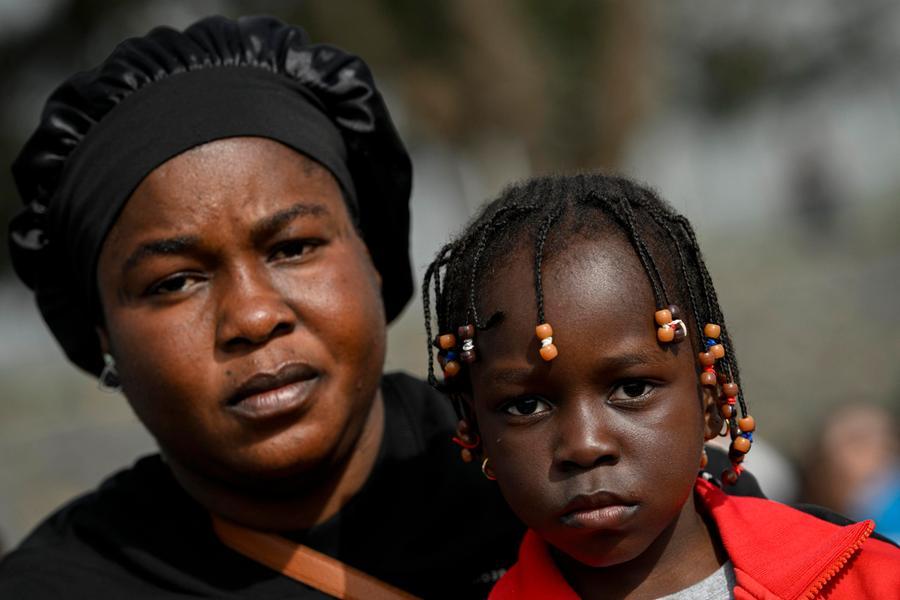
Today the World Refugee Day invites us to stop and look at one of the great questions of our time: millions of people forced to leave their homes to escape wars, persecution, violence and human rights violations.
It is an anniversary that risks turning into a formal ritual, punctuated by statistics and declarations of circumstance. Nevertheless, Behind every figure there is a story: a separated family, a child who interrupts his studies, a mother who crosses unknown borders, a father who loses his job, his home and often his hope.
According to the most recent UNHCR Global Trends 2025 reportat the end of 2025 they were 117.8 million people have been forced to flee around the world: approximately one person for every seventy inhabitants of the planet. A huge, frightening figure, even if slightly down on the previous year, the first after more than a decade of almost continuous growth. (UNHCR)
There are now 41.6 million refugees in the world, while another 68.7 million live displaced within their own countries and around 9 million are still awaiting a decision on their asylum application. (UNHCR)
How to interpret this overall decline? The data tells a complex reality. Almost in 2025 14.7 million people have returned to their areas of origin, including 4.4 million refugees. Many of these returns have been to Afghanistan, Syria and Sudan. However, as UNHCR underlines, numerous returns have taken place in extremely fragile conditions, in territories still marked by instability, poverty and insecurity. Returning home does not necessarily mean having found a dignified life again.
Then there is a particularly significant figure: seven out of ten refugees live in situations of prolonged exile. For millions of people, escape is no longer a temporary parenthesis, but a permanent condition. Years spent in refugee camps, in urban suburbs or in countries that welcome them without being able to offer real prospects of integration.
This observation forces us to reflect more deeply. Too often public debate reduces the issue of refugees to a question of numbers, quotas, borders and controls. These are aspects that have an impact on the life of societies, certainly, but they cannot be the only evaluation criteria. The real question concerns the future of the people who have lost everything. How to build opportunities for study, work and autonomy? How can we prevent entire generations from growing up dependent exclusively on humanitarian aid?
UNHCR has chosen to focus attention precisely on this point, launching a strategy that aims to drastically reduce the number of refugees trapped in conditions of prolonged dependency on assistance by 2035. The objective is not only to guarantee protection, but to create the conditions so that those who have been forced to flee can return to being protagonists of their own lives.
Even some clichés deserve to be overcome. In fact, most refugees do not reach the richest countries in the world. Around 65% find protection in states bordering their country of origin, often low- or middle-income nations that bear the brunt of the reception. They are communities that, despite having limited resources, continue to offer refuge to millions of people.
World Refugee Day also comes at a delicate time for the international humanitarian system. Needs are growing, while funding is decreasing. UNHCR itself has reported a significant reduction in available resources in 2025, with inevitable consequences on essential services intended for the most vulnerable populations.
This is why June 20th should not just be an opportunity to express solidarity. It should become a moment of collective responsibility. In an era marked by persistent conflicts, geopolitical tensions and increasingly frequent climate crises, the fate of refugees does not just affect those who flee. It concerns the model of society we intend to build.
Defending the right to asylum, promoting inclusion and combating indifference are not gestures of generosity, they are choices that define the moral and democratic quality of our communities.
Because, ultimately, the history of refugees reminds us of a simple and universal truth: no one chooses to become a refugee. But we can all choose how to look at those who were forced to flee.

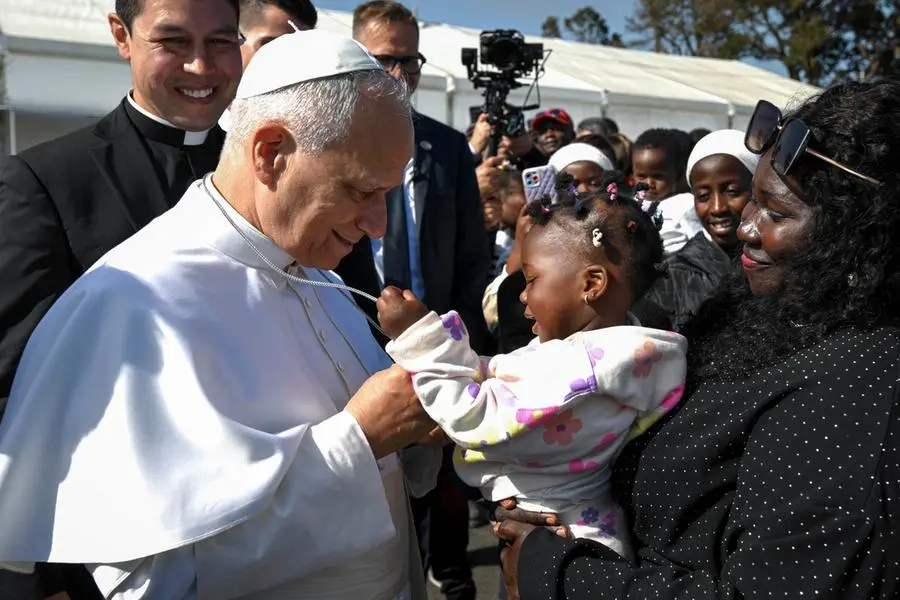
A gesture of tenderness by Leone XIX with some migrants in Tenerife, last June 12th.
(HANDLE)
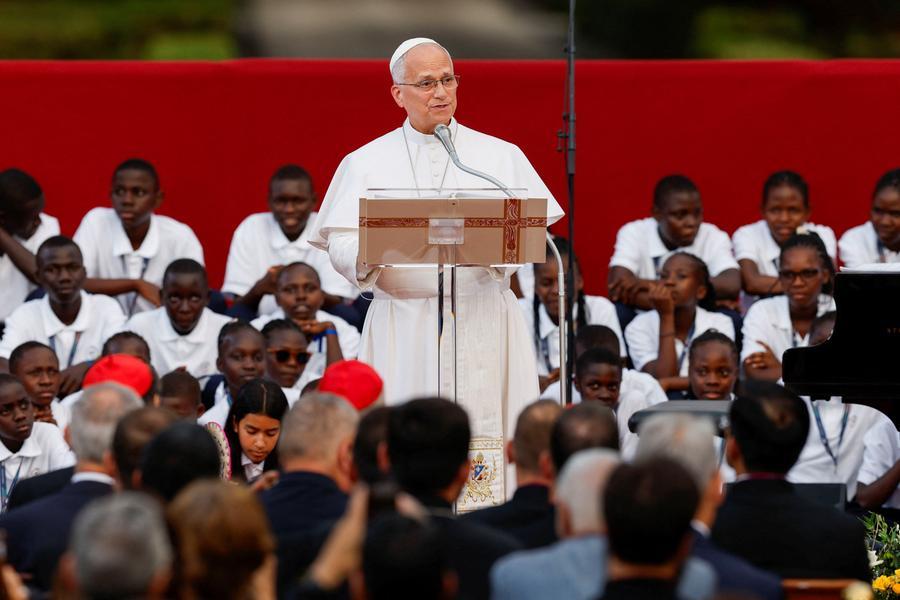
Pope Leo XIV chose as the theme of World Migrant and Refugee Day the sentence «Even just one of these children», recalling the Gospel of Matthew (“Whoever welcomes one of these children welcomes me”). With this choice he wanted to draw attention to migrant and refugee minors, considered among the most vulnerable people in the process of escape and migration.
On his recent trip to the Canary Islandsone of the main landing points of the migratory routes towards Europe, Leo XIV stated that “all of us are migrants”, inviting us to look at refugees not as a problem but as people who bring dignity, history and hope. He called for greater solidarity, integration and legal and safe paths for those fleeing war, persecution and poverty. He also reported the “normalization” of deaths along migratory routes, stating that history will judge severely those who remain indifferent to these tragedies.