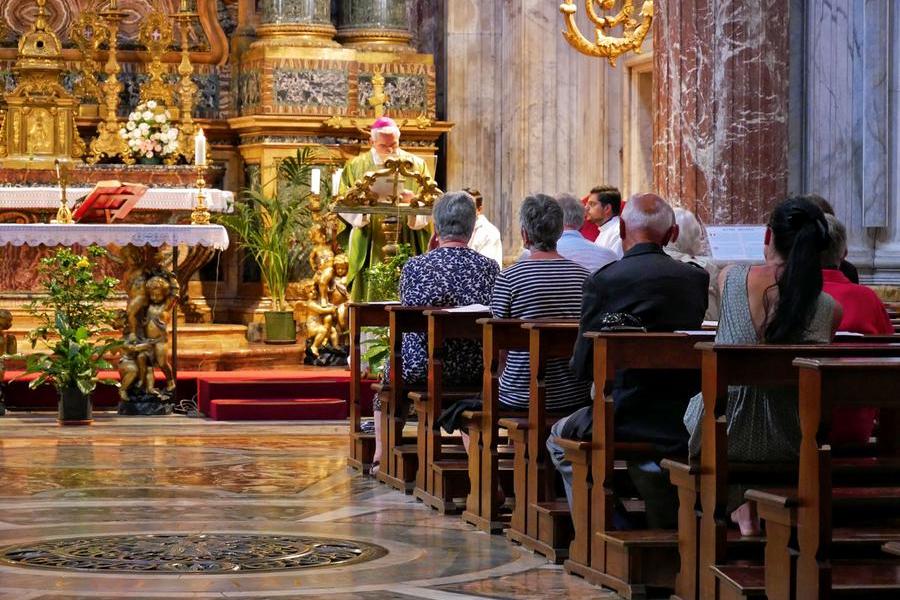





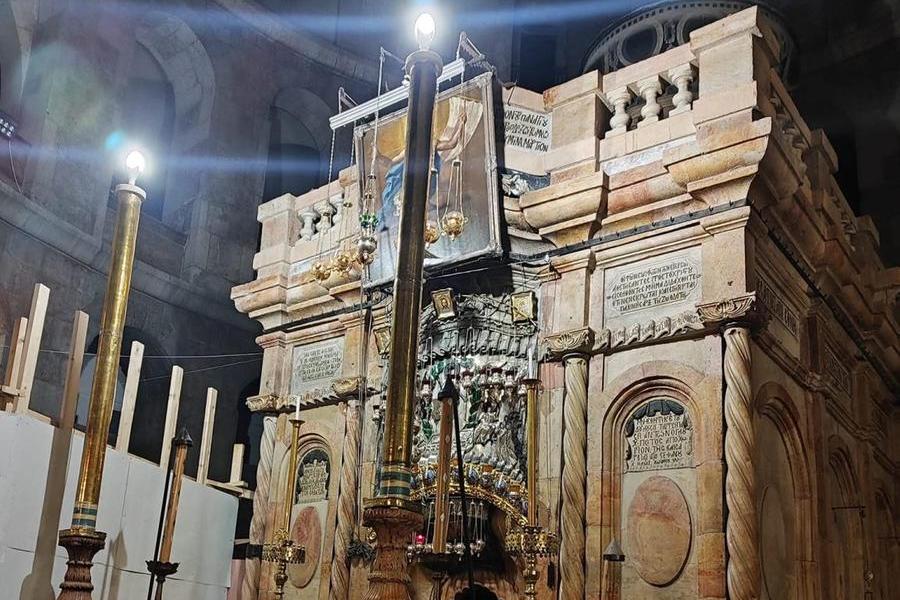
«There is a door in the heart of Jerusalem that has been closed every evening for centuries. It is an ancient wooden door, worn by the hands of thousands of custodians, of pilgrims, of silent cries, of mothers who like The Mother, Mary, they pray and wait for their children, in the belly of a place as sacred as love. It is the door of the Holy Sepulcher and every time it closes, it seems that the world is holding its breath, that it stops in an infinite instant, that it cries and begs to see its doors wide open again.” This is how it begins Letter for the Easter season that Monsignor Francesco Savino, vice president of the CEI, published on the morning of the Saturday of silence. «That door», he continues, »tells something that no theologian has ever been able to fully explain: the mystery of a God who allows himself to be locked away; a God who accepts the stone, who becomes granite in love, who accepts the seal, the darkness. A God who has chosen to inhabit the depths of human pain to cross it from the inside, to touch it in its entirety.”
And he explains that, «in the tradition of Jerusalem, the keys to the Basilica of the Holy Sepulcher have been entrusted to a Muslim family for centuries. It is a paradox that only sacred history can generate: the tomb of the Son of God guarded by those who do not recognize him as such. But perhaps this is precisely what tells us something essential: the Sepulcher belongs to all humanity because pain has no religionit has no face and no history and perhaps it has a face and is part of the history of all of us.”
For those who have been in the Church of the Holy Sepulchre, the one that the Israeli authorities have closed for security reasons since February 28, seeing those locked doors, precisely in the holiest days of our faith, has a bitter taste. But even more bitter is thinking of our Christian brothers and sisters and those of other religions who are discriminated against, persecuted and killed in those countries. Bitter and painful to think of those who suffer in Gaza, in the West Bank, in Lebanon.
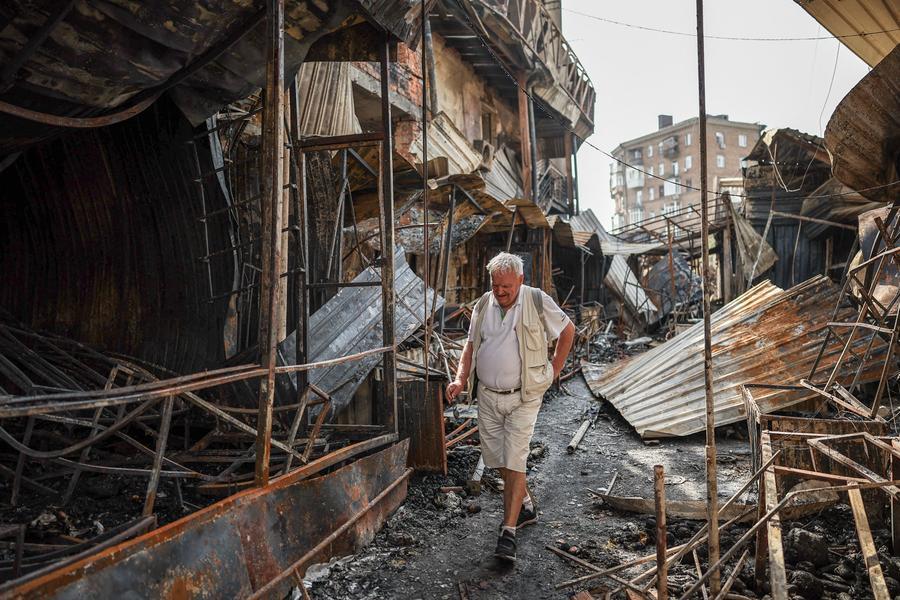
Monsignor Savino speaks of them and of all “those crucified in the flesh”. Crucifixes who «are silent, speechless and are terminally ill patients who every day face the ordeal of physical pain with a dignity that leaves you speechless; I am refugees crossing the sea on boats that shouldn’t float, carrying their children as the Cyrenean carries the cross and not because they chose to, but because there was nothing else to do. They are children in war zoneswho don’t understand why the adult world has decided to tear the sky above their heads to pieces while they dream of colorful constructions. I am the women and men who survived untold violencewho carry wounds in their flesh and memory that no doctor knows how to cure completely.”
But «every year, on Easter morning, that ancient door of the Holy Sepulcher is opened. The keys return to the hands of the custodians, the pilgrims enter, the stone is rolled away. The darkness is conquered.”
The door is open not only in Jerusalem, not only in the history of two thousand years ago. It’s open now, for you, for each and every one of you, at the exact point where you find yourself: inside the illness, inside the mourning, inside the tiredness, inside the sin, inside the loneliness. The Resurrection is not an event of the past, it is a living, renewed promise planted in the midst of your real life.”
The door is open when each of us brings Easter with us, «not as a religious habit, but as a fire. Bring it to those who are alone, to those who no longer believe they deserve anything, bring it above all to those who suffer in silence, to those who have stopped asking for help because they are tired of not receiving an answer.”
And he concludes: «You are the answer that silence awaits. You are the hands of the Risen One in the world. And every time you open a door to someone who was outside in the cold, it will still be Easter.”