




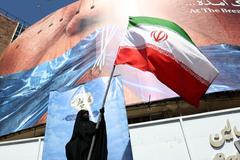
Statements, rumors, announcements, but still no concrete facts in the negotiations between the United States and Iran to put an end to the conflict unleashed by Trump and Netanyahu on February 28.
The signals coming from Washington and Tehran are contradictory. Over the weekend, Donald Trump hinted that the parties were close to an agreement. But then he pressed the brake pedal, declaring that he had instructed the negotiators “not to rush” the conclusion of an agreement. Then he spoke Marco Rubiothe Secretary of State on an official visit to India. Rubio hypothesized the possibility of an agreement quickly, perhaps as early as today, Monday 25 May. On Monday, however, a statement from Esmail Baghaei, spokesperson for the Foreign Ministry, arrived from Tehran. “It is fair to say that we have reached a conclusion on most of the issues under discussion,” Baghaei said, “but to say that this means that the signing of an agreement is imminent… no one can say that.”
According to reports, the memorandum of understanding includes a 60-day extension of the ceasefire, the reopening of the Strait of Hormuz and a plan for further negotiations on Iran’s nuclear program.
However, negotiations are ongoing. Top Iranian negotiators arrived in Doha, Qatar, on Monday for further talks. Mohammad Bagher Ghalibaf, speaker of the Iranian parliament, leads the delegation, which would also include Abbas Araghchi, foreign minister.
Despite the uncertainty, oil prices recorded a decline on Monday: Brent crude lost around 4%settling at $96 a barrel, on hopes that the United States and Iran are close to a peace deal.
Meanwhile, the US president said he had communicated on Saturday to the leaders of Saudi Arabia, Bahrain, the United Arab Emirates, Qatar, Pakistan, Turkey, Egypt and Jordan that “it should be mandatory that all of these countries, at a minimum, join the Abraham Accords at the same time.” once the agreement with Iran is signed, thus normalizing relations with Israel. Trump added that it would be a reward “after all the work that the United States has done to try to piece together this very complex puzzle.” Among the Gulf countries, so far the Abraham Accords have only been signed by the United Arab Emirates and Bahrain.