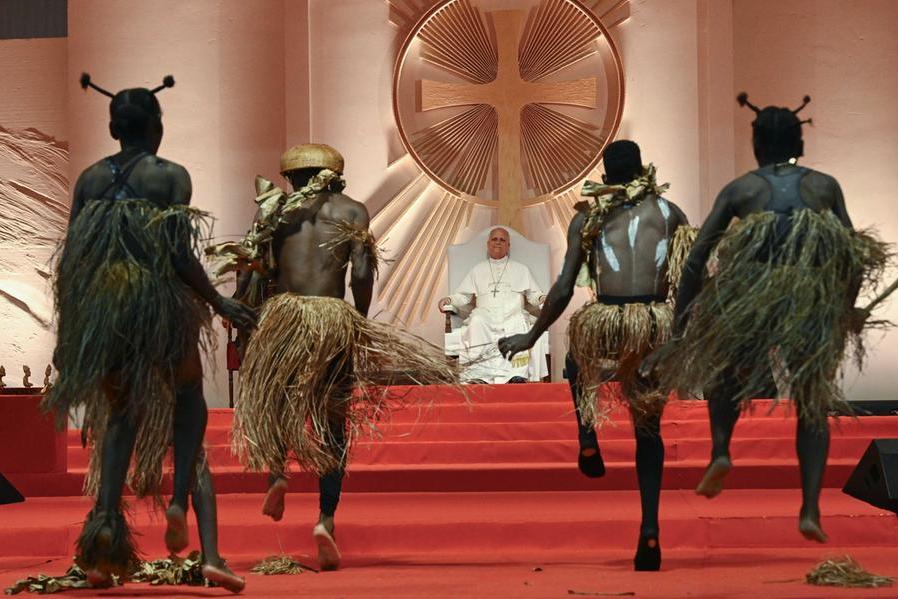



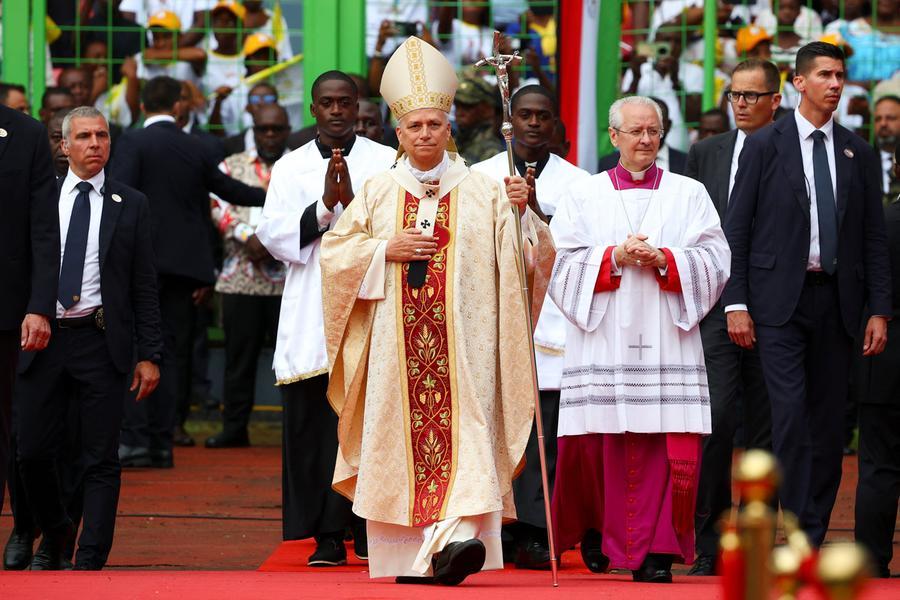


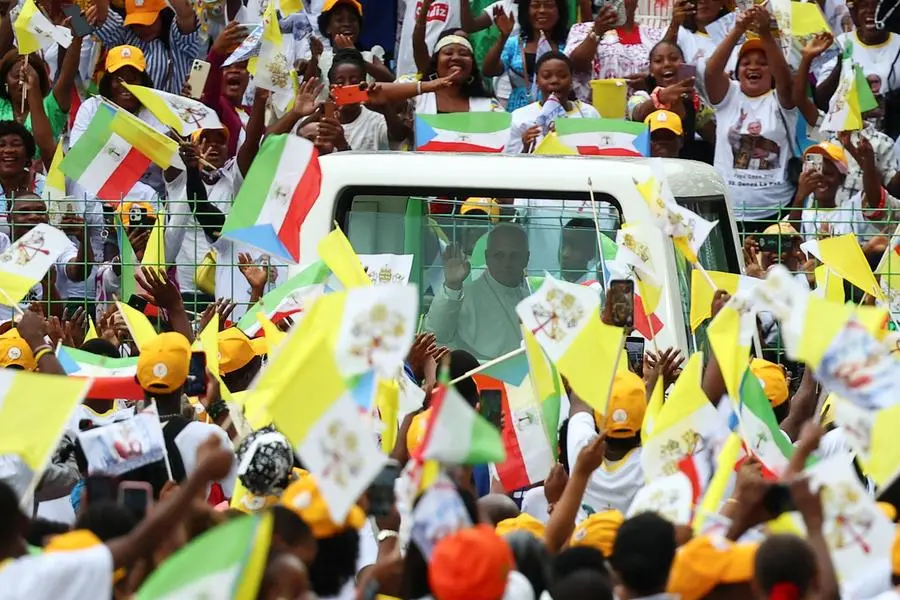
It is the stage of Malabowhere there are around thirty thousand cheerful and colorful faithful, the last stage of Pope Leo’s long apostolic journey to Africa who visited, in ten days, theAlgeria, Cameroon, Angola and finally Equatorial Guinea. The Pontiff, in the last appointment of the busy program of these days, at the end of the Mass addressed an intense greeting to the faithful, letting emerge all the emotion for an experience which, as he himself said, carries in his heart
The Pope’s greeting and thanks to Equatorial Guinea
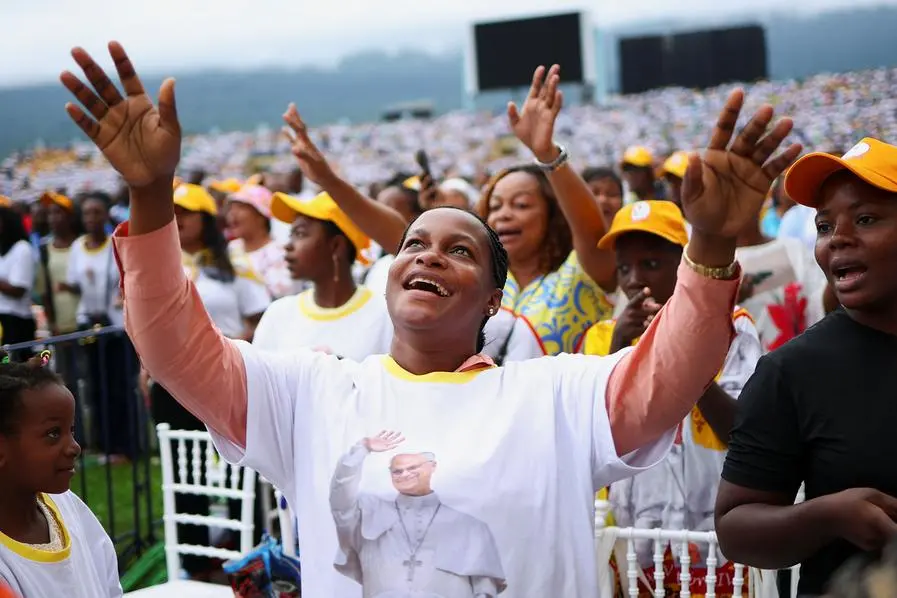
In Spanish, the language that has always accompanied Robert Prevost’s missionary journey, the Pontiff took leave of Equatorial Guinea amid applause, yellow and white flags and a visibly moved crowd. The Pope thanked «the Archbishop and the other Bishops, the priests and all of you, people of God on a journey in this land that has welcomed the good seed of the Gospel for 170 years», the country’s authorities and all those who contributed «to the success of my visit».
Words welcomed by long applause, while the waving of the flags colored the stands and the festive atmosphere mixed with that of gratitude.
Shortly before, during the Eucharistic celebration, the Pontiff had received the gifts of the African land: fruits, symbols of a wealth that is not only material but profoundly human and spiritual. A gesture that expressed, once again, the vitality of a continent often marked by difficulties and injustices, but capable of offering the world a testimony of living and resistant faith.
The “treasure” of the apostolic journey to Africa
In his final speech, Pope Leo wanted to deliver a spiritual summary of his journey, made up of encounters, faces and stories which – he underlined – remain engraved in the memory of his ministry: «I leave Africa with a priceless treasure of faith, hope and charity: a treasure made of stories, faces, joyful and painful testimonies that greatly enrich my life and my ministry as successor of Peter.”
A strong image, that of the “treasure”, which becomes the key to understanding the entire African pilgrimage: not a simple pastoral itinerary, but an experience of the Church lived in the concreteness of the people encountered.
The role of Africa in the Church today
The Pope then turned his gaze to the future of the Church on the continent, underlining the central role that it is called to play in the life of Christianity: «As in the first centuries of the Church, Africa is called today to make a decisive contribution to the holiness and missionary character of the Christian people».
The homily and the figure of the Ethiopian eunuch
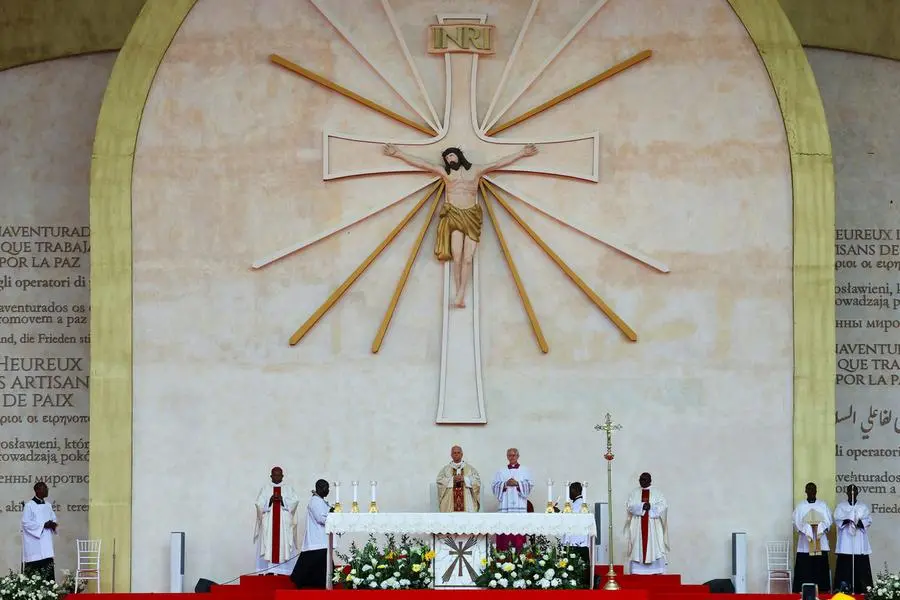
On the large stage of the stadium, dominated by a Crucifix from which wooden elements radiate, the Pope, during the Eucharistic celebration, wanted to recall the Church’s call to reach out to the world, bringing the Gospel into the daily lives of peoples.
During the homily, Leo XIV proposed an intense reading of Scripture starting from the meeting between the deacon Philip and the Ethiopian eunuch, a figure who becomes a symbol of humanity in search and often marked by internal and social wounds. In this man, the Pontiff explained, the drama of someone who possesses wealth and skills but is not fully free is reflected: «This man has intelligence and culture, and demonstrates it both in work and in prayer, but he is not fully free. This state is painfully imprinted on his body: he is in fact a eunuch. It cannot generate life: its energies are all at the service of a power that controls and dominates it.”
The Word that transforms life
But it is precisely the encounter with the living Word that changes his existence. The Gospel, the Pope underlined, is not a text to be observed from a distance, but a force that enters personal history and transforms it from within: «The Scriptures we have just heard question us, asking each of us if and how we know how to read the biblical pages that we share today. This is an invitation as serious as it is providential, because it prepares us to read together the book of history, that is, the pages of our lives, which God continues to inspire with his wisdom.” The eunuch, recalled LeoSlave and without descendants, this man is reborn to a new and free life in the name of the Lord Jesus: we still speak of his ransom today, even as we read the Scriptures!
The Church as communion in the Spirit
From this experience was born the vision of the Church as a space of communion, in which the Word is preserved and lived together, never in an isolated form: “Together”, he underlines, “we read the Scripture as the common good of the Church, having as our guide the Holy Spirit, who inspired it to compose it, and the apostolic Tradition, which has preserved and spread it throughout the earth”.
The heart of the message then focuses on Christ, the fulfillment of the Scriptures and the fullness of revelation. It is in Him, the Pope recalled, that God becomes close to man to the point of giving himself as the bread of life: «In the Son, the Father himself shows his glory: God makes himself seen, heard, touched. Through the gestures of Jesus, the Redeemer, He gives fullness to what he has always done: giving life. He creates the world, saves it, loves it forever.”
Hence the invitation to a concrete decision of faith, which questions the freedom of each one: «Do I trust that his love is stronger than my death? By deciding to believe him, each of us chooses between certain desperation and a hope that God makes possible.”
The mission of the Church in the world
The Pope then reiterated that evangelization is not theory, but concrete life that becomes testimony: “He loves us first, always: his word is the Gospel for us, and we have nothing better to announce in the world.” And with a formula that summarizes the entire mission of the Church, he concluded: «The announcement of salvation becomes a gesture, it becomes a service, it becomes a forgiveness: in a word, it becomes a Church!».