






Fear of hantavirus outbreak grows after serious cases and deaths on cruise ship. Passengers from different countries are on board, including French people. They will be disembarked in a few days.
It all begins on the Dutch cruise ship, the MV Hondius, which left Ushuaia in Argentina on April 1, 2026. Initially, it promises to be a pleasant trip for around a hundred people. But a month later, concerns are growing. The European Center for Disease Prevention and Control (ECDC) was informed on May 2 of a “outbreak of illness of unknown origin presenting serious respiratory symptoms” aboard the ship then located in the South Atlantic. By then, two people died and a third was evacuated to South Africa. She died there a few hours later. A PCR test is carried out and confirms contamination by a hantavirus. What is this ?
Hantaviruses are viruses that naturally infect rodents and are sometimes transmitted to humans. “In humans, infection can cause serious, often fatal illness.” specifies the WHO. Health authorities’ current hypothesis is that some passengers were exposed to the virus during a stay in Argentina before boarding, where it is endemic, and then transmitted it to other passengers on the cruise ship. In Argentina, a type of hantavirus called “Andes virus” or ANDV is mainly circulating. Its great particularity, very rare among hantaviruses, is that it can be transmitted from one person to another. One hundred and forty-nine people of 23 different nationalities were on the ship, including European nationals: Germany, Belgium, FranceGreece, Ireland, Netherlands, Poland, Portugal and Spain.
The ECDC confirmed on May 6 that seven people presented symptoms including fever, respiratory and gastrointestinal problems. At least four of them quickly developed pneumonia, acute respiratory distress and septic shock. All three deaths occurred among these seven people. One of the deceased was repatriated by plane. A flight attendant present on board at the time is now hospitalized in Amsterdam and presents symptoms suggestive of a hantavirus infection.
“The incubation of the virus can last 6 weeks”
“Taking into account the incubation period of the Andes ANDV virus (type of hantavirus), which can last up to six weeks, it is possible that more cases will be reported”, said Tedros Adhanom Ghebreyesus, Director-General of the WHO, on May 7. The MV Hondius boat left Cape Verde on the evening of Wednesday May 6 and is expected on Saturday May 9 in Tenerife in the Spanish Canary Islands.
The evacuation of the remaining passengers is expected to begin Monday, May 11. “All passengers will remain on the cruise ship until arrival” planes that will repatriate them to their countries, said the Spanish Interior Ministry. 29 passengers have already left the ship during a stopover on April 24 on the British island of Saint Helena. Some then took planes to return to their countries without specific isolation measures from other passengers on board.
Five French people on the boat, a contact case
Five French people are present on the boat. “They are doing well” assured Thursday, May 7, the Minister of Foreign Affairs, Jean-Noël Barrot, on RTL. One of these French people is a “contact case” since he was in contact with a sick person. Asked about his upcoming return to France, the minister indicated that “it is an ongoing discussion with the WHO to define the protocols, keep people safe and prevent the spread of the virus“. The ECDC wants to be reassuring: “Even if transmission of the virus were to occur from passengers evacuated from the ship, this virus is not easily transmitted. It is unlikely to cause many cases or a widespread outbreak, if infection prevention and control measures are applied. The risk to the general population of the European Union linked to the spread of the ANDV virus from this outbreak on a cruise ship is very weak.”
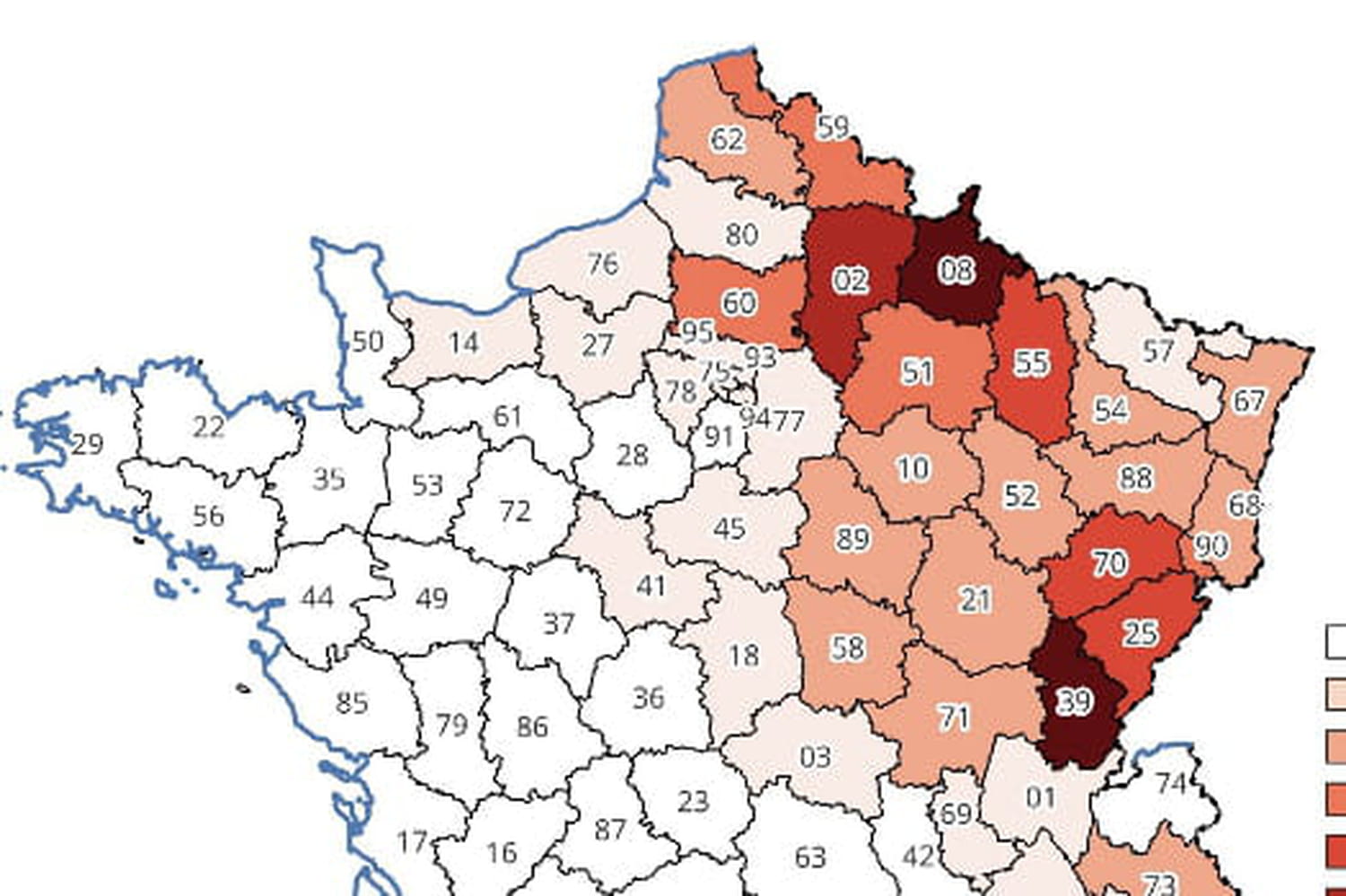
Hantavirus cases map of France
Hantaviruses are mainly present in the north-eastern quarter of mainland France. Small outbreaks can occur especially in spring and summer.
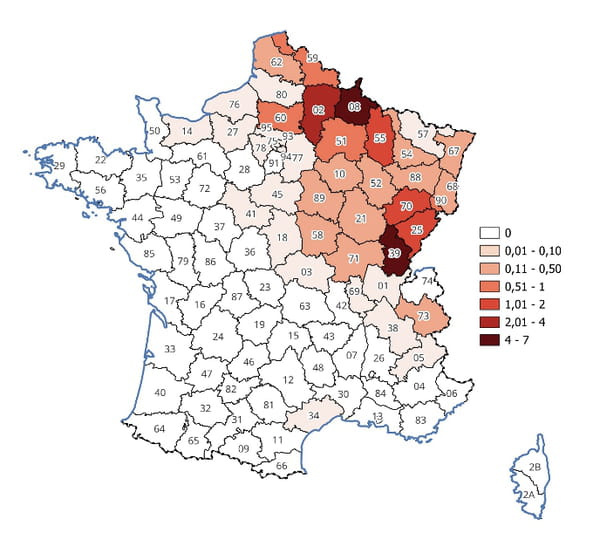
In France, the virus is mainly present in voles which live in forests and homes (barns, attics, sheds, abandoned cabins, etc.).
According to the ANRS, between January and March 2026, the National Reference Center for Hantaviruses, integrated into the Pasteur Institute in Paris, identified 19 confirmed cases of recent infection by a hantavirus. The number of cases detected is within the French monthly average.