






In Vienna, this evening, the curtain rises on the seventieth edition ofEurovision Song Contest. But the spotlights also illuminate something that should not go unnoticed: a stage with many empty chairs, some chosen with moral awareness, others left empty in protest.
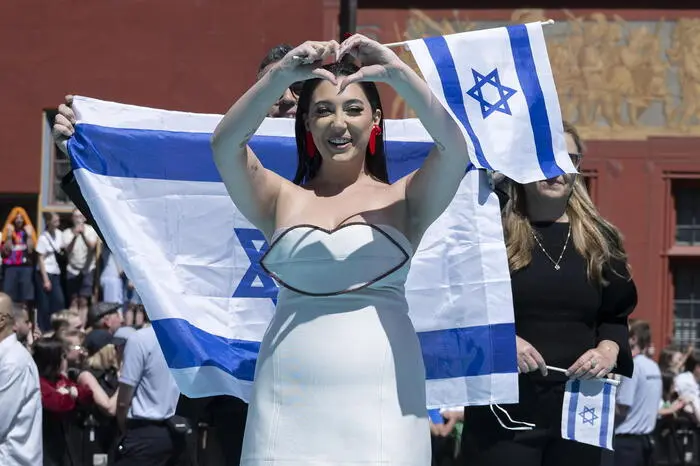
Five countries – Ireland, Spain, Slovenia, the Netherlands and Iceland – they decided not to participate to protest against the choice ofEBU, the consortium of European public broadcastersOf allow Israel to compete despite calls for it to be excluded due to the crimes and violence committed in Gaza. It is not a silent defection, it is not a technical question: it is a public, declared stance that transforms the largest musical event on the continent into a merciless mirror of its contradictions.
A fracture that comes from afar
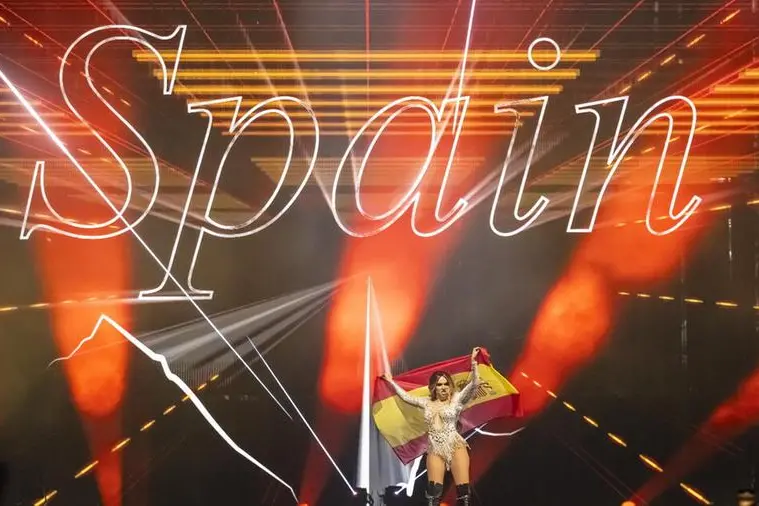
The issue is not new. Already in previous editions, the performances of the Israeli singers had been contested by the public with whistles and Palestinian flags displayed inside the arena. But this year the fracture has widened to the point of touching the very architecture of the competition. Spain, which is among the main economic contributors to Eurovision, will not participate and will not even broadcast the final: public TV will broadcast an alternative musical evening. This is, as we already wrote in December on these pages, the first major founding country to withdraw for ethical reasons, a blow that is not only symbolic but structural, because Spain is part of the so-called “Big Five”, the countries that guarantee the greatest funding for the competition and have rightful access to the final.
An animated film will be broadcast in Ireland instead of Eurovision. In Slovenia, in addition to withdrawing from the competition, public TV programming will be dedicated to content on Palestine. The Netherlands and Iceland have instead chosen a more measured form of protest: they will not compete, but will continue to broadcast the show. Subtle but significant distinctions: even in the gesture of resistance there is a gradient of consciousness.
Warwashing and the silence that weighs
As we had already written here, the real problem is not the presence of an Israeli artist on stage, but the use of the show as a mechanism of symbolic normalization, what can be called warwashing: the show’s ability to wash away, in the spotlight, the blood, the pain, the injustice, making everything presentable again. Music is never neutral when it plays while part of the world burns. And those who choose to sing as if nothing were happening, even involuntarily, become part of a message.
The EBU defended itself by appealing to the rules: Eurovision is a competition between broadcasters, not between governments, no ideological flags should fly on stage. It is the same logic that was invoked in reverse to exclude Russia in 2022 after the invasion of Ukraine, when Moscow was deemed incompatible with “Eurovision values”. This time those values seem to have become elastic. The contradiction is evident: either music is truly neutral, and then no one is expelled for political reasons, or values really matter, and then they must be applied to everyone.
Suspicions about voting and the new rules
To further complicate the picture, the New York Times published an investigation according to which from 2024 the Israeli government would organize a coordinated campaign to influence televoting through online advertising, campaigns on social networks, mobilization of Israeli communities abroad and the direct involvement of diplomats and embassies.
It is not surprising, then, that the EBU has revised the regulations. This year the maximum number of votes that each spectator can express will drop from twenty to ten. The juries of music experts from each country will also return to vote in the semi-finals and will weigh more or less as much as the public vote. Artists and television broadcasters will also be prohibited from actively engaging in promotional campaigns that could influence the outcome of the vote. Legitimate corrective measures, but which come after a crisis of credibility that no technical modification can completely remedy.
Europe that sanctions, while Vienna sings
All this is happening at a time when political Europe is trying to give itself a more coherent voice on the conflict. Just yesterday, the European Union’s Foreign Affairs Council gave the green light to sanctions against violent Israeli settlers in the West Bank, after Hungary lifted the veto it had held until now, allowing the necessary unanimity to be reached. The European Commission will now have to work on proposals for trade sanctions, including a possible customs blockade of settler products, while the agreement also provides for new sanctions against members of Hamas.
Israel reacted harshly: “The EU chose arbitrarily due to its political opinions and without any basis,” Israeli Foreign Minister Gideon Sa’ar wrote on X, calling the parallelism between Israeli citizens and Hamas terrorists “outrageous”.
The contrast is alienating: while Brussels, laboriously but concretely, takes a step towards political responsibility, Vienna prepares to sing. Europe speaks with two voices, the diplomatic one and the entertainment one, and struggles to keep them together.
Vienna, the demonstrations and Sal Da Vinci
The first semi-final is this evening, Tuesday 12 May, broadcast in Italy by Rai 2; the second will be Thursday 14 May. The final will be broadcast on Saturday 16 May on Rai 1. Italy will be represented by winner of the Sanremo Festival, Sal Da Vinci, with the song “Per semper Sì”.
A demonstration is scheduled for Friday in Vienna in Resselpark on the occasion of Nakba Day, the day that remembers the over 700 thousand Palestinians forced to flee or expelled from their homes during the 1948 war – in which around three thousand people are expected to participate. Another demonstration is expected on Saturday. There will also be a demonstration in support of Israel’s participation, entitled “12 points against anti-Zionism”.

To sing or to be silent: a question that cannot be avoided
Eurovision was born after the war with a specific ambition: to unite the people of Europe through music, to build bridges where wars had left rubble. Seventy years later, that original vocation finds itself faced with its most acute contradiction. It’s not about asking artists to answer to the governments of their countries. It’s about asking ourselves, as a public, as European citizens, as Christians accustomed to not looking the other way, whether it is possible to celebrate unity while part of the world burns.
Music can unite, it’s true. But only if he has the courage to face reality. However, when it serves to distract us, to cover the pain with a refrain, then it does not fulfill its highest mission. It does the exact opposite.