

There was a time when buying used was considered a fallback, a solution to be adopted only when new was out of reach. Today that scenario appears profoundly changed. The second hand is no longer the last option, but often the first. And it says something important about the way in which the habits, priorities and even values of Italians are changing.
To say it is theSecond Hand Economy Observatory 2025 by Ipsos Doxa for Subito: 68% of Italians say they start from second hand when they have to buy something. A significant jump compared to the previous year: nine percentage points more. It is a cultural change even before an economic one.
The photograph taken by the research shows a country that, faced with economic uncertainty and the increase in the cost of living, chooses new strategies to protect the family budget. Over 28.2 million Italians – 65% of the population – have bought or sold used goods in the last year. A constant growth that confirms that the second hand economy is not a passing fad but a now structural practice.
The economic data helps to understand the extent of the phenomenon: the sector generates a value of 27.2 billion euros, equal to 1.2% of the Italian gross domestic product. Numbers that speak of a true parallel economy, capable of having a concrete impact on the daily lives of families.
The reasons for the choice are very concrete. Earning something from what you no longer use and saving on new purchases are the main motivations. Those who sell earn on average 834 euros per year; those who buy perceive an average saving of 44% compared to the new one, a percentage which in some categories – such as clothing, books, bicycles or children’s items – it even reaches 50%.
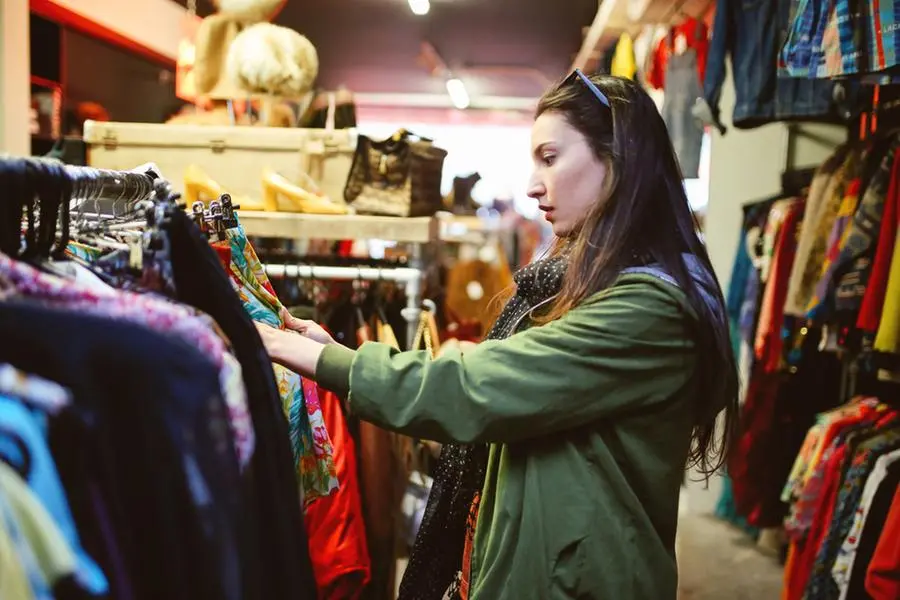
A girl intent on choosing a used item to buy.
(Getty Images)
Behind the numbers, however, a reality emerges that closely concerns family life. In times of inflation and uncertainty, second-hand goods become a silent ally in managing the household budget. It’s not just about spending less: it also means recovering value, avoiding waste and using available resources more consciously.
It is not surprising then that buying and selling used goods is now considered the second most widespread sustainable behavior in the countryimmediately after separate waste collection. Even before low-energy light bulbs or other gestures associated with environmental sustainability.
The way we buy is also changing. Today the engine of growth is online: 71% of Italians use digital channels for buying and selling second-hand goods. Ten years ago they were just 30%. Speed, convenience, breadth of offer and the possibility of doing everything from home explain a transformation that now appears consolidated.
Trust grows above all because digital platforms are perceived as more secure and structured than in the past. More and more users declare that they also choose them to avoid scams and manage the entire process easily.
Among the leading sectors, the vehicle sector continues to stand out, which alone generates over 11 billion euros. And here too a significant figure emerges: in the last three years one Italian in five has purchased a used car. Even among young people from Generation Z, often described as less interested in cars, used cars are gaining space and acceptance.
The change, therefore, goes beyond the simple act of purchase. A new consumer culture seems to be emergingmore attentive to the real value of things and less tied to the idea that new necessarily means better.
Second-hand items tell the story of the ability to adapt to difficult times without giving up one’s needs. And also to rediscover an ancient principle, often dear to Italian family tradition: give new life to thingsbecause what was once useful can still have value for someone.