





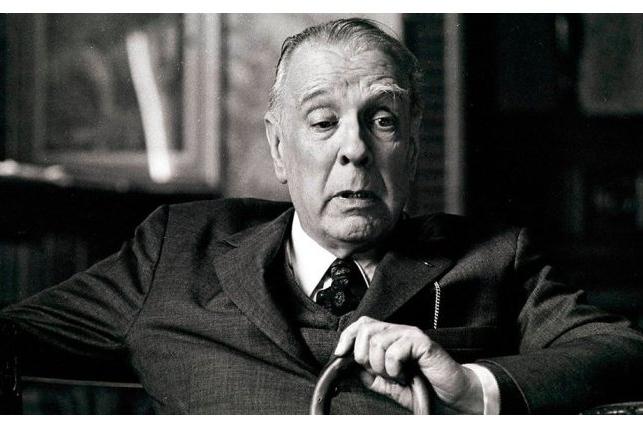
On 14 June 1986, Jorge Luis Borges died in Geneva at the age of 86 from liver cancer: only a few days earlier he had married María Kodama, one of his former students, who became his secretary. Forty years after his death, his figure continues to establish itself as one of the greatest in world literature of the twentieth century. Writer, poet, essayist, translator, lecturer, librarian, Borges was much more than an author: he was a way of thinking about literature, an intellectual who transformed universal culture into narrative matter and who made reading a philosophical adventure.
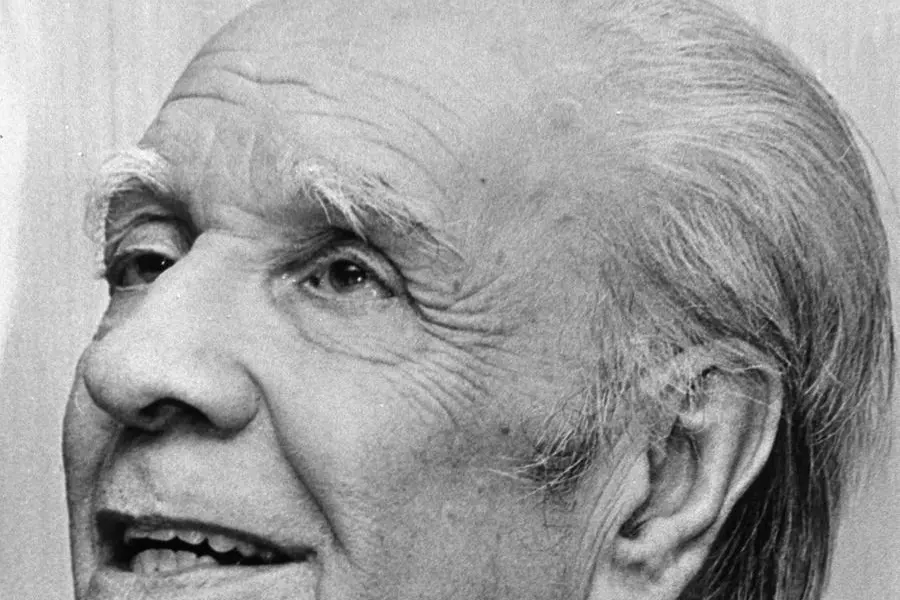
Born in Buenos Aires on August 24, 1899, into a cultured and cosmopolitan family, Borges came into contact with books since childhood. He loved to remember that the most important event in his life was not a trip or a meeting, but his father’s library. Even before learning Spanish, he learned English, the language of his British grandmother and of the volumes that crowded the shelves at home. From that early familiarity with literature was born a vocation destined to change the face of contemporary fiction.
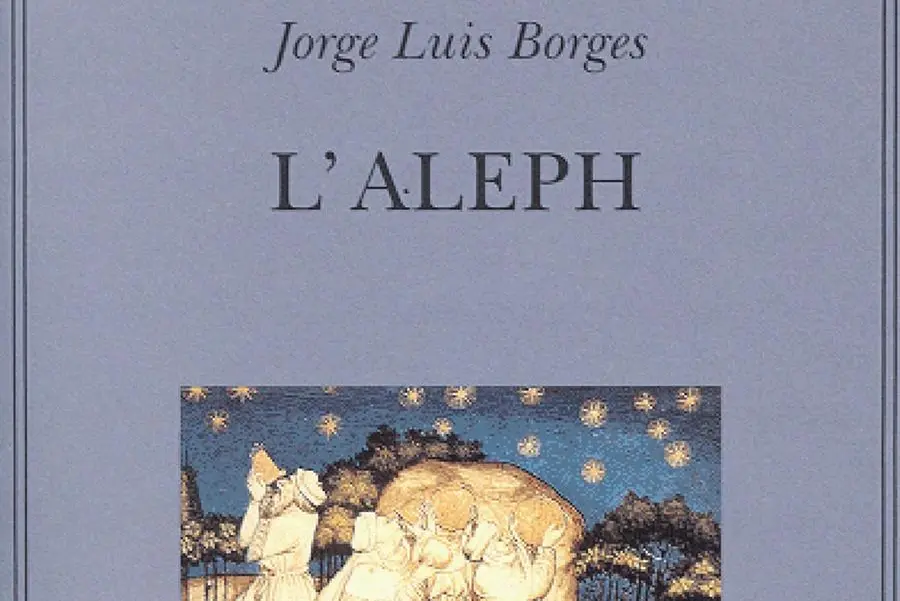
His work defies any classification. The stories collected in Fictions (1944) e The Aleph (1949) they redefined the boundaries of the fantastic, fusing philosophy, theology, metaphysics, erudition and imagination. In his texts infinite libraries, labyrinths, mirrors, imaginary encyclopedias, non-existent books and parallel universes occur. Borges succeeded in making culture itself a literary character. In his stories, knowledge is never an ornament: it is the heart of the mystery.
If many writers have told the world, Borges has told the way in which the world is thought through books. It is not surprising, therefore, that the library became one of the central symbols of his work. Famous is the Library of Babelimage of a universe composed of an infinite number of books and possible combinations. That imaginary library is also a metaphor for the human condition: the incessant desire to find meaning in the immensity of knowledge.
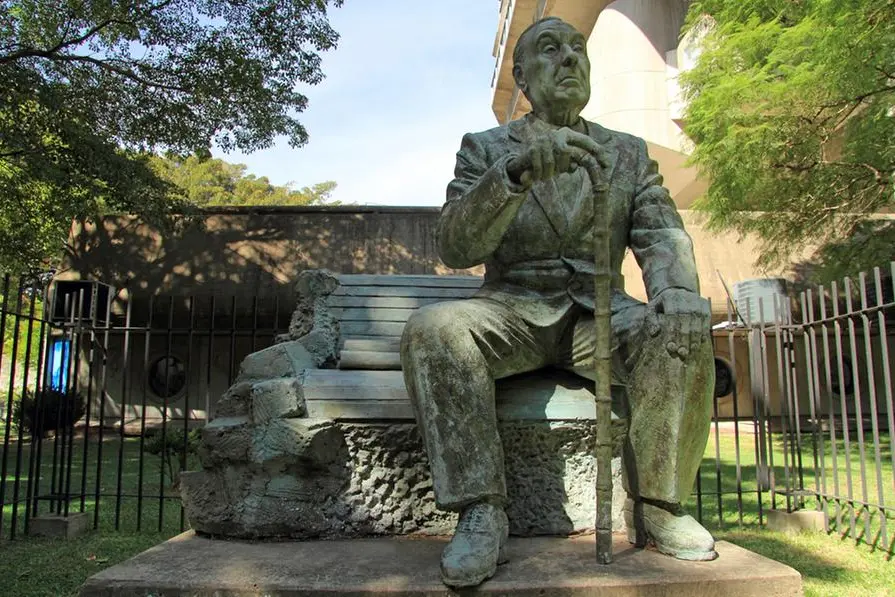
The dimension of the librarian was not just metaphorical. After working for years in a municipal library in Buenos Aires, in 1955 Borges was appointed director of the National Library of Argentina. It was a coincidence that he himself defined as ironic and almost cruel: just when he obtained the most prestigious librarianship position in the country, the hereditary blindness that had afflicted him for decades had now become almost total. “God, with magnificent irony, gave me together eight hundred thousand books and the night,” he wrote in one of his most famous poems. The loss of his sight did not stop his intellectual activity; on the contrary, it pushed him towards new expressive forms, entrusting his texts to memory and dictation.
His erudition was legendary. He was familiar with European literatures, Nordic sagas, classical philosophy, Eastern mysticism, medieval theology and detective fiction. However, he did not display knowledge as an elitist privilege: he transformed it into a story, an intellectual game, a wonder. This is why its influence has transcended the boundaries of the Spanish language, reaching writers, philosophers and scholars from all over the world. Generations of authors have recognized him as a master: Julio Cortázar, Italo Calvino, Osvaldo Soriano, Umberto Eco (who in his novel The name of the rose in his honor he gives the name Jorge da Burgos to one of the characters, a blind librarian), Leonardo Sciascia, John Barth, Philip K. Dick, Gene Wolfe, Paul Auster, Roberto Bolaño, Zoran Živković, Carmelo Bene. Furthermore, Borges also influenced comic book authors such as Alan Moore and Grant Morrison, singer-songwriters such as Francesco Guccini, Roberto Vecchioni (The secret miracleinspired by the story of the same name by Borges), Giorgio Gaber (I if I were God, with reference to the “superstition of democracy”) and Elvis Costello.
During his life he never received the Nobel Prize, an absence that is still considered one of the most sensational in the history of Swedish recognition. Yet the lack of a Nobel Prize has not affected his prestige in the slightest. With the passage of time its stature has grown further, to the point of making it one of the great classics of universal literature. Today Borges continues to be read, studied and reinterpretednot as an author of the past, but as a writer of the future, capable of anticipating issues that concern memory, identity, reality and even the relationship between man and information. However, Borges received many other prestigious awards. Among the most important: the National Literature Prize (1957), the International Publishers’ Prize (1961), the Formentor Prize together with Samuel Beckett (1969), the Miguel de Cervantes Prize together with Gerardo Diego (1979) and the Balzan Prize (1980) for philology, linguistics and literary criticism. Three years later the Spanish government awarded him the Grand Cross of the Civil Order of Alfonso
From a spiritual point of view, Borges was agnostic (he often defined himself as an atheist), but sensitive to the various suggestions of religious traditions (on his deathbed he wanted to speak to a Catholic priest, even though he did not convert). From a political point of view, while declaring that “the social commitment of the writer is a beast”, he showed an open aversion to Juan Domingo Perón and his Justicialist Party, considering it a fascist party. After an initial appreciation for the Argentine military government, which came to power in 1976 with a coup d’état, Borges was shocked when he discovered the behavior adopted by the junta against dissidents. His moral opposition to the dictatorship began, as he himself said, when some members of the Mothers of Plaza de Mayo came to visit him at his home and told him about the fate of their missing children. In 1980 he signed a petition in favor of the disappeared in everyday life Clarin and took a clear oppositional attitude, which was tolerated in homage to his intellectual stature. In 1985, after the fall of the junta, he participated as an auditor in the trial which resulted in the first convictions of the soldiers involved in the regime. A story from the latest collection is dedicated to the disappeared, Los conjurados (1985).
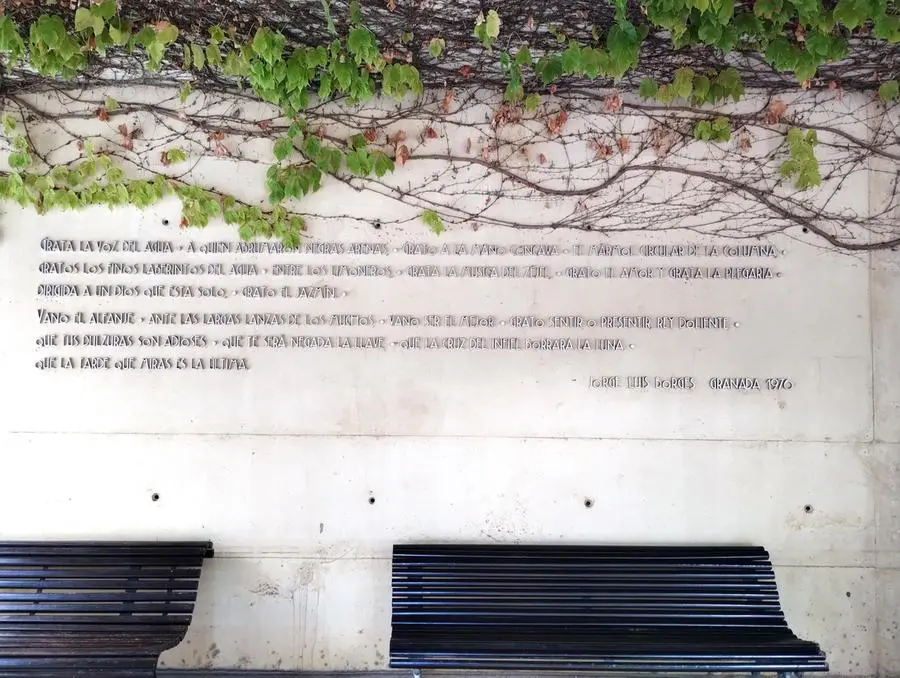
Forty years after his death, Jorge Luis Borges remains the custodian of one of the most extraordinary imaginary libraries ever conceived. and his phrase, which is worth like an epitaph, remains as a testament to the importance of knowledge and stories: “I always imagined heaven as a kind of library.”
An anniversary book
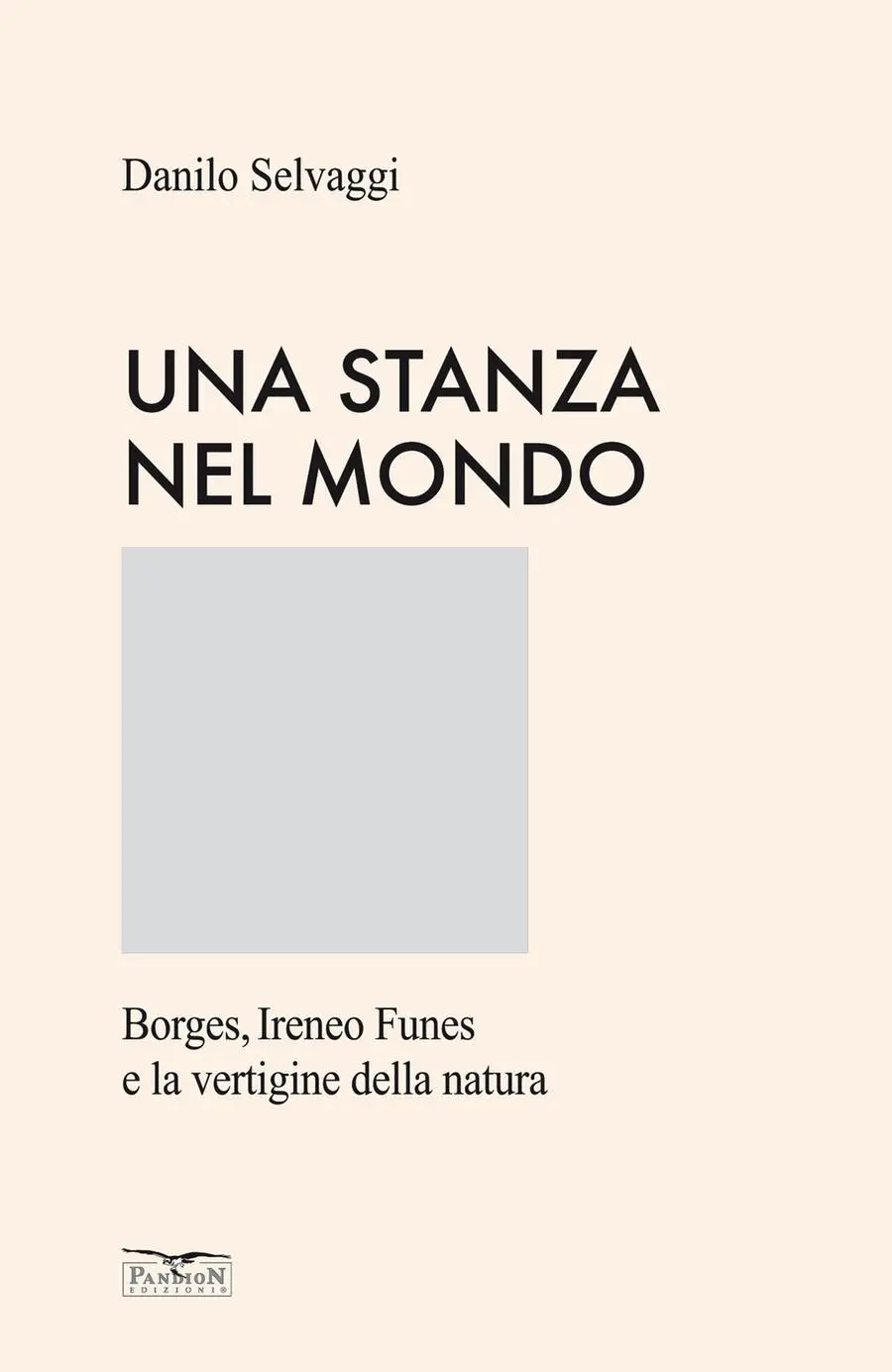
On the occasion of the 40th anniversary of his death, A room in the world was released. Borges, Ireneo Funes and the vertigo of nature (Pandion Edizioni), by Danilo Selvaggi, an innovative reading of the great Argentine writer, which highlights a series of ecological themes running through his literature and his very existence.
At the center of Selvaggi’s book is one of Borges’ most intense stories: Funes or memorytaken from the collection Fictions. It’s the story of Ireneo Funes, a young man who, following an accident, loses the use of his legs but acquires an extraordinary capacity for perception and memory, which leads him to establish a profound, immersive relationship with nature. Every thing, every moment, every leaf become a source of enchantment, an infinite and unforgettable experience that makes Funes’ room, in which the boy is relegated due to paralysis, a very special form of being in the world and a sort of exemplary place of ecology.
Usually considered a pathological case, an example of the inability of oblivion and rational thought, Funes’ story is thus transformed into a luminous story of sensitivity for the world, also functioning as a common thread for the ecological rereading of legendary Borgesian stories as The Library of Babel, The Immortal, The Book of Sand or (especially) The Alephand acting as a gateway to some of the great cultural and social issues of our time: environmental activism, the ecological crisis, vertigo, eco-emotions, the Anthropocene.
The original route traced by Danilo Selvaggi also leads to a rereading of Borges’ own existential events, from his years of training in Geneva to his painful love story up to that conflict between life and literature (“I think I never left my father’s library”) which, in the light of ecological culture, takes on a central and decisive meaning.