





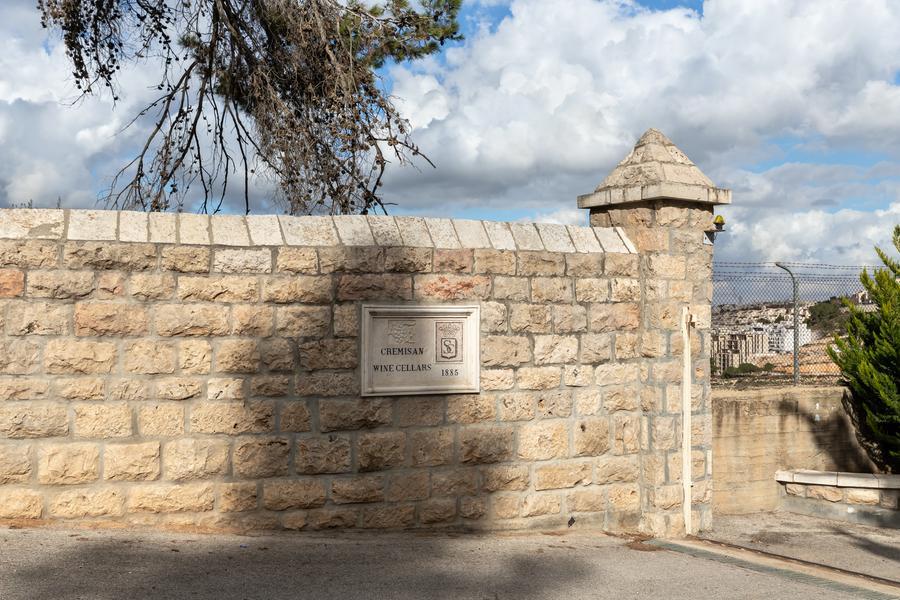
In Fossanova (Latina), in the heart of the ancient Cistercian abbey, wine has become a story of faith, history and dialogue. Among the protagonists of Abbey winesan event dedicated to Italian and international monastic wines, which in recent days has brought together enthusiasts and operators between tastings, masterclasses and conferences, was also present Cremisan, the Salesian monastery south of Bethlehem, where a winery founded almost a century and a half ago continues to safeguard a mission that goes beyond production: creating jobs, defending a connection with the land and building bridges in one of the most complex areas of the world, on the border between the West Bank and Jerusalem.
Here, among the vineyards and ancient terraces of the Holy Land, wine is not just an agricultural product: it is memory, identity and a concrete form of cultural resistance. It is the story of a community which, amidst the fractures of a territory marked by conflicts, continues to choose collaboration between people of different religions.
It was Father Antonio Belloni, an Italian missionary known as the “Father of Orphans”, who in 1882 understood the value of that land rich in Byzantine traces and cultivations, deciding to found a Salesian work. The cellar was born in 1885 as a support for educational and social activities: a place where the vine could also become an instrument of dignity and work. These are the years in which the presence of the religious family founded by Don Bosco and dedicated to young people grows in the world.
«In 1885 Don Antonio Belloni he had decided to open a winery mainly to support the orphanage he had founded in Bethlehem, where he offered children without families a home and a course of study – he says Luigi Bisceglia, regional coordinator for the Middle East of the NGO VIS (International Volunteering for Development) –. In Bethlehem he also started a bakery to ensure the sustenance of the work. We anticipated by many years a model that today we would call social enterprise: giving work to people and supporting Salesian works.”
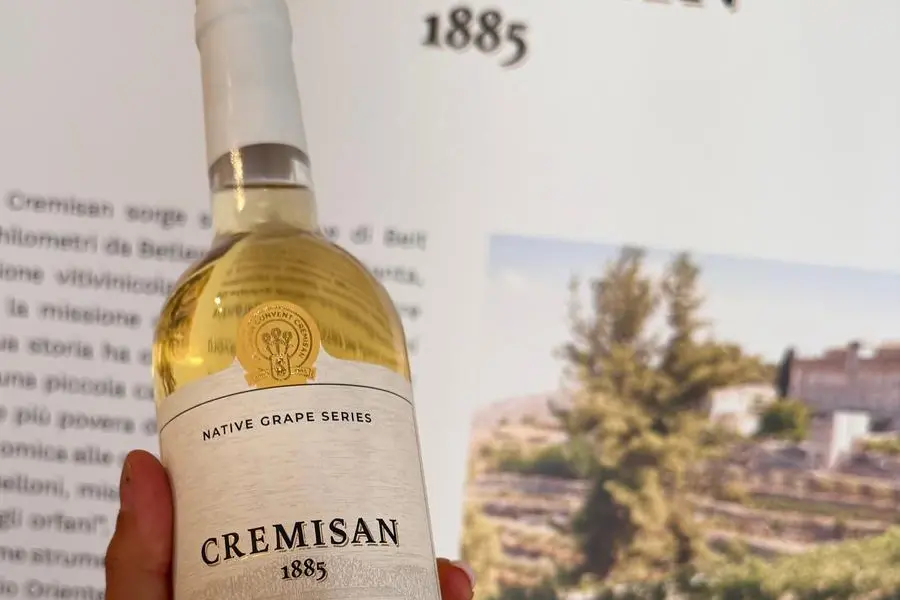
The peculiarity of Cremisan it is also in its human composition. Over the years, people of Christian and Muslim religion have worked in the cellar, united by a common goal of peaceful and constructive resistance.
«Our Muslim workers are proud to produce wine even though they cannot drink it – explains Bisceglia -. It is an inclusive reality, where respect for differences comes first. Even the Palestinian grape suppliers, often Muslims, are part of this history and allow the diffusion of a Palestinian identity through local grape varieties.”
In fact, the monastery produces wines from native vines, enhancing biodiversity, in an agricultural context rich in olive trees, vines, apricot trees and almond trees (symbols of resistance). A job followed by Luca Cristaldi, head of the VIS campaigns sectorwhich underlines the profound meaning of the production: «Cremisan is not just a winery: it is a tool for supporting families in a difficult context. Land that is not cultivated risks losing its value for those who live there, because it is confiscated by the Israelis. Fifteen workers work in the cellar. Continuing to cultivate means keeping a connection with the territory alive.”
The history of Cremisan is also a history of borders. The barrier, commissioned in 2002 by the then Prime Minister Ariel Sharon, has changed the daily life of the community: the cellar and some land are separated, making the farmers’ work more complex, breaking up families, towns and economic activities.
«Cremisan wine is an instrument of peace not only because Christians and Muslims work together – continues Cristaldi – but because it was born in a divided territory. The cellar is separated from the vineyards by the wall and this creates enormous difficulties for those who have to reach the fields, who are thus forced to take a long tour, which is not always possible because it risks their lives. In the last three years we have not made wine. This year there has been a resumption of the harvest, but the quantities are limited.”
Despite the difficulties, the mission continues. The proceeds from the cellar have supported Salesian activities for years: the cultural center for professional training, the oratory and other initiatives for the local population. Inside the monastery there is also a precious theological library.
«The tourism and pilgrimage crisis, after the pandemic and the massacre of 7 October 2023, has had an enormous impact on Bethlehem and, in particular, on the cellar, because our customers were above all the people who came to visit us – says Bisceglia -. When visitors decrease, the entire community suffers. But Cremisan continues to move forward: we try to strengthen the export of our wines, that maintain a good market in the United States, Germany and Austria, and above all we try to keep this place open to people.”
The monastery is not just a cellar. It is also a meeting space: a place where families, children and visitors can find a moment of normality.
«We are working to make Cremisan increasingly open to the community – concludes Bisceglia – with spaces dedicated to families, a playground and new hospitality activities, such as a café and a wine shop which we will open at the end of the month. At the moment, talking about coexistence is difficult, because the distances between people have increased: the Palestinian and Israeli communities are much further apart than in the past. Places like Cremisan have even more value because they offer the possibility of meeting again.”
In a land where walls separate, a vineyard continues to tell a different story: that of people who choose to cultivate and be together.