





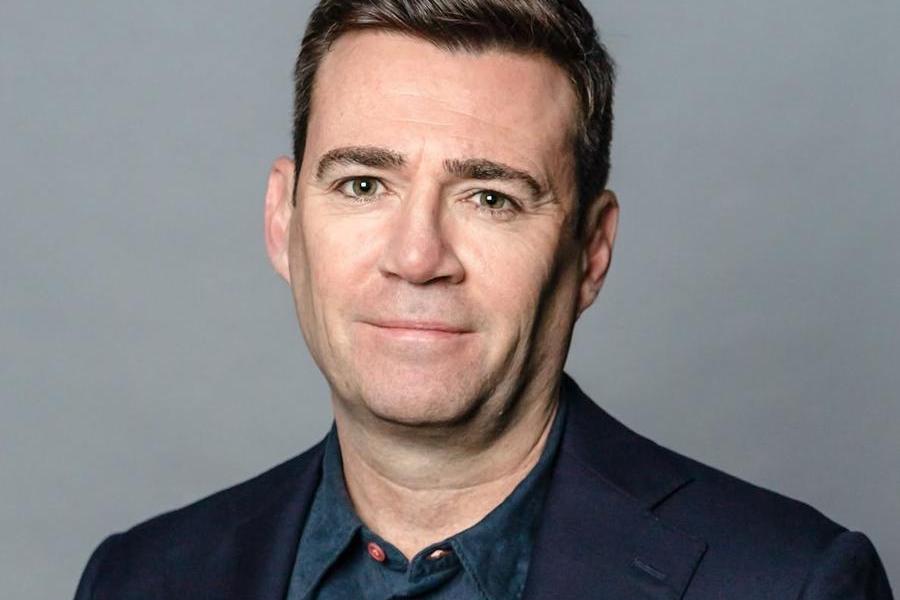
“Andy Burnham has always understood something that many modern politicians struggle to grasp: voters want leaders they can recognize as human beings. They may admire competence, intelligence and management skills, but they also want human warmth and an emotional connection. Despite his genuine strengths, Keir Starmer never understood this. The Labor Party has paid the price, struggling to re-establish an emotional connection with large swaths of the population who once regarded the party as their natural political home. Always more often, many Labor MPs believe that Burnham may be the most suitable figure to rebuild that relationship.”
These are words written a month ago by Mike Craven in the British Catholic weekly “The Tablet”. Prophetic words, since on 22 June Keir Starmer announced his resignation, paving the way for the leadership of the party (and consequently the leadership of the government) for Andy Burnham.
Ten years after the referendum on Brexit and after six prime ministers who succeeded each other between 2016 and 2026 (Thatcher, for example, reigned for over 11 years), Great Britain starts again with Andy Burnham, who is 56 years old and has a beautiful story to tell.
The son of a telephone technician and a receptionist at a doctor’s practice, Burnham described his childhood in the Cheshire village of Culcheth as “fantastic”. Burnham, a rare case among prominent politicians in the United Kingdom, studied in a Catholic school, was also an altar boy, knows the social doctrine of the Church, even if today he confesses that he is not very practicing.
His true passion has always been politics. At 14 he decided to join the Labor Partyafter being struck by the BBC television series *Boys from the Blackstuff*, which chronicled the lives of five unemployed people in Liverpool. A very sensitive topic in those early years of the Thatcher government.
A brilliant student, Burnham studied at Cambridge, where he later met his now wife, Marie-France van Heel, of Dutch origins. They married in 2000 and have three children.
After graduating, he moved to London, working in some magazines before starting work as a researcher in the parliamentary office of Labor MP Tessa Jowell. He later became an advisor to the then Minister of Culture, Chris Smith.
In 2001 Burnham was elected MP for his home town of Leigh in Greater Manchester. These were the roaring years of Tony Blair’s Labor Party and Burham also took on some government roles: undersecretary under Blair, chief secretary to the Treasury, becoming culture secretary and subsequently health secretary in the government led by Gordon Brown.
In 2010 Burnham ran for the leadership of the Labor Party for the first time proposing an “ambitious socialism”, but came fourth out of five contenders, losing to Ed Miliband, who had proposed taking the party a little further to the left. When Miliband lost the 2015 general election, Burnham tried again with a centrist programme, but lost to the left-wing candidate, Jeremy Corbyn.
At this point Burnham changes strategy. He is aiming for the North and in 2017 he is running for mayor of Greater Manchester. He triumphs with 63% of the votes and in his victory speech he declares: “This is the dawn of a new era, not just for this metropolitan area, but for the politics of our country. For too long it has been too London-centric. The old political and party structures have not delivered for all people and all areas. … Greater Manchester will take the lead. We will change politics and make it more effective for the benefit of citizens.”
As mayor Burnham has found his true voice, transforming himself from a politician sometimes perceived as “too straight and institutional” to a fierce defender of the working class of the North of England.
The key moment was during the COVID-19 pandemic. Burnham rose to local hero status when he openly opposed Boris Johnson’s government, rejecting a tough lockdown for Manchester without adequate economic benefits for workers. That battle, fought with open microphones in front of cameras in the middle of the street, established him as the trade unionist of an entire region.
Re-elected to Westminster in a by-election in Makerfield a few days ago, Burnham is now ready to take over the reins of the party and government. As summarizes the New York TimesBurnham “will soon lead a government that faces all the same challenges that brought Starmer’s tenure to a premature end after less than two politically exhausting years. These include a failing economy, chronically underfunded public services, an increasingly powerful populist movement and the never-ending challenge posed by her relationship with President Trump.”
It won’t be easy.