





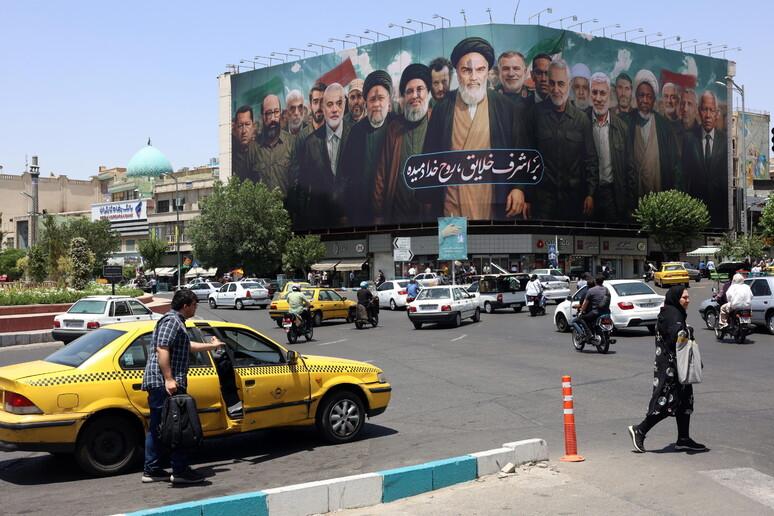
There is an image that the Tehran regime obsessively entrusts to the cameras of state television: a compact human tide that winds along the streets of the capital for the solemn funeral of Ali Khamenei. It is the liturgy of power that becomes a spectacle, the attempt to stage the unanimity of a wounded but faithful nation.
But behind the faces furrowed by the crying of the Pasdaran and the chants chanted by megaphones, the reality of Iran tells another story. It is the story of a normality imposed by force, an apparent stability that rests on the reinforced concrete of repression.
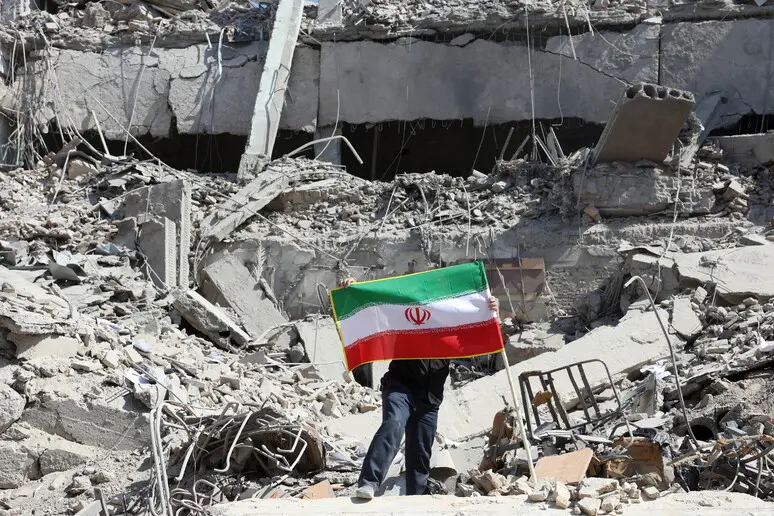
In recent weeks, Tehran has experienced the most dramatic days in its recent history. The targeted attack by the United States, which beheaded the top of the Supreme Leader causing an unprecedented geopolitical earthquake, had revealed the cracks in a system that was believed to be unbreakable.
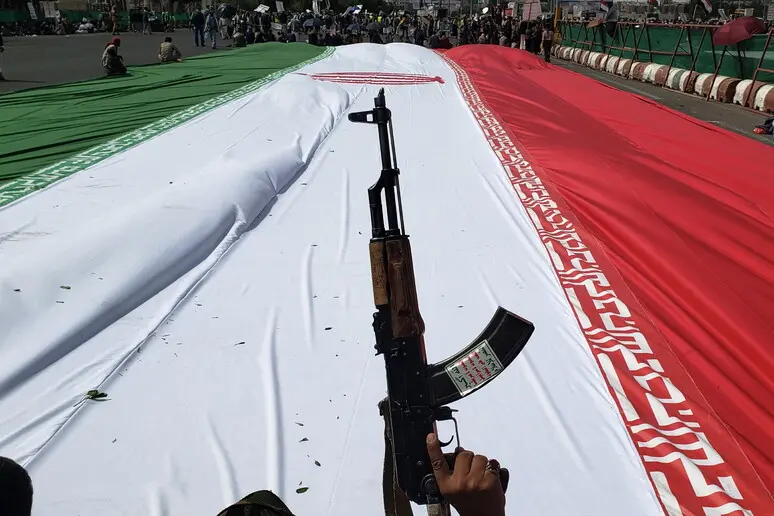
In the capital’s northern neighborhoods, whispers of hope had mixed with panic; the shadow of a chaotic transition loomed in Western chancelleries. But the power vacuum, in a military theocracy, lasts the space of a morning. The regime reacted by immediately activating its two historical antibodies: mass propaganda and state terror.
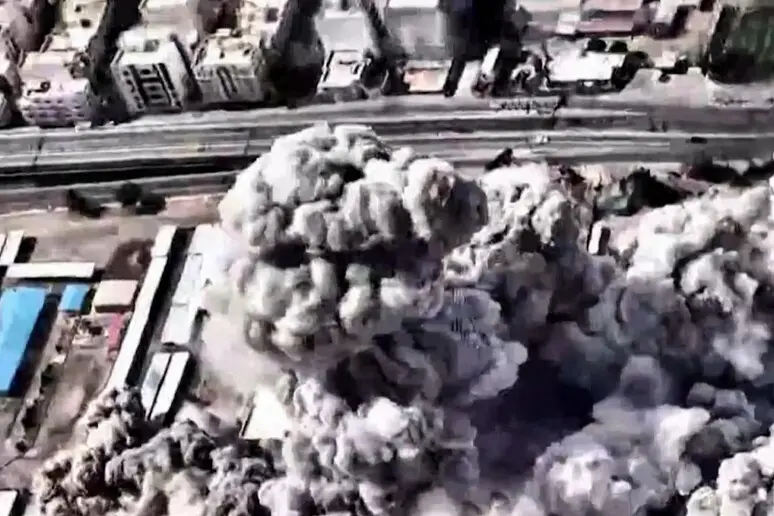
Field sources, intercepted by international agencies such as Reuters and the BBC, describe an impressive scenographic machine for the funeral. Coaches arrived from every deep province of the country, public employees forced to clock in in the mourning squares, food rations distributed to the poorest population in exchange for an hour of devotion in front of the cameras. For the theocracy, the funeral is not just a farewell rite, but a visual plebiscite: it serves to demonstrate to the world, and especially to internal dissidents, that the body of the nation is still united around the flag of the Islamic Republic.
Yet, it is enough to turn off the spotlights of the official square to encounter the true face of the “return to normality”. In the same hours in which the funeral songs resounded in Tehran, the judicial and police machinery tightened its meshes around civil society. Activists, independent journalists and even ordinary citizens who had dared to express relief, or even just skepticism, over the end of the Khamenei era on social media have disappeared into thin air. Preventive arrests, suffocating patrols by the moral police, targeted blackouts of the internet to prevent dissent from finding a virtual place.
According to reports by human rights organizations, the Evin prisons and other places in the country are filling up with a new generation of political prisoners, guilty of not having cried. It is the normalization of fear. The message from the transitional leadership is clear: flexibility is not an option. The transition towards the new balance of clerical power must take place in an aseptic laboratory, free of democratic contamination.
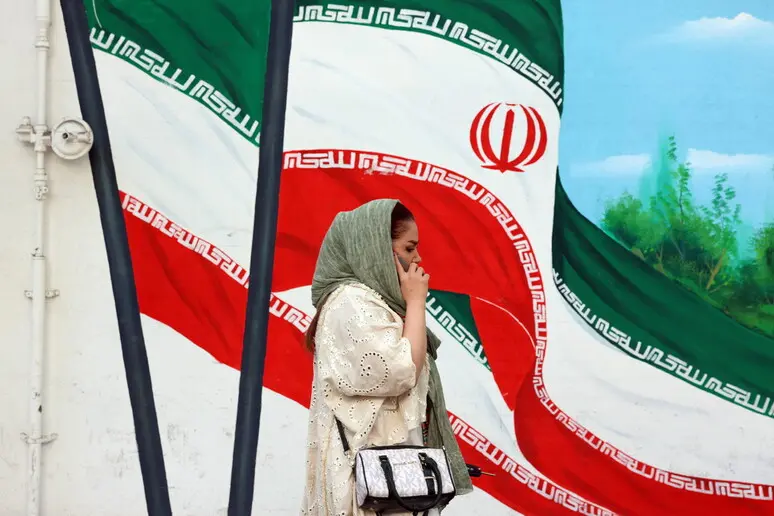
But this normality is a house of cards. Diplomatic sources agree that the American attack did not come in a vacuum, but hit an already deeply weakened body. Before the raid, Iran was a country exhausted by galloping inflation, the devaluation of the rial and the memory still alive and bleeding from the protests for “Woman, Life, Freedom”. The social anger, repressed with blood in recent years, has not vanished: it has only been swept under the carpet by the geopolitical emergency. The average Iranian citizen today finds himself crushed between two nightmares: the threat of all-out war with the West and the certainty of economic misery and deprivation of freedom at home.
Iran overlookingThe post-Khamenei era thus resembles a theater of mirrors. On the one hand the baroque and funereal majesty of power, on the other the wounded daily life of a people who no longer believe in the promises of theocratic paradise, but who do not have the weapons to challenge the rifles of the Guardians of the Revolution.
The stability trumpeted by the state media is not peace, it is just the absence of noise. And in the Middle East, often, the deepest silence is the one that precedes the storm.