





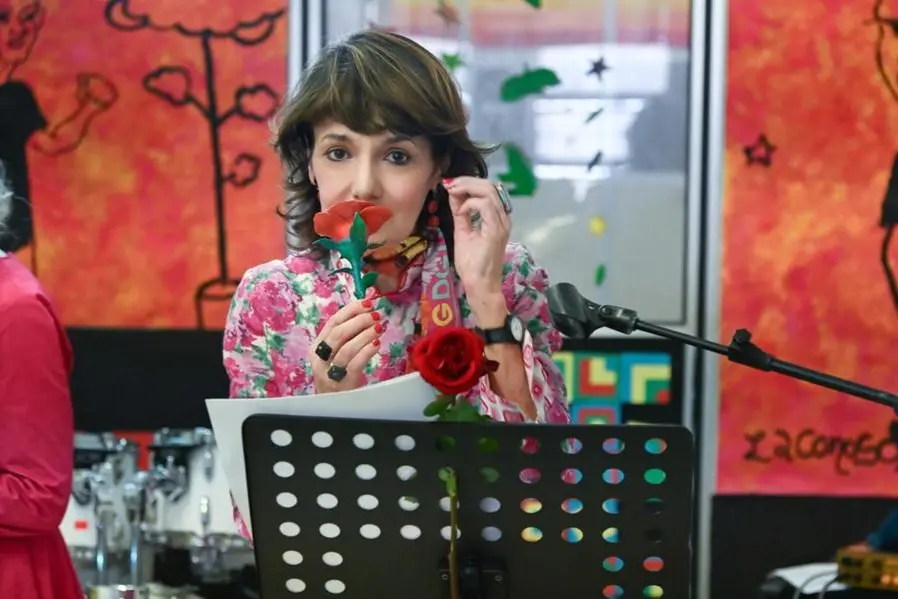
When the Milanesiana, cultural event created and directed by Elisabetta Sgarbitakes to the field, he always does so in sensitive contexts, which require a certain tact. It was like that at Humanitas in Rozzanor, where a series of events were held in the oncology department, and it was the same yesterday with the cycle of initiatives “More wishesthe“, to whom the children of the “Young Adults” department of the San Vittore prison in Milan participated. The first meeting took place on June 18th, and saw the invaluable participation of the semiotics professor at the University of Bologna Anna Maria Lorusso.
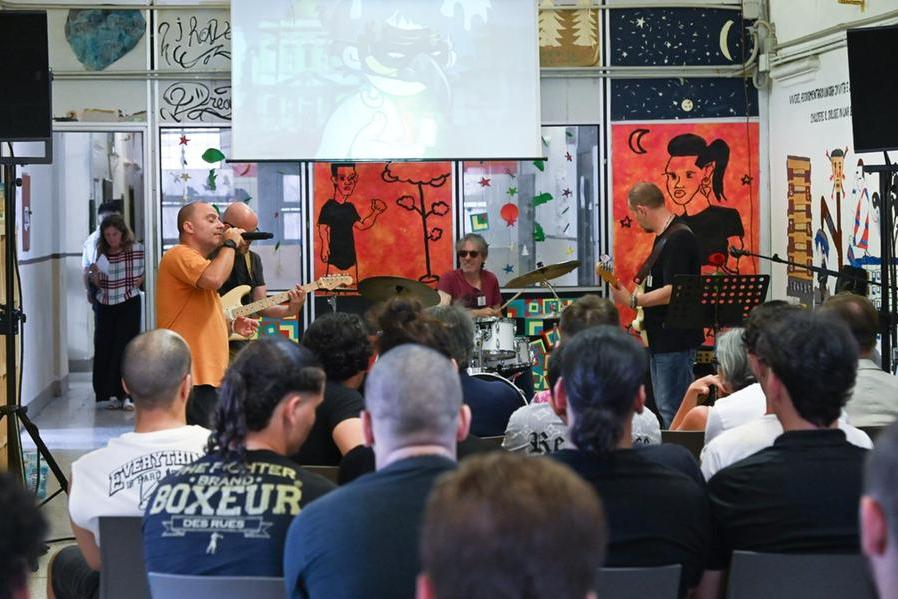
The second and final moment however took place yesterday afternoon and saw the protagonists Daniele Sanzone and his group, ‘A67. Daniele and the other musicians have a perfect background to speak to the kids in the young adults section, since they grew up in the suburbs and in difficulty, and it was from there that they began to cultivate their music. The group was formed in 2005 and their songs were immediately a symbol of denunciation of an area besieged by the Camorra: Scampia. There’s no point in hiding, everyone knows the famous sails, which have become an emblem of series like Gomorrah and of urban decay, but too few know what’s behind the narrative of a neighborhood that has experienced great difficulties over the years: there are people, stories, the desire to break out of a pattern that seems to have been imposed on you just because you were born there. And it is exactly in this spirit that Daniele and the other members of the band began their musical journey. But not only that, Daniele Sanzone is also an author of books, as well as having collaborated with numerous authoritative newspapers.
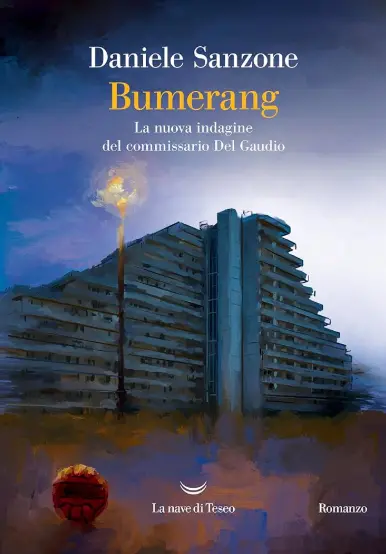
His latest book “Bumerang” I find it when entering the room where the presentation will take place, on the third floor of the San Vittore prison. There are several copies, scattered on the chairs where the boys are sitting Young Adults department; some of them leaf through it, others look at the cover, while waiting for the instruments to start playing. There are about twenty of them, old enough not to be in a juvenile institution, but too young to be called adults. The room is particularly hot and the plaster is not in perfect condition, but imbued with experience and the desire for redemption.
Once full the event can begin. While the ‘A67 they warm up the instruments, the kids start clapping, and one of them plucks up courage and asks for the microphone: while serving his sentence, locked within the walls of a cell, he wrote some rap songs. Daniele immediately leaves the “stage” to him and he starts rapping. Those who share his situation support him, clapping their hands and acting as if they were at their favorite rapper’s concert.
After giving vent to his art, the boy receives the (deserved) compliments of Elisabetta Sgarbi, who briefly introduces what will follow. At this point the program officially begins, opened by Daniele Sanzone’s reading of a paragraph taken from his book “Bumerang”.
The hour available passes quickly, between music, films and shared reflections. When the time comes for A67 to play their first song “‘A Camorra song’ I”Daniele explains the sense of denunciation behind this song and how he realized that “‘a camorra song’io”.
There were two episodes that changed his way of seeing and experiencing things and relationships. The first is linked to the tragic death of Annalisa Durante, which occurred at the height of clan feuds in Naples, when a stray bullet killed her in the Forcella neighborhood. He experienced the second firsthand: he tells how one day, outside the university, a boy met his gaze. In the suburbs where making ends meet with an honest job seems like a utopia, just meeting a glance can lead to a conflict, because it represents an act of defiance. Daniele flies into a ragenot because he was a violent boy or went around committing crimes, but because the mentality of his neighborhood was completely permeated in him. For this ‘a camorra song’ I. After a few days, one of Daniele’s university classmates told him that she had seen that boy again, and told him of a significant characteristic: he was cross-eyed. When he talks about it again, it is clear how this was a turning point for him:
«The episode at the university was like a bolt of lightning for me, it made me understand how despite myself I was a healthy carrier of the Camorra and how much, wherever I went, without knowing it, I brought my neighborhood with me. In the gaze, in the attitudes and in the way of looking at the world, once you have become aware, you try to grow, improve yourself also because by traveling you understand that Scampia is not the world, but that awareness is not an enlightenment, that awareness can be rendered futile at any moment, it is easy to fall back into that gaze and that is why the revolution must be permanent, the attention must be constant if you really want to get out of certain contexts and certain mentalities”.
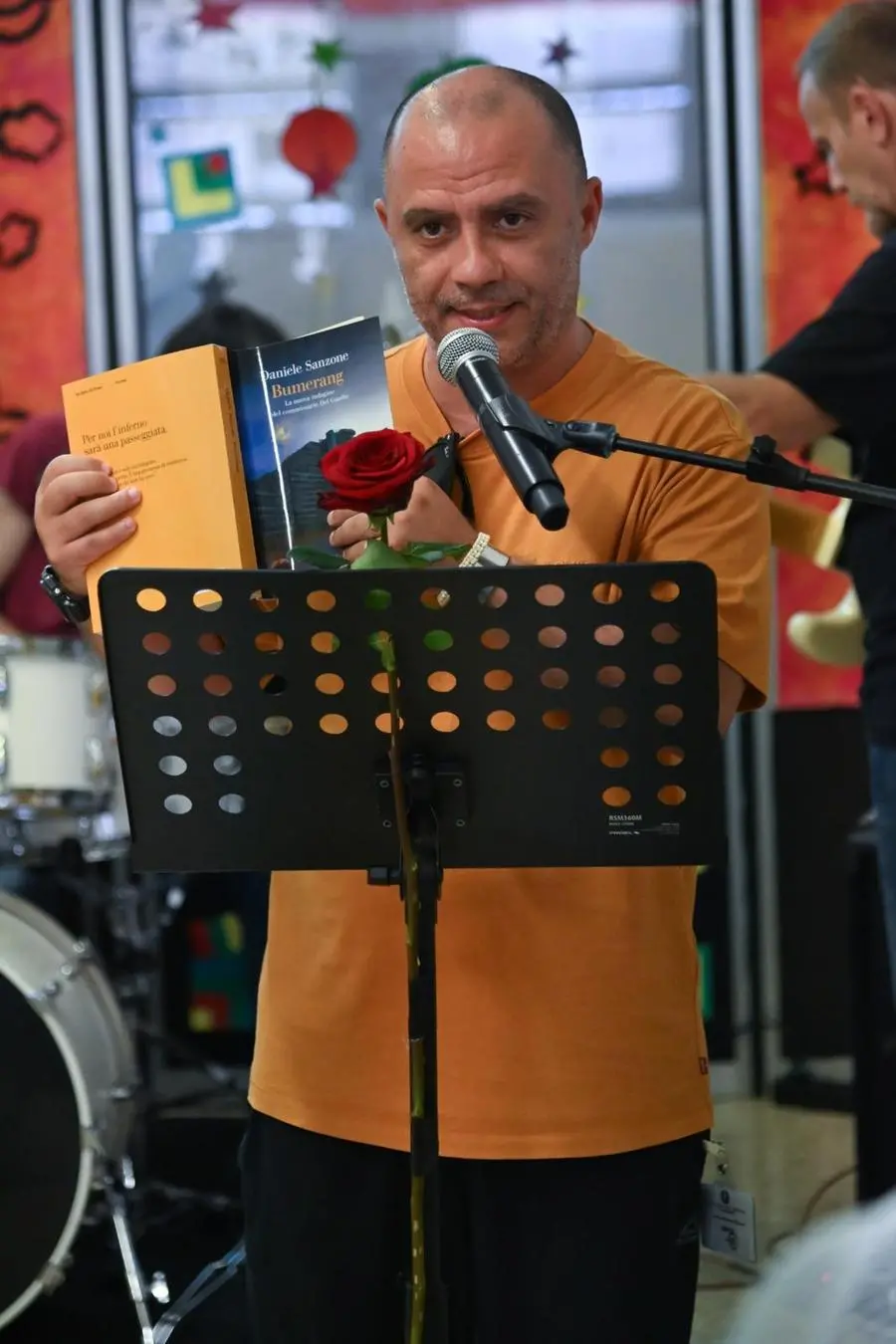
The kids listen to him, perhaps thinking about how many times they too have felt challenged simply because they made eye contact with someone else their age.
During the hour, the boy who rapped before the surgery sings another song of his for us: he talks about his mother in Egypt, and how he is suffering because of missing her. Personally, I was moved, in his ways and from his words, a true discomfort and that good soul, hidden under the tough exterior, shine through.
At the end of the day, the boys were left with something: they ask Daniele and the other band members questions, they get copies of “Bumerang” signed, and above all they do something I didn’t expect: they all come to shake my hand and say hello. I was only on the sidelines watching and taking notes, I didn’t give them a hand or leave anything, but in those “thank yous” they dedicated to me while greeting me while smiling, I saw in their looks that desire to show the world that they are working on themselves, that they can and will certainly become better citizens.