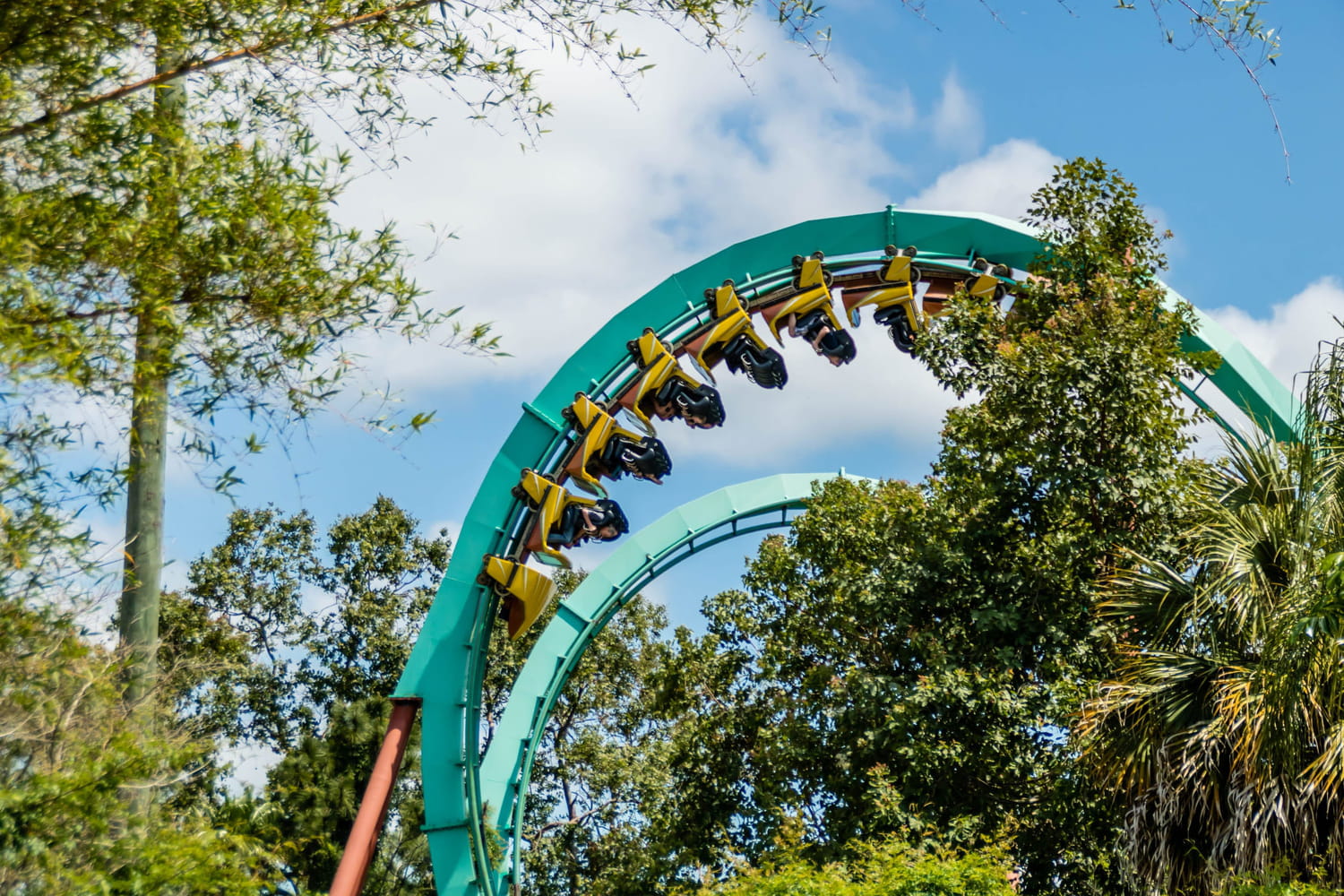
When we think of ecological transition, we rarely think of amusement parks. However, a famous entertainment giant is at the top of the ranking of the most “green” tourist places in the world, ahead of certain natural sites.
In our collective imagination, amusement parks rarely rhyme with eco-responsibility. We instead think of roller coasters as gigantic as they consume energy, of millions of visitors who generate just as much waste, of unlimited neon lights and air conditioning… However, against all apparent logic, the world champion of ecological transition is a titan of the leisure industry. An entertainment juggernaut that we readily imagined at the top of the overconsumption ranking, but certainly not as an example of climate virtue. Because this giant complex would not only be the most “eco-friendly” amusement park in the world: it would outstrip all other tourist sites on the planet, including Niagara Falls.
A study, carried out by the energy comparator Uswitch and the tourist attendance specialist AECOM in 2020, screened the 27 most visited places in the world according to very specific environmental criteria: renewable energy, waste recycling, water savings, reduction of CO emissions2sustainable transport, and efforts to regenerate biodiversity. And the big winner is enough to break down our prejudices: it is Walt Disney World Resort, in Florida, in the United States. With an almost perfect score of 56 out of 60, the gigantic American park – as big as the city of Paris! – outperforms all its competitors. A leading position that it owes to the “Disney Planet Possible” strategy.
Currently, the park located in Orlando has a farm of 600,000 photovoltaic panels, with a total capacity of 212 megawatts. On a sunny day – far from rare in Florida, nicknamed the “Sunshine State” – these installations are capable of “cover up to 100% of the complex’s daytime electricity needs”according to a recent report from April 2026. Disney World also acts on the water management side, with 80% of the water used for the irrigation of its green spaces which is recycled and reprocessed. The park has, through a subsidiary, its own wastewater treatment and waste recovery plant. In total, recycled water covers 30% of the complex’s overall needs.
But what weighs the most is Disney’s action to preserve biodiversity. Since its creation in 1995, the Disney Conservation Fund has reinvested more than $140 million to finance environmental NGOs around the world. In Florida, the company also purchased several thousand hectares of wilderness, which became the Disney Wilderness Preserve.
Two of the Disney parks rank in the Top 5 of the most ecological tourist sites in the world (that of Florida, and that of Hong Kong), as well as another which arrives at 7th position: our Disneyland Paris. Today, Disney reports that 48% of the electricity it uses globally comes from carbon-free or renewable energy. Between 2012 and 2020, the American giant achieved the feat of halving its net greenhouse gas emissions. Far from stopping there, the firm has tightened its calculation rules to align with the requirements of the Paris Agreement. Since 2019, Disney has further reduced its emissions by an additional 36%, with the intention of achieving carbon neutrality by 2030. An ambitious objective, but which concerns above all its direct emissions (energy, operation of sites) and not its entire value chain, of which the travel of millions of visitors remains by far the heaviest item.
This is where it is essential to qualify this “green” classification: companies like Disney mainly engage in “corrective” ecology, which serves to compensate for their undeniably oversized environmental impact. Due to their size and financial resources, these huge polluters can more easily deploy measures to “repair” their initial errors and therefore position themselves as champions of the ecological transition.
Conversely, other amusement parks are designed from an eco-responsible perspective from their construction, as is the case with GreenWood Family Park in Wales for example. It is one of the few parks in the world powered 100% by renewable energy, and where we find the first “human-powered” roller coasters: it is the weight of the visitors, installed in a descending cabin, which pulls the roller coaster train towards the top. In France, we can notably cite the efforts of the Nigloland park, the first to obtain the “Sustainable Entertainment” label. Since then, other French parks have also received it, including Parc Astérix, Walibi Rhône-Alpes, Festyland, Vulcania and Puy du Fou, also the only one to have “Green Globe” certification in our territory. Other leisure complexes are increasingly committed to the environment in their internal actions, as is the case with Futuroscope, Efteling in the Netherlands and PortAventura World in Spain. Proof that the entertainment of tomorrow will no longer be measured only by the height of the loops, but by the lightness of the carbon footprint.