They were hidden under the houses of a village in eastern France…
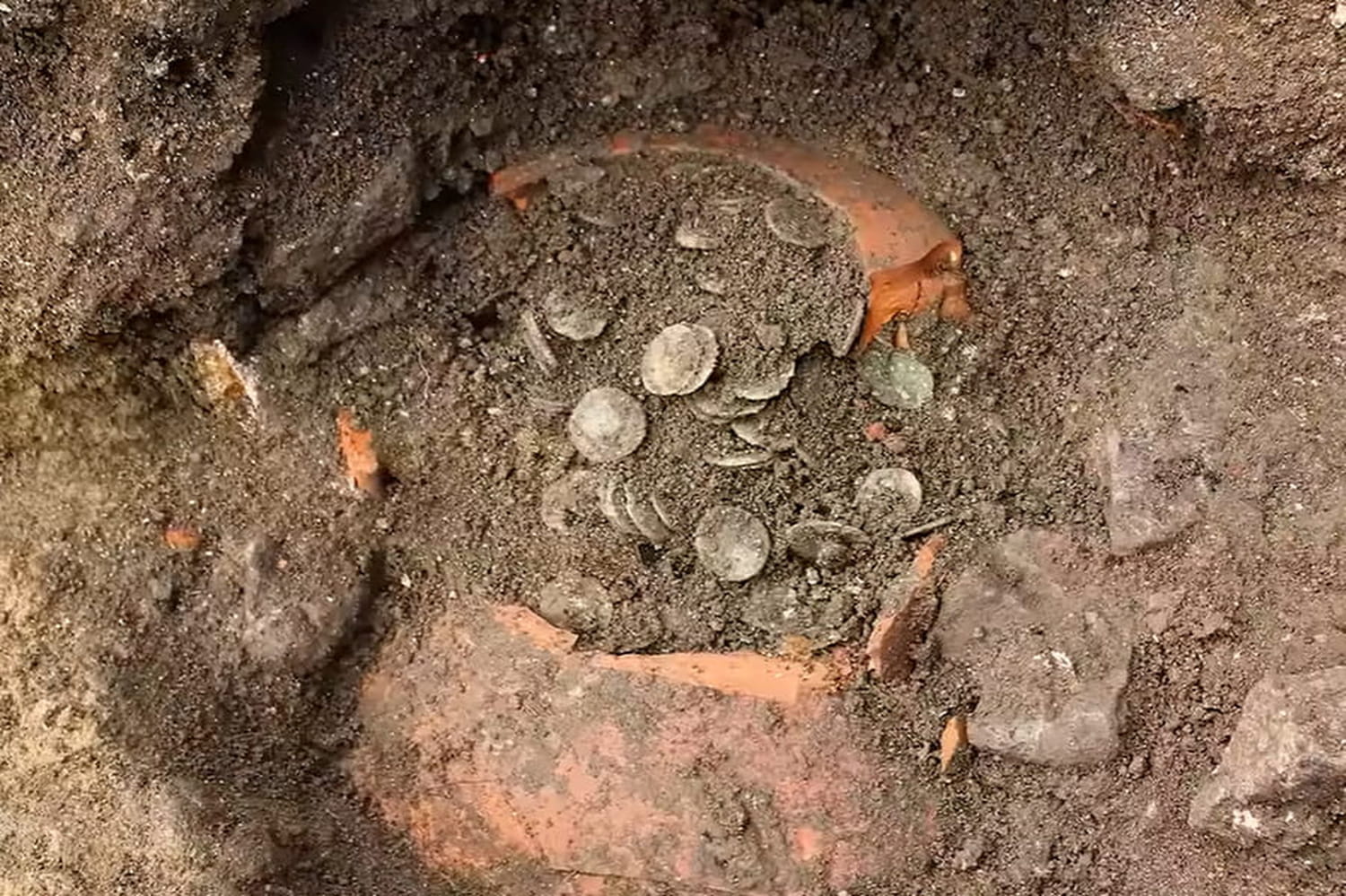
The find of this ancient treasure is worthy of an adventure film. What looked like simple pottery debris hidden underground turned out to be one of the greatest treasures of Roman coinage ever found in France. More than 40,000 pieces of billon – an alloy of silver and copper – were unearthed in Senon, in the Meuse, by archaeologists from INRAP (the National Institute for Preventive Archaeological Research, the public body responsible for excavating the ground before construction sites). This exceptional discovery opens a unique window into the daily life of wealthy inhabitants who lived in the region almost 1,800 years ago.
It all started during work to extend a house in this village located about twenty kilometers from Verdun. The archaeologists then excavated an area of 1,500 m² and came across the heart of an ancient Roman city. By digging the ground, they discovered two ancient streets and the remains of three large dwellings. The site was home to a population of very wealthy artisans and traders, even possessing superb stone cellars and rooms heated by the floor.
It was inside one of these houses that the surprise was complete: three large ceramic vases filled to the brim with thousands of coins. Scientists were able to film and precisely analyze the location of this discovery. “The neck of these vases was still visible or accessible from the residential floors“, explains one of the researchers in the official video of the excavations. For the team, it is therefore not a question of a treasure hidden in panic, but rather of a “reserve, like a big piggy bank or a family safe“.
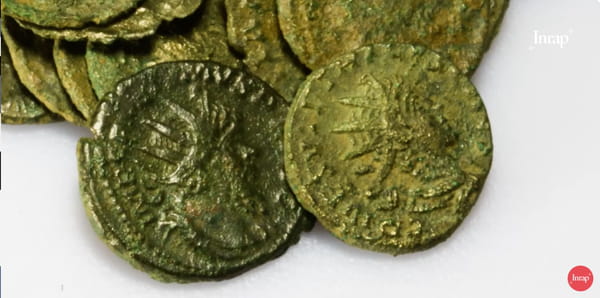
This colossal deposit shakes up what we knew about the economy of Roman Gaul. Residents regularly came to deposit or withdraw money there on a daily basis. Furthermore, the date of this hoard (around 300 AD) coincides with the presence of Roman soldiers in the region. Archaeologists today wonder about “a possible relationship between these monetary deposits and the military occupation“. It is the last chapter of a flourishing city, which ended up being completely abandoned in the middle of the 4th century after great fires. A mystery which recalls that other spectacular discovery: that of a precious Roman cargo just brought up from the depths of a lake in Switzerland.
Today, this site is unique because the terracotta vases have perfectly protected the pieces from rust and time. Some coins are so well preserved that the faces of the emperors of the time can still be clearly seen. An incredible opportunity for researchers, who will be able to study these details to understand how trade and markets functioned in Eastern France at the end of Antiquity.