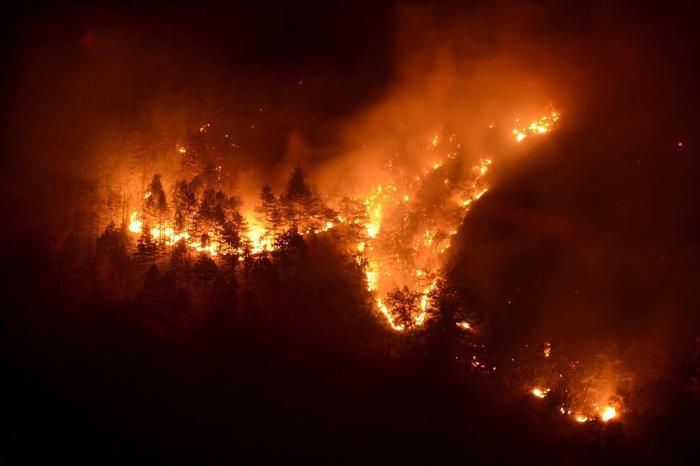
The silence of the high altitudes has its own secret voice. It is an ancient breath made of wind among the branches, of sap that flows invisible, of centuries-old stories written circle after circle in the heart of the trunks. For centuries we have believed that that silence was invulnerable, an eternal refuge above our metropolitan miseries. In these days of July, in the mountains of Piedmont, that silence was shattered by the roar of the fire. Not a purifying blaze, but the violent symptom of a land sick with fever.
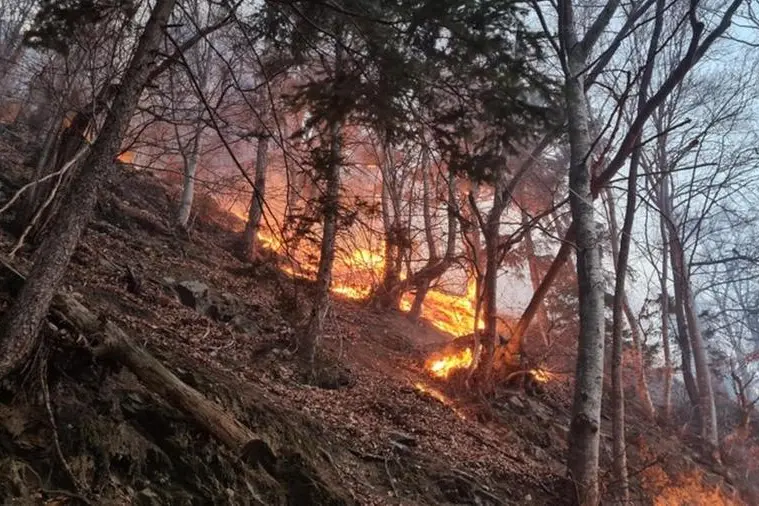
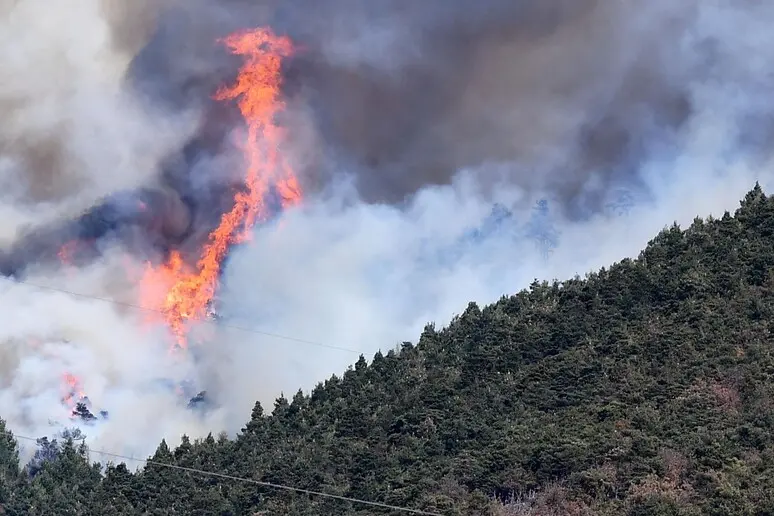
The numbers, in their geometric and naked severity, describe the perimeter of a silent massacre: over 800 hectares of forest reduced to ash, seven hundred thousand trees erased from maps and from life. Seven hundred thousand green brothers who no longer breathe. Valsesia has paid the heaviest price, seeing 450 hectares of forestry heritage disappear.
A little further north, in the Ossola Valley, the fire injured Premosello Chiovenda, devouring 226 hectares of oaks, centuries-old beech forests and pioneer woods. Even the sacred inviolability of the Gran Paradiso National Parkin the Soana Valley, was violated: the fire, which started from the high altitude prairies between Valprato Soana and Ronco Canavese, fed on olina grass and rhododendrons before attacking the fir and larch forests.
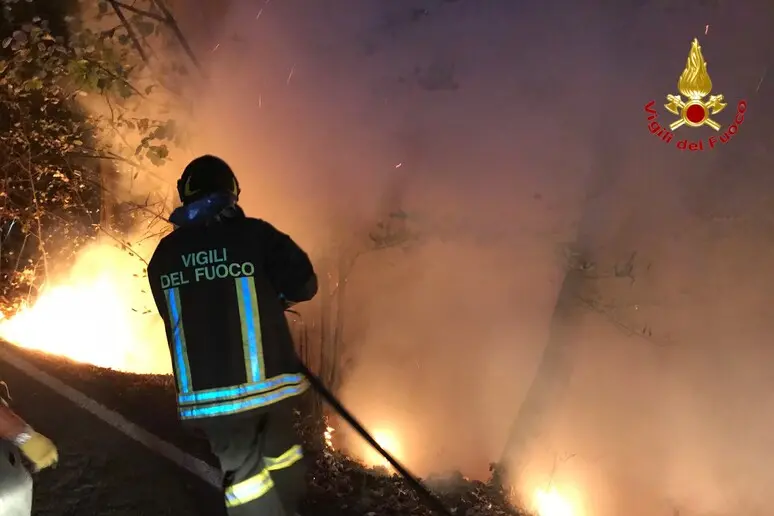
A tree is not simply firewood or a landscape feature; it is a center of life, a node of relationships that hosts the mystery of biodiversity. To see it burn is to witness the mutilation of a piece of our collective soul. The fires of recent days were not born from the criminal hand of the lone arsonist, but from a substitute of nature gone mad. Lightning triggered the fires. Lightning bolts falling during dry storms on forests transformed into powder magazines by the exasperating heat. Nature, attacked by the climate that we ourselves have altered, ends up consuming itself.
On the evening of July 9th, the Domodossola detection station recorded an instantaneous peak of 250 micrograms per cubic meter of fine dust. An Asian megalopolis value, breathed deeply by the Alpine communities. The following day the average dropped to 55 micrograms, but the verdict remains written in the air: the pollution from the cities has climbed the mountains, returning to us in the form of toxic smoke the carelessness with which we treat the plains.
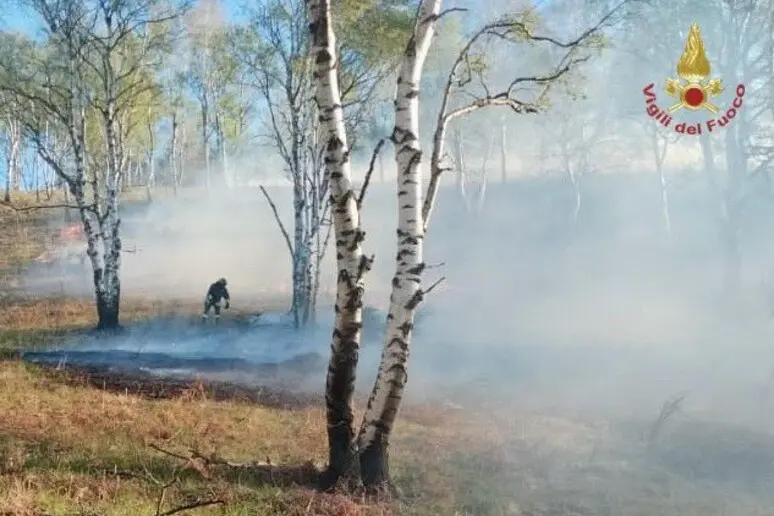
What is dismaying, however, is not just the extent of the damage, but the mutilation of time. When a complex forest dissolves, not only space is erased, but the future is erased. The experts of the Region and environmental agencies are unanimous: it will take 2 to 5 years just for the first species of plants and animals to return to populate that sterile and charred soil. It will take 15 to 20 years to see the development of a young, fragile and immature forest. But to witness the return of the original structure, to see those vegetal cathedrals of oaks, beeches and tall conifers in their full complex maturity, it will take between 50 and 70 years.
It means that those who have seen the mountain burn in recent days will never see that forest as it was again. It is a generational condemnation. We are leaving to our children and grandchildren a land deprived of its biological memory, a landscape impoverished and vulnerable to landslides and instability. It is the profound breakdown of the alliance between man and Creation, that custody pact that Pope Francis it incessantly asked us to renew and which we traded for the illusion of endless consumption.
This Piedmontese disaster cannot be isolated from the macroscopic context that holds Italy in a grip of heat. We are in the midst of the third heat wave of summer 2026. The African anticyclone is no longer a passing meteorological anomaly, an unwelcome guest for a few weeks; has become the permanent syntax of our climate, a dictatorial presence that pushes the temperatures reach unsustainable peaks of 40-43 degreesdrying up rivers, exacerbating drought and worsening what analysts call cooling povertythe impossibility for the weakest sections of the population to protect themselves from the heatwave. Even the Po, exhausted, sees salt water rising dramatically from the delta, threatening crops.
Extreme heat and Piedmontese fire are two sides of the exact same coin. They are the cry of the earth, which joins the cry of the poor. There is a profound, almost mystical connection between the suffering of those 700 thousand trees in Valsesia and the fatigue of the elderly person left alone in a city apartment without air conditioning. It is the global vulnerability of a system that has lost its spiritual center and its civil compass.
Faced with this scorched earth, the temptation is resignation or, worse, distraction that makes us turn our gaze elsewhere as soon as the last embers go out and the news channels change news. But (our) journalism, if it wants to maintain its dignity, must become the guardian of the memory of the damage. We must stop, look at those black wounds on the sides of our mountains and ask ourselves. The indignation of the moment is no longer enough; we need a profound ecological conversion, a radical transition in behavior and political choices.
If we do not understand that the protection of a forest in Val d’Ossola is linked to our own civil and ethical survival, we will continue to burn our tomorrow. Those 700 thousand lost trees ask us, in their tragic silence, to finally find the humanity we have lost.