There are roles that remain tailor-made, despite a career that included cinema and television in which the blond New Zealand actor Sam Neill was born in Omagh, Northern Ireland, and raised in New Zealand. He passed away at the age of 79, with a reassuring face but capable of suddenly becoming glacial, playing the most diverse characters.
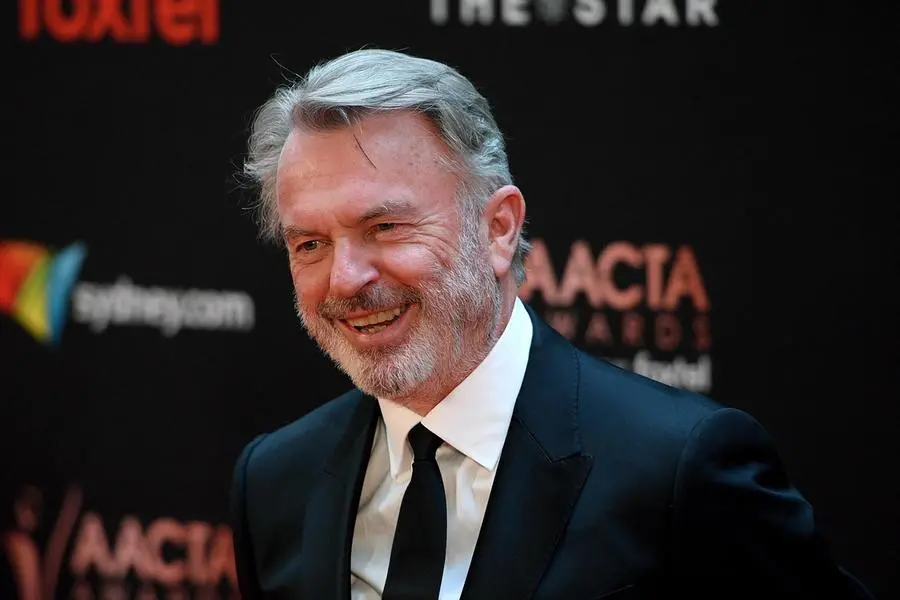
And when we think of Sam Neill, his face, for most audiences of at least three generations, is associated with that by Dr Alan Grant, that in the saga of Jurassic Park is the architect, together with the visionary billionaire played by Sir Richard Attenborough and the intrepid assistant with the face of Laura Dern, of the return to life of dinosaurs starting from their DNA trapped in amber resin. An ingenious narrative gimmick signed by Michael Crichton, which marked an era, transformed tyrannosaurs and velociraptors into real stars and gave rise to a series of more or less successful sequels.

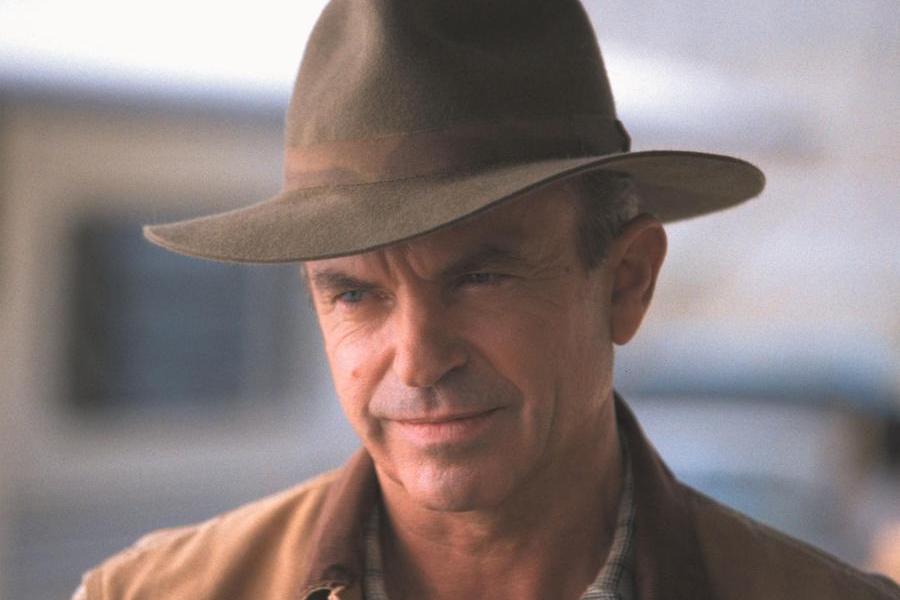
In the second chapter, The Lost World – Jurassic Park, again directed by Steven Spielberg, Sam Neill was not there, but returned in the third, this time directed by Joe Johnston, released in 2001 with the titleor Jurassic Park III. The first trilogy seemed to end with this film, but a second one followed: Jurassic World (2015), Jurassic World – Fallen Kingdom (2018) e Jurassic World – The Domination (2022). SOnly in the latter Sam Neill returned once again to take on the role, somewhat Indiana Jones-style, of Alan Grant.
Even before the blockbuster Jurassic Park he had attracted attention for a series of films, including the one that remained in the collective imagination the longest: 10 am: flat calm. Sam Neill plays the husband of a very young Nicole Kidman: the couple takes a solitary sailing cruise to overcome the tragedy of their son’s death. Sailing the ocean he comes across a castaway, played by Billy Zane (many years before becoming Rose’s boyfriend in Titanic)who turns out to be a murderous psychopath.
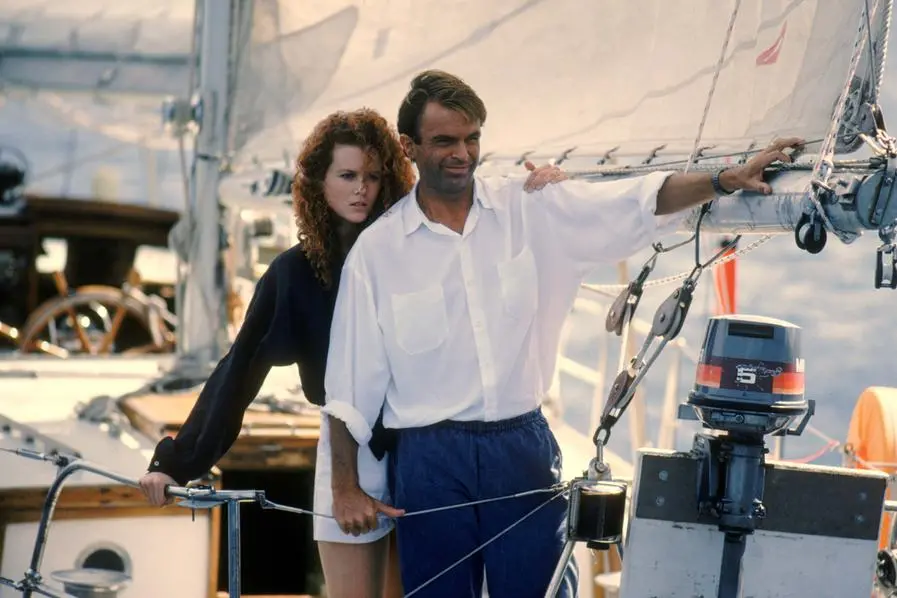
The sailing boat thus becomes a trap, from which the two spouses, rich, beautiful and with a good heart, will have to escape by transforming themselves into heroic avengers. And Sam Neill, with his white shirt open on his chest, his skin tanned, while he encircles the very thin Nicole Kidman with his muscular arms with a still adolescent face and leads the boat on the choppy sea – the calm before the storm – is an image that has imprinted itself in the hearts of many spectators, perhaps surpassed only by that of Rose and Jack on the bow of the Titanic.
But Sam Neill also gave the face to very unromantic men with brusque, if not ruthless, ways. In the masterpiece Piano lessons (1993), written and directed by Jane Campion, winner of the Palme d’Or at the Cannes Film Festival and three Oscars, plays Alisdair Stewart, the New Zealand landowner who conveniently marries Ada McGrath (Holly Hunter), a mute woman arrived from Scotland with her daughter and her inseparable piano. Alisdair appears as a rigid, awkward man and incapable of understanding his wife’s emotional world.
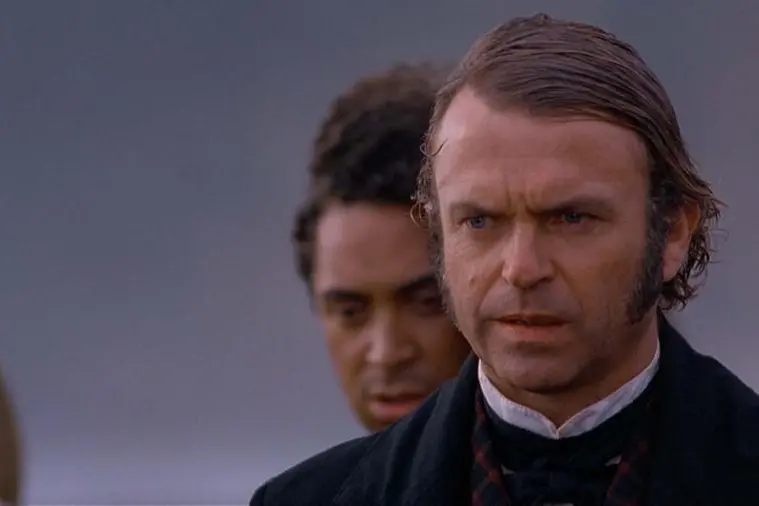
However, when he discovers the relationship between Ada and George Baines (Harvey Keitel), his desire for control turns into jealousy and violence, revealing the darkest side of the character, until he commits an act perhaps even crueler than the murder itself. A memorable role for a film which, like many other works by the New Zealand director, investigates madness and human passions in all their forms.
Finally, from Sam Neill’s immense filmography we remember another brutal but not without nuance antagonist. Noin the first two seasons of the hit series Peaky Blindersis Chief Inspector Chester Campbell, isent from Belfast to Birmingham by Winston Churchill to recover a shipment of stolen military weapons and dismantle the Peaky Blinders gang led by Tommy Shelby.
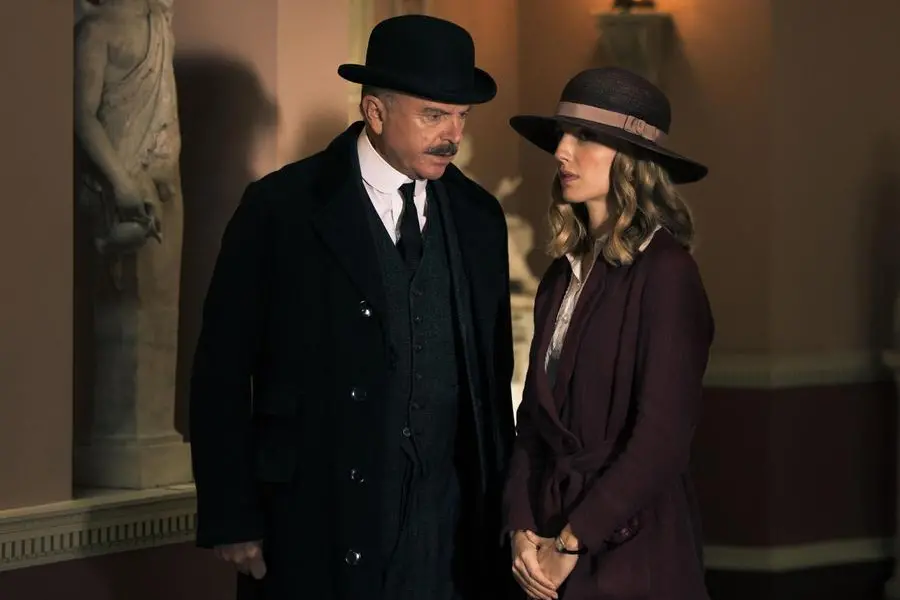
Campbell is an intelligent man, inflexible and deeply convinced of his mission, but his strong sense of duty is accompanied by often brutal methods and deep-rooted prejudices. Convinced that the end justifies the means, he does not hesitate to resort to intimidation, violence and manipulation to achieve his goals. Sam Neill builds the character with great intensity, avoiding reducing him to a simple “villain”. Campbell is animated by rigid Protestant morality and an authoritarian vision of the law, which leads him to consider Tommy Shelby not only a criminal, but a threat to the social order. Over the course of the season, a more fragile and obsessive side also emerges, especially in the relationship with Grace Burgess, which contributes to making the character more complex and human. In short, a great actor, to whom we pay homage by recovering some of his films in which he was directed by great directors: Until the End of the World by Wim Wenders, The Seed of Madness by John Carpenter, Angel – Life, the novel (Angel) by François Ozon.