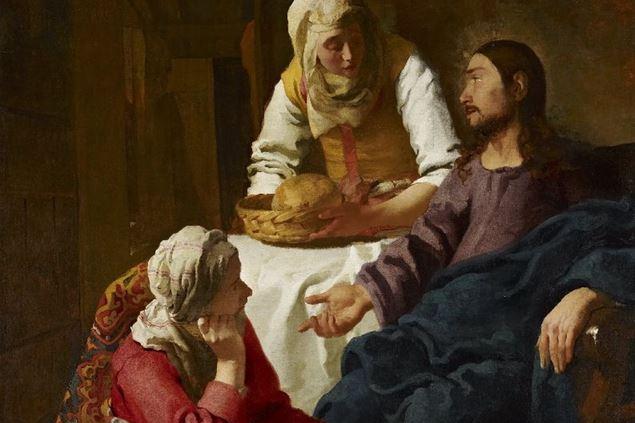
She is the patron saint of penitents and also venerated by the Eastern Church. The Latin Church used to bring together in the liturgy the three women mentioned in the Gospel and whom the Greek liturgy commemorates separately: Mary of Bethany, sister of Lazarus and Martha, the sinner “who was forgiven much because she loved much”, and Mary Magdalene or Magdalene, the possessed woman miraculously miraculous by Jesus, who she followed and assisted with the other women until the crucifixion and had the privilege of seeing him resurrected. The identification of the three women was facilitated by the name Maria common to at least two and by the sentence of Saint Gregory the Great who saw one and the same woman indicated in all the evangelical passages. The editors of the new calendar, reconfirming the memory of only one Mary Magdalene without any other indication, such as the adjective “penitent”, intended to celebrate the disciple to whom Jesus appeared after the Resurrection. This is it Magdalene whom the Church commemorates today and who, according to an ancient Greek tradition, went to live in Ephesus, where she would die. John, the beloved apostle, and Mary, the mother of Jesus, had also taken up residence in this city.
But was she really a prostitute?
Regarding Mary Magdalene (or Mary Magdalene) there is the stereotype, now widely spread, which classifies this evangelical woman as a prostitute redeemed by Christ. «Tradition», as the cardinal and biblical scholar wrote Gianfranco Ravasi«repeated a thousand times in the history of art and lasting to the present day, made Mary a prostitute. This only happened because in the previous evangelical page – chapter 7 of Luke – the story of the conversion of an anonymous “known sinner in that city” is told, she who had sprinkled perfumed oil on the feet of Jesus, a guest in the house of a notable Pharisee, had wet them with her tears and dried them with her hair. Thus, without any real textual connection, Mary of Magdala was identified with that nameless prostitute. Now, this same gesture of veneration will be repeated towards Jesus by another Mary, the sister of Martha and Lazarus, on a different occasion (John 12, 1-8). And, thus, a further misunderstanding will arise for Mary of Magdala: by some popular traditions she will be identified precisely with this Mary of Bethany, after having been confused with the prostitute of Galilee”.
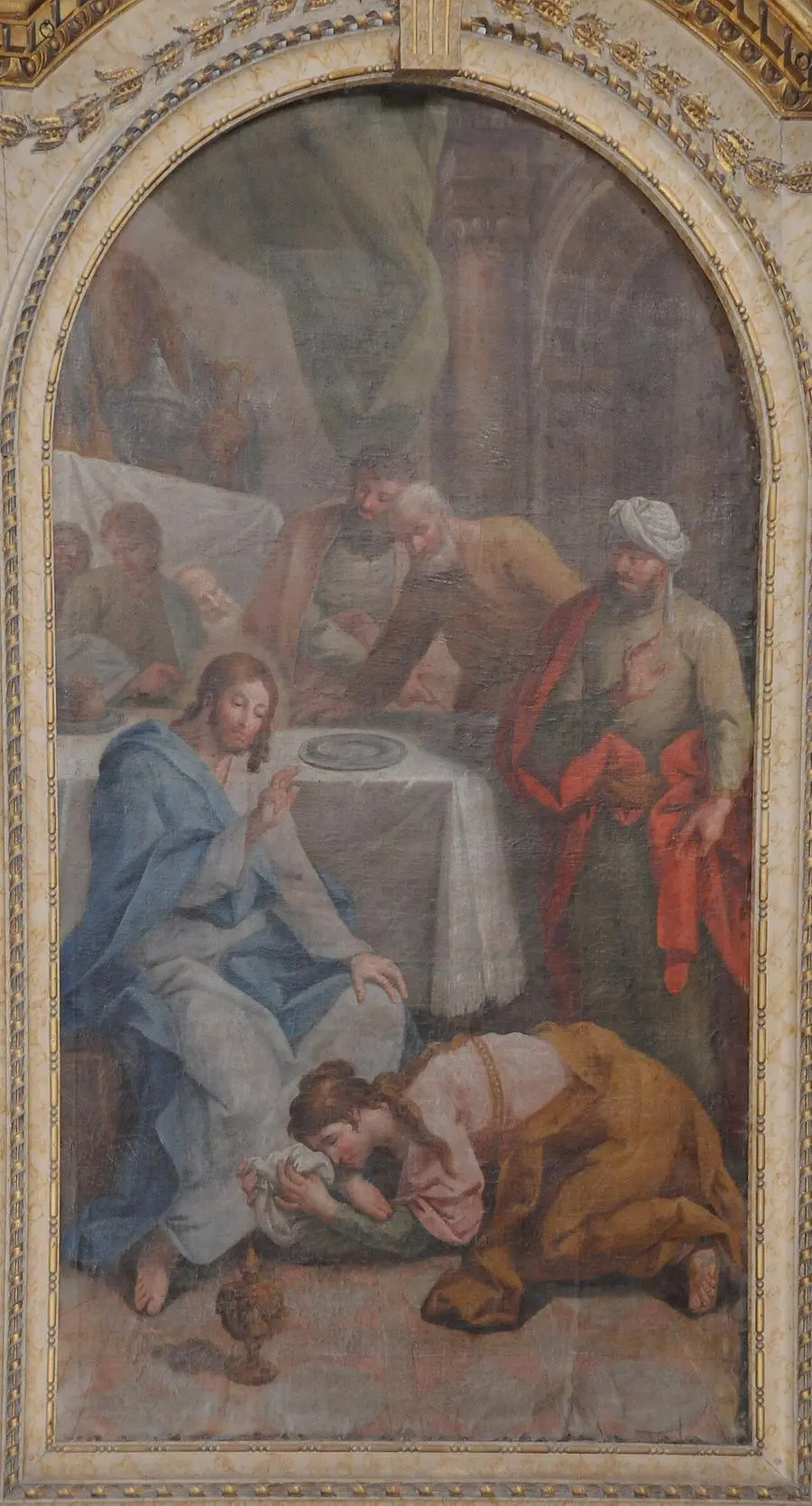
Mary Magdalene washes Jesus’ feet
The disciple who remained faithful to Jesus until the end
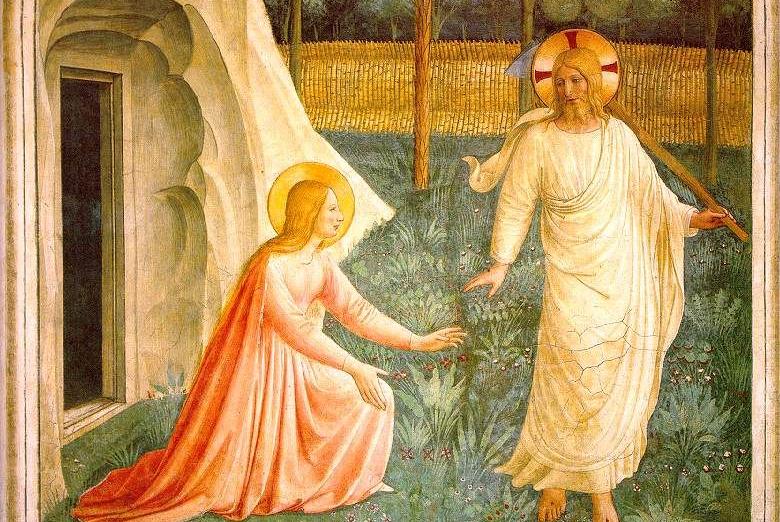
Mary Magdalene was among those who loved Christ most, demonstrating it. When the time of Calvary came, he was together with the Most Holy Mary and Saint John, under the Cross (Jn. 19.25). He did not flee out of fear as the disciples did, he did not deny him out of fear as the first Pope did, but he remained present every hour, from the moment of his conversion, until the Holy Sepulchre. For the Roman Missal, on the day dedicated to Mary Magdalene, July 22, a reading from the Song of Songs was chosen: «I will get up and search the city, the alleys, the squares, I will search for the one I love with all my soul. I looked for it, but I couldn’t find it. The police patrolling the city met me: “Have you seen the one I love with all my soul?”” (Song of Songs 3.2), a persevering love that the Lord rewarded, making her worthy of being “apostle of the apostles”: she was the first to announce his resurrection.
The praise of Saint Gregory the Great
Saint Gregory the Great has extraordinary words (Om. 25,1-2. 4-5; PL 76,1189-1193) for the one who made Christ the only reason for life. «She went to the Sepulcher on Easter Sunday, with the ointments, to honor the Lord. But he did not find him: “But Mary was outside, near the tomb, crying” (Jn. 20,10-11). In this fact we must consider how much strength of love had invaded the soul of this woman, who did not leave the tomb of the Lord, even after the disciples had left. (…) It therefore happened that she alone who had remained to look for him was able to see him; because the strength of a good work lies in perseverance, as the voice of Truth itself states: “He who perseveres to the end will be saved” (Mt. 10, 22). So she looked for the first time, but did not find, she persevered in looking, and she was given to find. (…) Holy desires grow as they continue. However, if they weaken while waiting, it is a sign that they were not true desires. (…) “Woman, why are you crying? Who are you looking for?” (Jn. 20,15). She is asked the cause of the pain, so that the desire grows, and calling the one she seeks by name, she becomes more inflamed in love for him. “Jesus said to her: Mary!” (Jn. 20,16). After he calls her by the generic name (…) without being recognized, he calls her by name as if he wanted to say: Recognize the one by whom you are recognized. I know you not like any other person, but in a very special way». Mary awakens from the nightmare: «Rabboni!» (“Master!”). The humble penitent Maddalena becomes witness to the triumph of the Crucifix. Now he would like to be there, in adoration, but no: «Do not hold me back, because I have not yet ascended to the Father; but go to my brothers and say to them: I ascend to my Father and your Father, to my God and your God” (Jn. 20, 17). She will bring the announcement to the Apostles.
The cult in the East linked to Easter
The oldest cult addressed to Mary Magdalene, dating back to the end of the 4th century, is that which took place in the rites of the Eastern Church on the second Sunday after Easter, called “of the myrophores”. On that day the women who went to the tomb with ointments to embalm him the day after the crucifixion and death of Jesus were commemorated. Among the myrophores, Mary Magdalene had an important role, the only one who is always mentioned in all four canonical gospels. The first center of veneration of Magdalene was Ephesus, where her tomb was also said to be, in the entrance to the cave of the Seven Sleepers; it then moved to Constantinople, where the body was transferred at the time of Leo the Philosopher (in 886), and then spread to the Western Church especially from the 11th century.
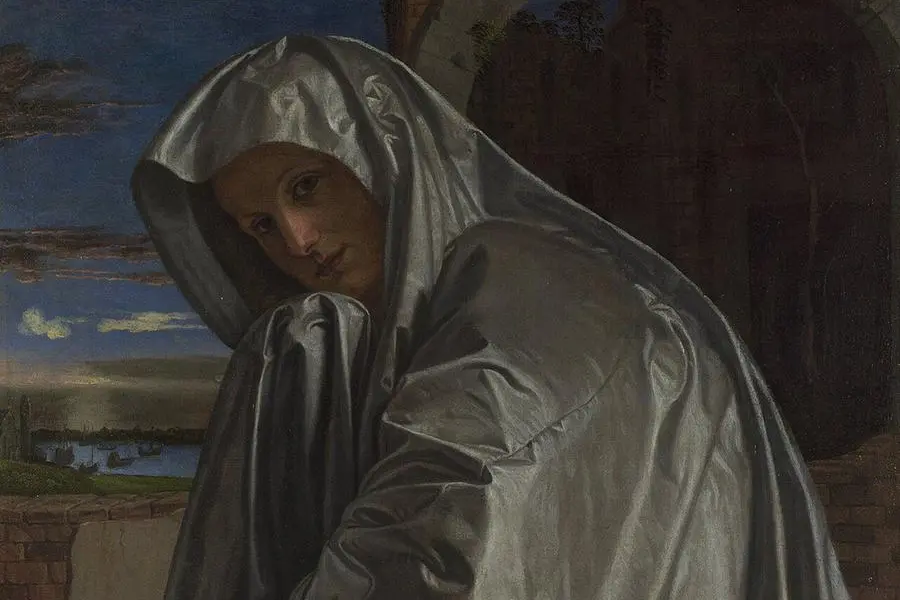
Giovanni Girolamo Savoldo, Mary Magdalene (1535-1540), preserved in the National Gallery in London
In the West venerated as “the apostle of the apostles”
The spread of the cult in the West occurred above all thanks toOrder of Friars Preachersaccording to the testimony of Umberto de Romans: “After Magdalene gave herself to penance, she was made by the Lord so great through grace, that after the Blessed Virgin there is no woman to whom greater reverence is not paid in the world and greater glory is not given in heaven”. The Order of Preachers included him among the number of its patrons. Friars and nuns honored her with the title of “Apostle of the Apostles”, as she is celebrated in the Byzantine liturgy, and they compared Magdalene’s mission to announce the resurrection with their apostolic office. The cult of Magdalene spread throughout Europe and her devotees built numerous churches in her honour: the best known is the Gothic one of Saint-Maximin-la-Sainte-Baume (1295) where what is said to be the saint’s skull is preserved, but the first place where the cult of Mary Magdalene was formed is the Abbey of Vezelay where the body was said to be preserved as early as 1050.
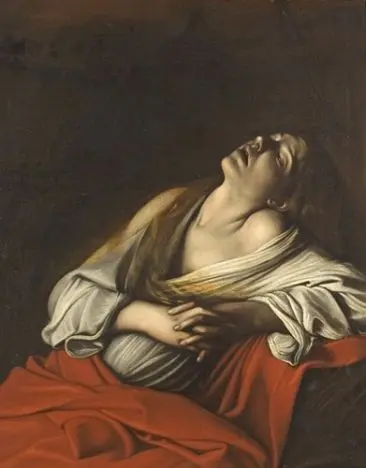
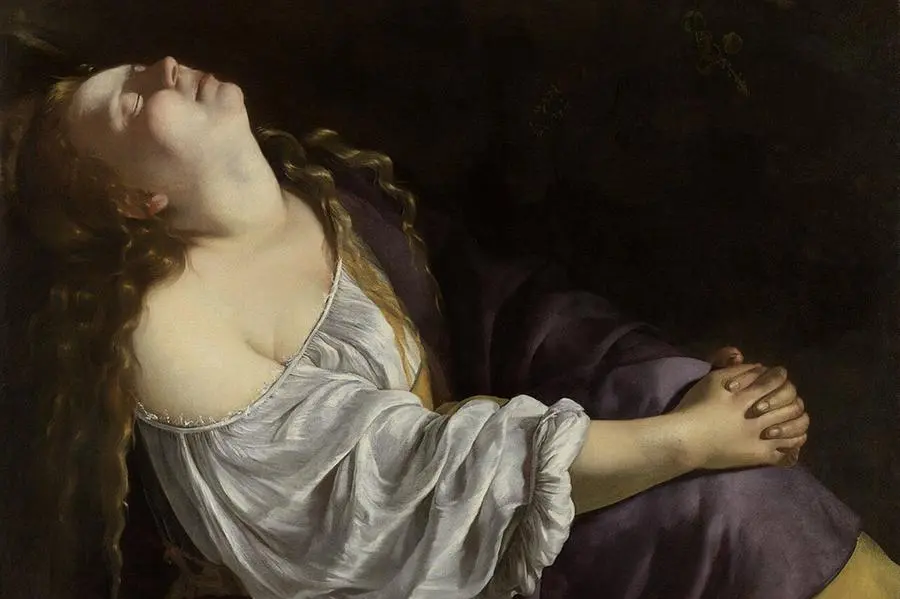
Michelangelo Merisi known as Caravaggio, Mary Magdalene in ecstasy (1606)
Pope Francis established the liturgical feast in 2016
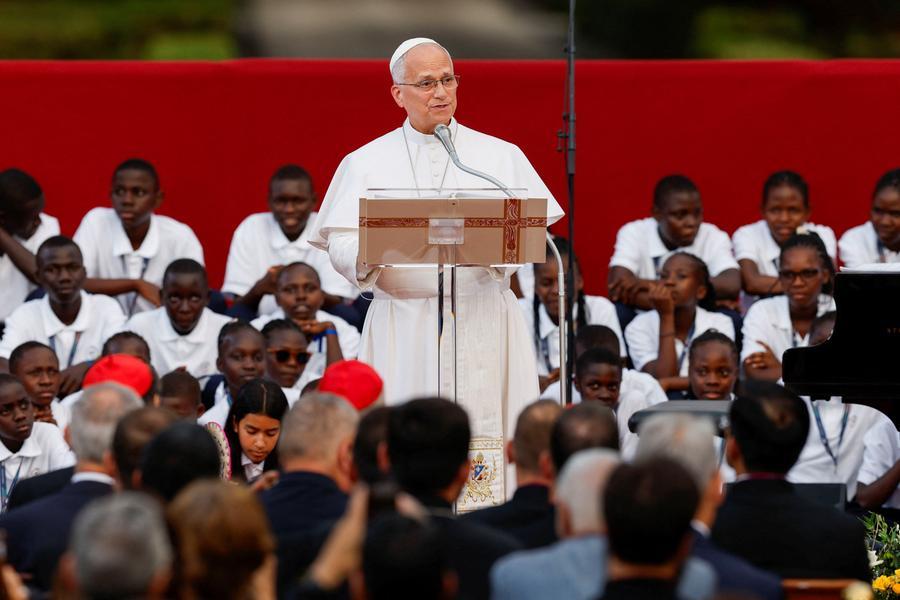
On June 3, 2016 the Congregation for Divine Worship published a decree with which, «at the express wish of Pope Francis», the celebration of Saint Mary Magdalene, which was an obligatory memorial, is elevated to the level of a liturgical celebration. The Pope took this decision during the Jubilee of Mercy, explained the Secretary of the dicastery, Archbishop Arthur Roche, “to signify the relevance of this woman who showed great love for Christ and was so loved by Christ”. Mary of Magdala was part of the group of Jesus’ disciples, she had followed him to the foot of the cross and, in the garden where the tomb was located, she had been the first witness to the resurrection, “testis divinae misericordiae”, as Gregory the Great defines it.
«Christ», said Archbishop Roche, «has a special consideration and mercy for this woman, who manifests her love towards Him, seeking him in the garden with anguish and suffering», with what Saint Anselm defines as the «tears of humility. Therefore it is right”, concludes Roche, “that the liturgical celebration of this woman has the same degree of celebration given to the celebration of the apostles in the General Roman Calendar and that the special mission of this woman stands out, who is an example and model for every woman in the Church.”