The European Union has revoked funding to the Venice Biennale Foundation, to counter the reopening of the Russia Pavilion (closed after the Russian invasion of Ukraine) at the 2026 international art exhibition. The Pavilion, located in the Biennale Gardens among other foreign countries, belongs to Russia. Its history dates back to 1914: it was created by the then Russian Empire, then managed by the USSR and, after its end, by the Russian Federal Republic. As you can see, a long history, passed through different regimes. The European Union has declared that it will not finance the Biennial (although the Russian exhibition is on unrelated programmes): «Culture», said the Union spokesperson, «financed with the money of European taxpayers must safeguard democratic values, promote open dialogue, diversity and freedom of expression: values that are not respected in today’s Russia».
The president of the Biennale, Pietrangelo Buttafuoco, for his part, explained that it is not a “political” choice, but rather about keeping an area of freedom open. In a television debate, he declared: «We are going through a challenging historical phase: we are at war. And in war there is propaganda, which does not allow us to see how things really are.” Must culture stop when faced with borders or walls of conflict? Cultural exchange is, in its own way, a bridge that unites peoples and countries that find themselves in conditions of opposition or war.
A similar problem arose some time ago, following the terrible story of the Israeli bombings of Gazaafter the Hamas pogrom in Israel. Many Italian university institutions have questioned whether to continue applying the cultural agreements with Israeli universities. In total there are about eighty still active. There was a debate. It has been highlighted that some agreements may have a military impact and would therefore lead universities to collaborate indirectly in the war. However, other agreements have a different nature. Some universities have decided to discontinue its implementation. We wonder if this decision is positive, if we are talking about humanistic thematic fields or not connected to war. Does this not contribute to isolating Israeli culture, also penalizing personalities who do not share the current government’s policies?
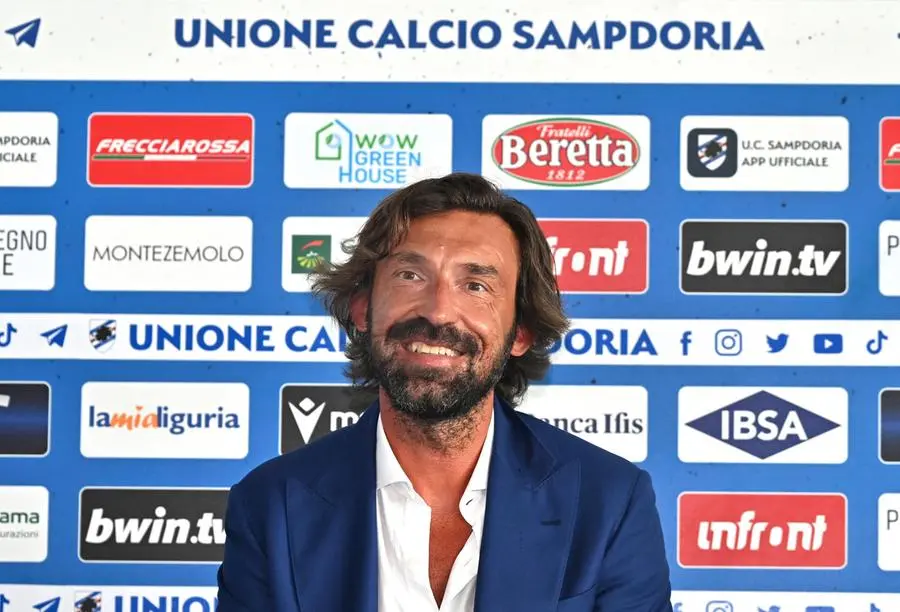
Some cases have recently caused discussion, not on the subject of culture but of sport: the name of Andrea Pirlo as a potential coach of the national football team he has been questioned as a testimonial for a Russian betting agency. Previously, regarding the participation of the Iranian national team in the World Cup, the American government was not in favor of the entry of its players on its territory and it was ultimately decided to impose some restrictions. The players had to go to Mexico for the “retreat” and enter the USA only close to the matches. Iranians protested their treatment.
In this age of strength, polarizations are becoming more acute, to the point of involving art, culture and sport. Sectors in which, in some way, there may also be the presence of the State, but which express a broader feeling. Sport, with its large popular following, manifests a vision of global coexistence in a competitive manner. Boundaries cannot be imposed on culture. UNESCO’s Charter begins like this: “Since wars begin in the minds of men and women, it is in the minds of men and women that the defenses of peace must be built.”