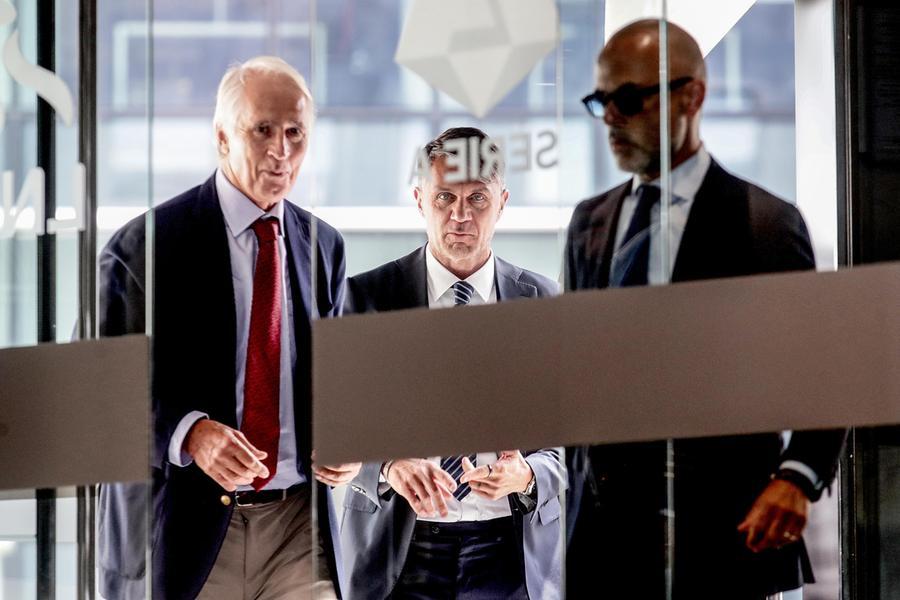
For some time, since there has no longer been a line of federal technical commissioners, that is, since after Azeglio Vicini, the appointment of the Italian football coach is an Italian comedy, of which the Pirlo case, which occurred in the night between Sunday 26 and Monday 27 July, by Andrea Pirlo himself’s admission via social media, due to the “stain” as a testimonial for the most important Russian betting agency, is only the latest episode.
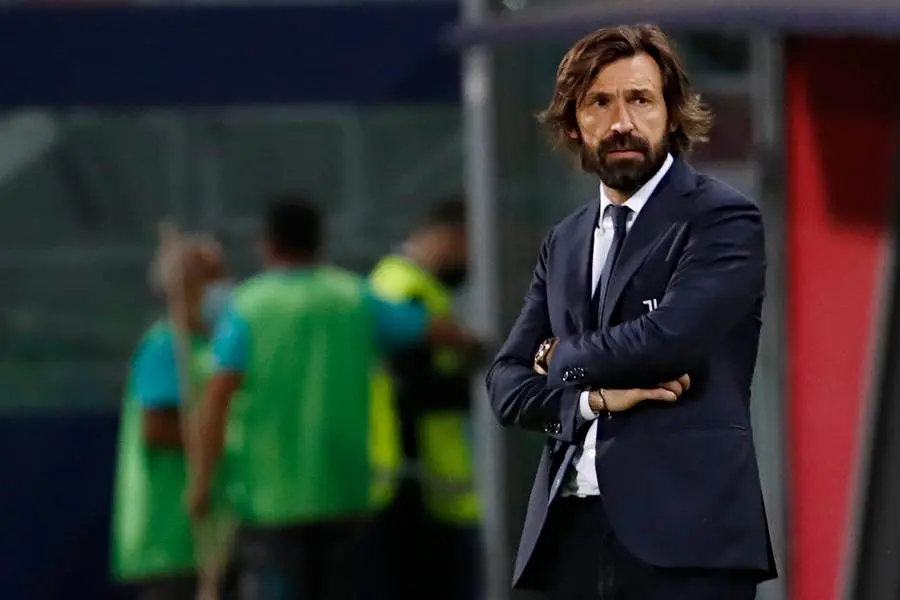
Politically, Russia, which is still disqualified by FIFA after the invasion of Ukraine, had more weight on his controversial name than the betting agency which is also a problem in Italy, where the law prohibits sportspeople from advertising them (even if many former world champions do so with a stratagem that saves the form but not the contradictions of the substance) and makes the role of testimonial for the sector incompatible with federal positions. On paper, however, to resolve the formal issue it would have been enough to terminate the contracts, which according to Pirlo’s lawyers was immediately feasible. More complicated, however, even if it has been talked about less, is the question of image, for a Federation that has seen cases of pathological gambling in the national team, where the contracts closed on the fly for the occasion would have risked the effect of Braghettone’s adjustments on Michelangelo’s Judgment.
But in the script lately full of twists and turns of the appointment of the coaches, a series of structural factors always weighs and is discounted (and clashes) which is worth more than pretexts and contingencies: the heaviest argument is the competition from the clubs who can put attractive jobs on the table (the Mancini case, “attracted” by the moneyed sirens of Saudi Arabia while he had just renewed a sum of federal positions, teaches); the other is the difficulty in bringing together the wishes of different components: in the ongoing controversy we know that Giovanni Malagò, new president of the FIGC, has a preference for Roberto Mancini (on which also hangs that Arab flight, which fell on Spalletti and Gattuso); While the Football League representing the clubs has expressed preference for Antonio Conte. Malagò would have the title regulation to decide on his own but we know that a choice that the League doesn’t like could exacerbate the eternal conflict between the cabbages of the national team and the goats of the clubsand the memory of the stage denied by the clubs to Gattuso, who took over from the sacked Spalletti in a very short time, to try out the team, before throwing himself into the inside-out fray of the World Cup play-offs then lost to Bosnia, is recent.
Meanwhile in the secret rooms the tug of war between the Leonardo-Maldini vs Malagò duo takes place: Pirlo’s candidacy, on which Maldini is said to have become stubborn, seems to have become politically unpresentable and not even the bad thought that the Russia case would have been the perfect storm useful for putting aside a name unwelcome to too many may have been entirely unfounded: a symbol of the beautiful football played but with a coaching career to consolidate.
It remains to be seen what will become of the two technical directors who had strongly wanted him and whether, if the disagreement is irremediable, others will arrive or not. In this case, we would probably look for another strong face in football comparable to Maldini: the name of the less rigid Giorgio Chiellini is a possibility, but it’s a whisper in the corridor.
In the very inelegant choice to make public the fact of having probed, before Pirlo, Pep Guardiola and Carlo Ancelotti, the thorniest issue is revealed between the lines: taking over as coach of the Italian national team at this moment entails the risk of being left in the lurch: if it is true that the problem concerns the technical quality of the players and the scarcity of petals in the squad that can be called up, this means that it would not be enough to hire the best coach in the world, nor to cover him with gold to magically solve a problem that requires 10 years of long-term consideration and planning to be truly addressed. Guardiola would have been the first foreign pope, but his great refusal gives an idea of the international perception of the current state of health and prestige of Italian football.