






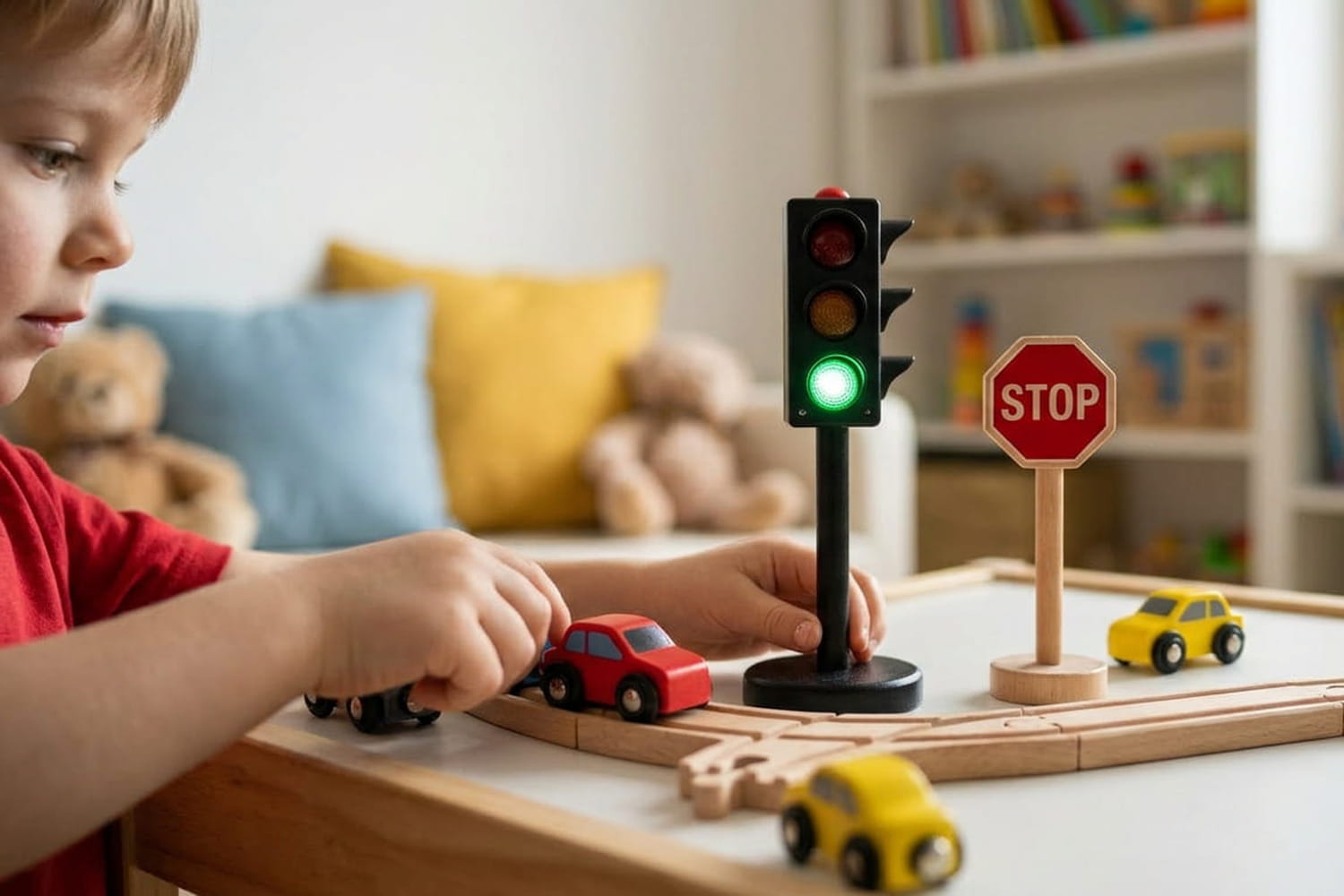
What if the highway code was the solution to teaching children to manage their frustration, and therefore avoid the crises that all parents fear? This is the unexpected approach that this psychologist proposes.
This is certainly one of the most difficult points of education for parents: teaching children to manage their emotions, and more particularly their frustration, to avoid crises. Because a child frustrated by not getting what he wants, whether it’s an ice cream snack or an extra cartoon, is often synonymous with great anger accompanied by inconsolable tears… which most of the time ends in a screaming session on the part of the parents. And while raising your voice may work in the moment, it unfortunately doesn’t solve the problem. The same goes for those who turn to “caring parenting”, choosing for example to hug the child to try to calm him down. A solution which, in the long term, will have no effect.
In the show Zoom Zoom Zen of France Inter, Didier Pleux thus denounces the “deviances of positive French education”which have led to a lack of parental authority, and which prevent children from learning “that we don’t always do what we want to do”. But the psychologist, author of numerous works on education, offers an unexpected approach to establish “the upstream authority”, because it is not in moments of crisis that parental authority will have a real impact. He calls this method the “family code”, directly inspired by the highway code or other legal rules that govern our everyday lives: “There is a civil code, a penal code for adults, why not a family code for certain children with more vehement temperaments?
Didier Pleux gives the example of a police officer who stops you for running a stop sign or a red light: if he only gives you a warning rather than a sanction, there is a good chance that the situation will happen again one day. “You can’t be kind when someone goes through a red light.”he explains, always referring to the methods advocated by followers of positive education.
It would thus be a question of establishing clear rules, with consequences proportional to each stupidity of the child, in the same way that the amount of a fine is proportional to the dangerousness of the offense committed on the road. “There’s no (fine) with a kid, but can we establish some kind of code if the kid has trouble with red lights?” In short, it’s a bit the same principle as the famous “swear word jar”, in which you put a coin as soon as someone says a forbidden word. It’s up to each family to find the balance that suits them by creating their own family code.
To parents who find his approach too radical, Didier Pleux replies that it is not a question of “dress up” the child orplay the cops on duty”but to find the right nuance to help the little ones “increase their frustration tolerance threshold” and above all understand “the reality principle” : yes, tidying your room or eating your vegetables is not always fun, but life is made up of “lots of things we don’t like” and we might as well teach it to children as early as possible.